

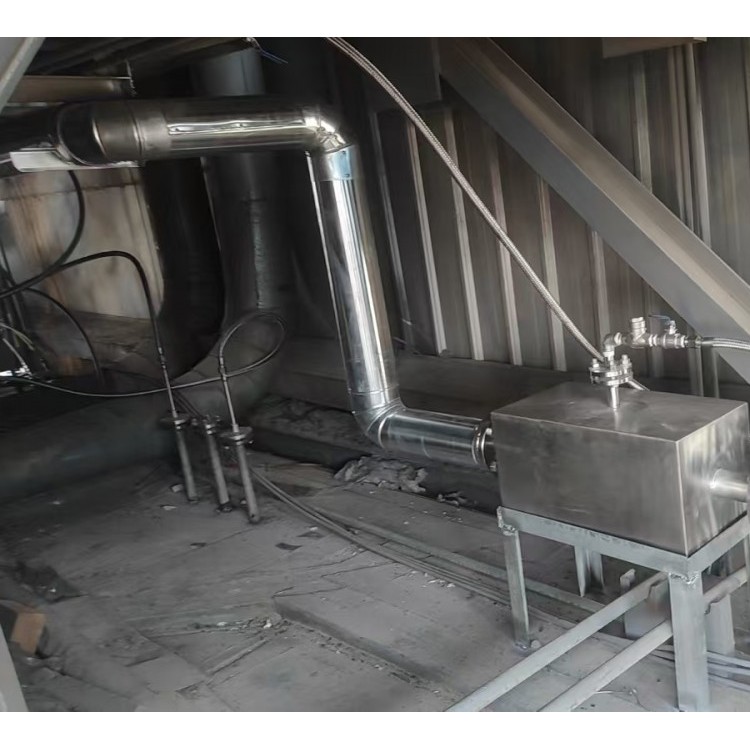
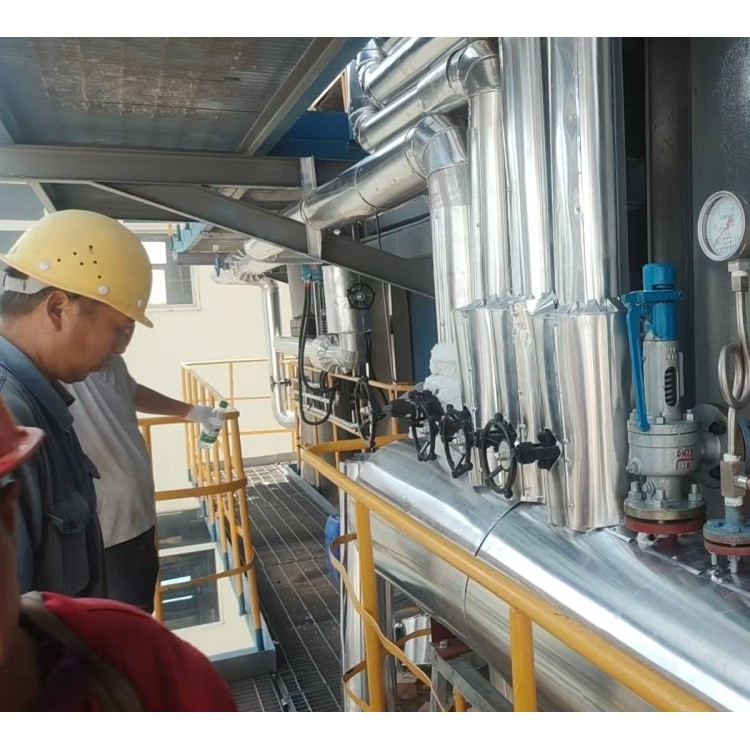
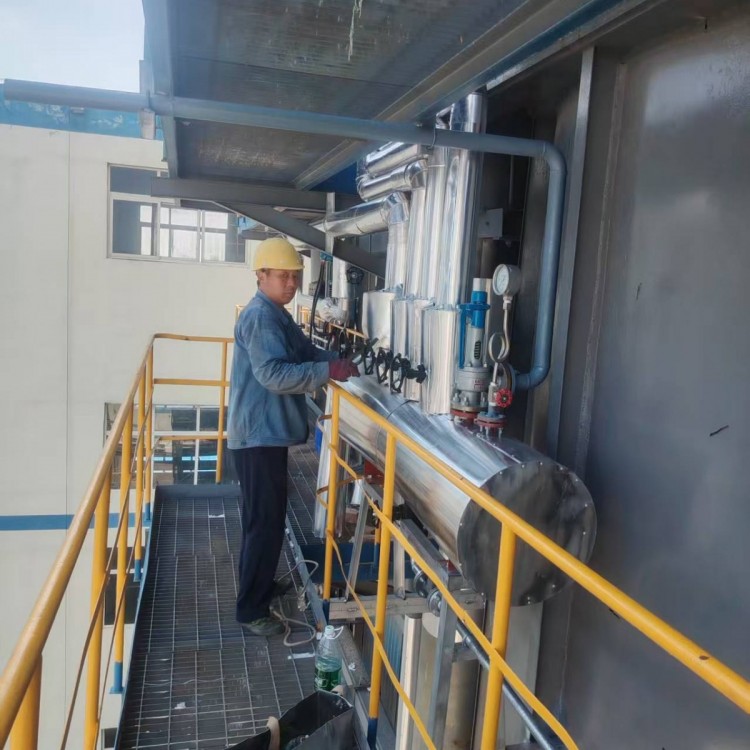
Chemical Plant 130t Circulating Fluidized Bed Boiler SNCR De-NOx Process Equipment Case Introduction:
Keywords: Denitrification Equipment, Boiler Denitrification Equipment, SNCR Denitrification Process, SNCR Denitrification Equipment

The SNCRz denitrification technology (Selective Non-Catalytic Reduction) principle involves injecting a liquid reductant containing amines (such as amine water or urea solution) into the appropriate temperature zone (750-980℃) through a steam shock wave injector system after it is efficiently vaporized (at 150-200℃). The reductant rapidly fuses after the steam shock wave and is uniformly sprayed into the inlet flue of the separator, where NO and NH3 in the flue gas undergo a chemical reaction, reducing to N2 and water.
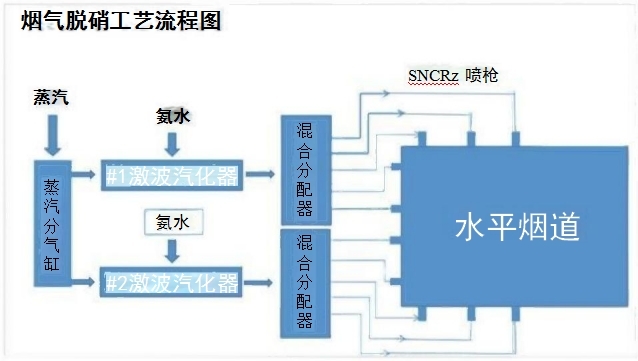
The denitrification process primarily enhances efficiency by preheating the ammonia water, converting the SNCR ammonia water into ammonia gas, increasing the residence time of the reductant through a shock wave atomizer, and improving the uniformity of the mixture between flue gas and reductant.
Anticipated Effect
Under the condition of meeting the requirement of NOx emissions ≤ 35 mg/Nm³, the current SNCR denitrification system consumes approximately 3.8 tons of ammonia water per day. After modification, the SNCRz system's ammonia water injection is reduced to about 2.5 tons per day, resulting in a decrease in ammonia water consumption and corresponding reduction in ammonia escape. This alleviates the corrosion issues caused by the ammonia escape.
