

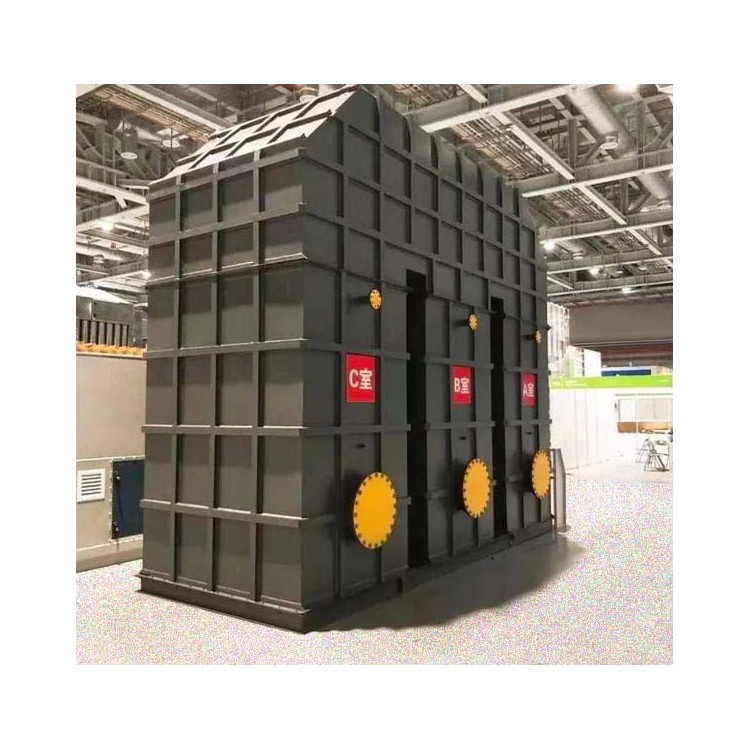
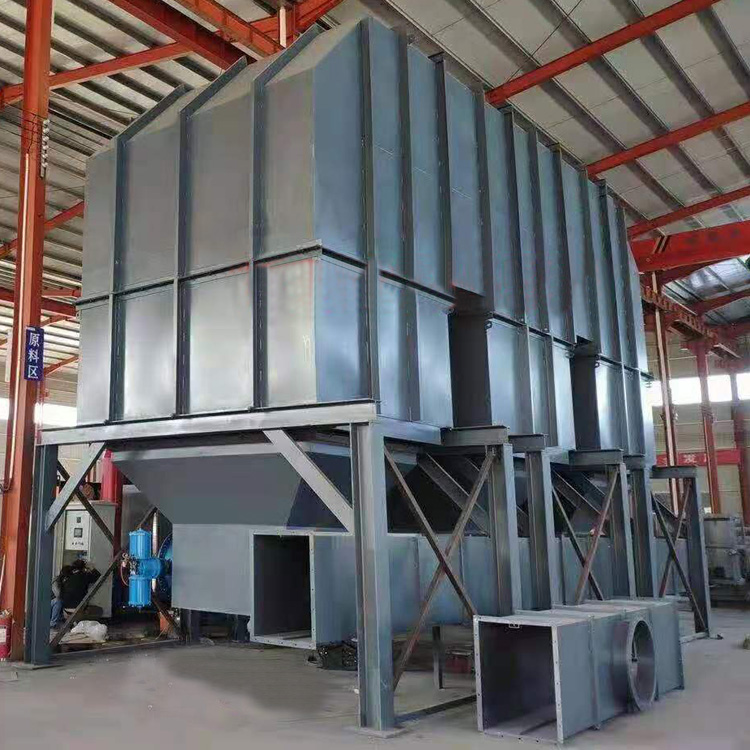
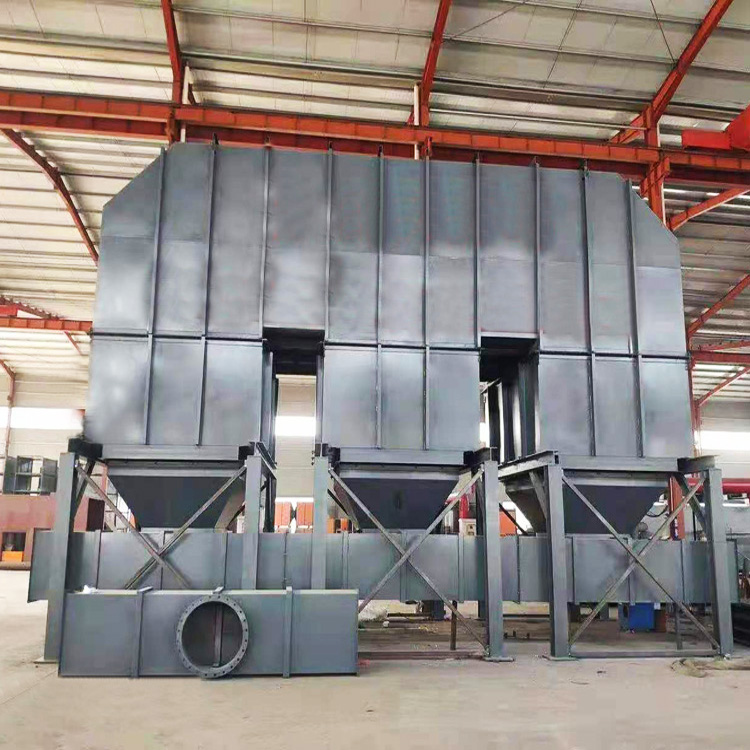
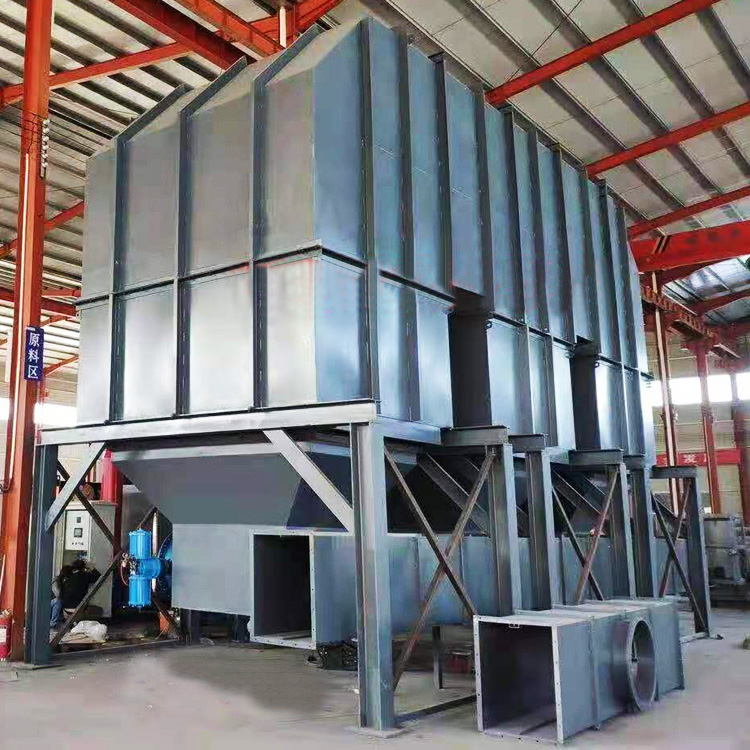
Catalytic combustion waste gas treatment equipment with a real three-chamber regenerative thermal oxidizer (RTO) for paint spray lines
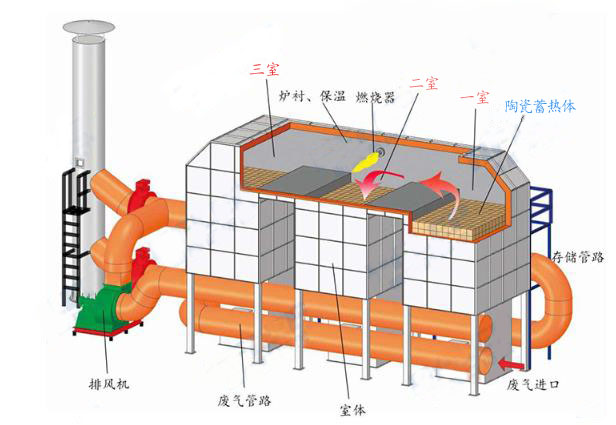
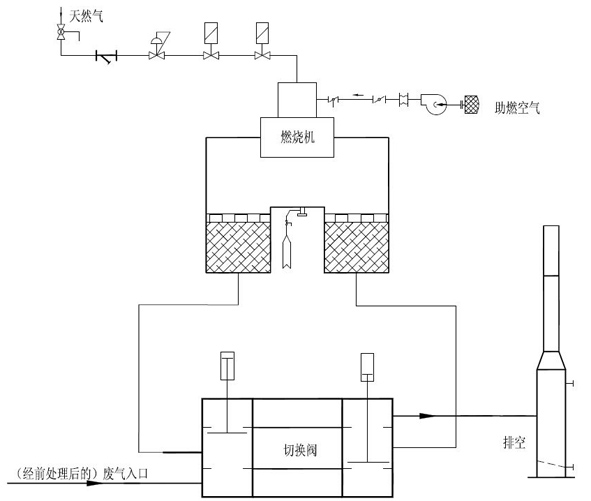
The operating principle of the RTO (Regenerative Thermal Oxidizer) waste gas treatment system is primarily based on high-temperature oxidation reactions and heat recovery mechanisms.For a three-bedroom RTO, the typical workflow usually includes the following stages:
Phase OneThe exhaust is first preheated in the regenerative bed A, then enters the combustion chamber for combustion. At the same time, the unprocessed exhaust remaining in regenerative bed C is blown back into the combustion chamber for further incineration treatment (i.e., the blow-off function) by the purified gas. The decomposed exhaust is discharged through regenerative bed B, while regenerative bed B is also heated.
Stage TwoWaste gases are redirected to the heat recovery bed B for preheating before entering the combustion chamber for combustion again. Meanwhile, the unprocessed waste gases in heat recovery bed A are also blown back to the combustion chamber for incineration by the purified gas. The decomposed waste gases are then discharged through heat recovery bed C, heating the bed C in the process.
Stage ThreeThe exhaust gas is then preheated in heat storage bed C and enters the combustion chamber for another round of combustion. The unprocessed exhaust gas remaining in heat storage bed B is recirculated back into the combustion chamber after being purified. The decomposed exhaust gas is finally discharged through heat storage bed A, heating it in the process.