


City landfill sites, affected by rainfall and moisture within the waste itself, often experience large amounts of wastewater. Since their output is significantly influenced by the seasons, it is necessary to set up leachate treatment ponds to maintain the stable operation of leachate treatment stations. Currently, these ponds are predominantly open. With the heightened environmental awareness, they often use flexible floating wastewater pond covers to prevent the arbitrary spread of noxious gases produced by leachate fermentation. However, the structure of the floating cover systems is unstable and easily damaged by adverse weather conditions, increasing repair costs. Therefore, the existing technology requires further changes and development.
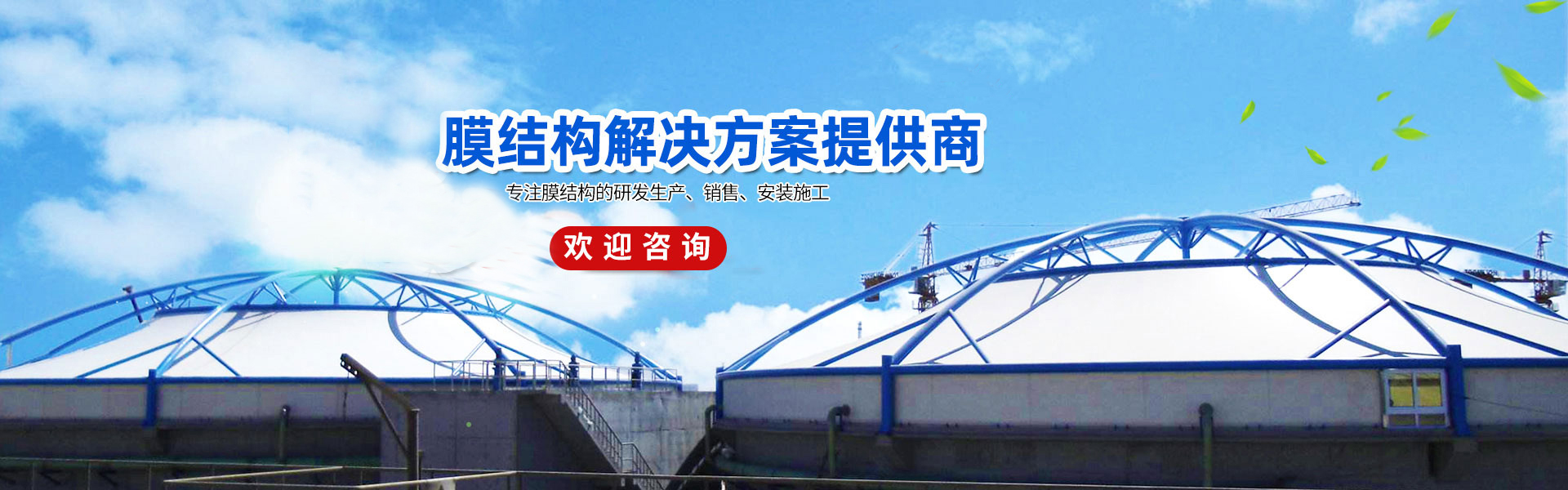
A new-style sewage pond cover has been produced by the manufacturer, featuring a floating body installed on the sewage pond. The floating body is equipped with a membrane structure, which is detachably connected to the floating body. The top of the membrane structure is arched. The membrane structure includes an arched membrane surface, connected to the floating body via a frame and steel cables. Multiple steel cables are evenly distributed and connected to the frame. The floating body consists of several sub-floats, which are assembled to form the main body. The joints between adjacent sub-floats are fitted with anti-corrosion steel plates, which can be detachably connected to the sub-floats. The frame is rigid, while the steel cables are flexible. The surface area of the floating body is greater than the bottom area of the membrane surface.
Floating devices set on the wastewater pond are equipped with a membrane structure, which can be detachably connected to the float. The top of the membrane structure is arched. Through the covering system of this wastewater pond, the stability of the protective structure can be enhanced, the risk of damage reduced, and maintenance costs lowered.
