
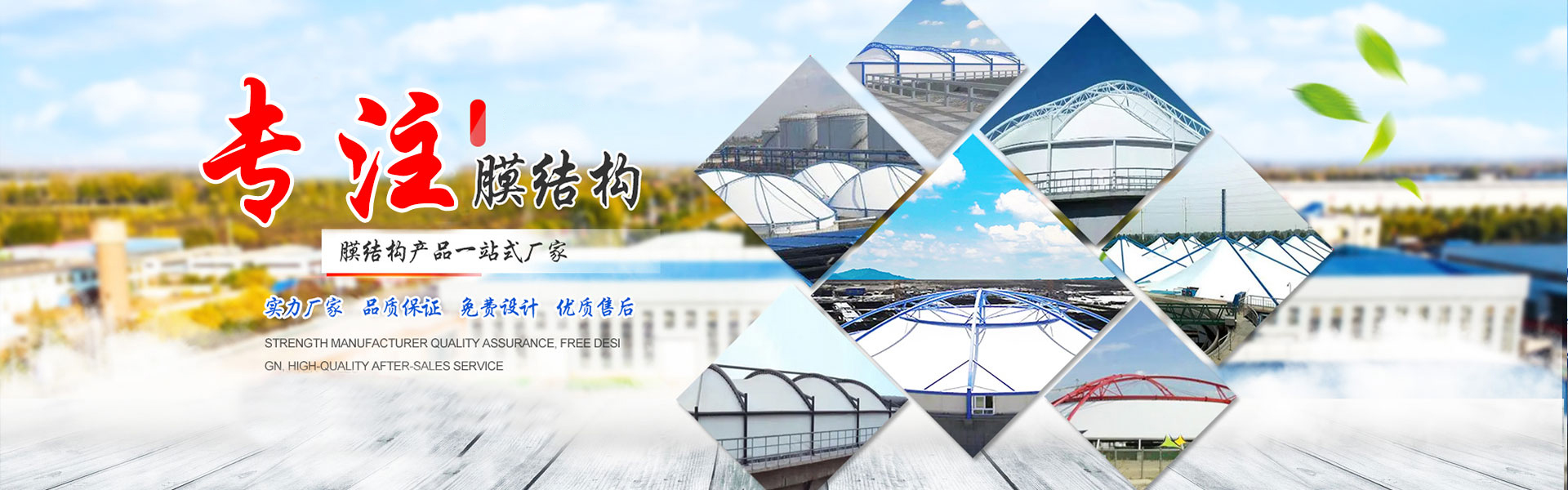
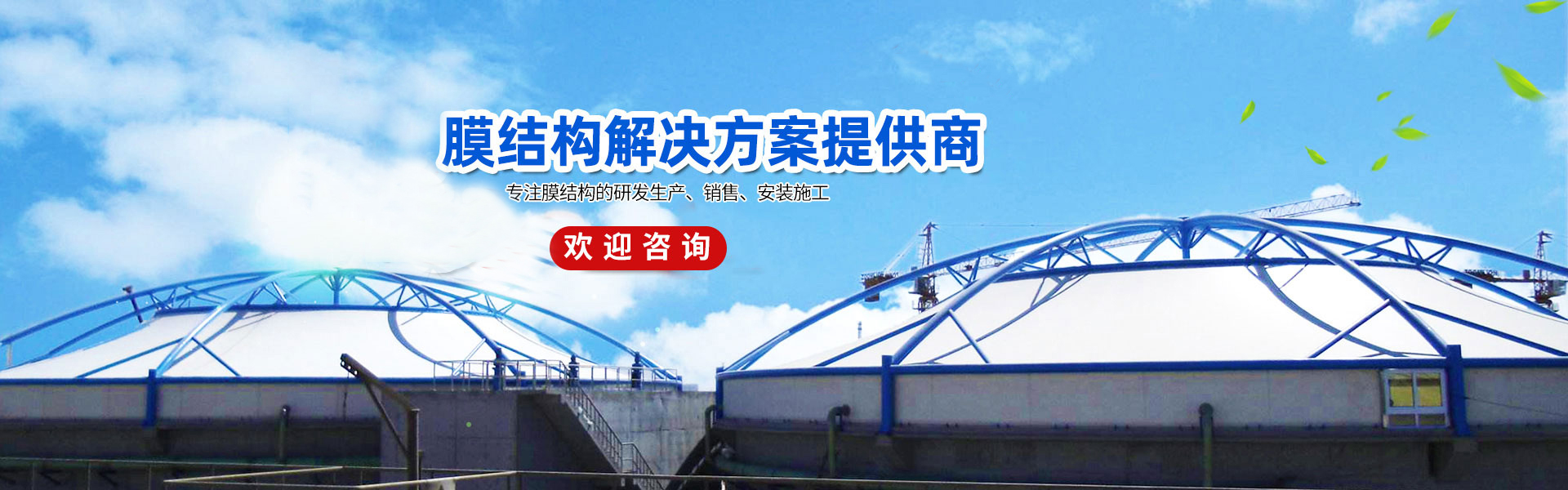

Severe pollution issues exist in many areas, particularly in the papermaking industry and industrial zones, as production processes generate wastewater that not only emits unpleasant odors but also contaminates the air. As a result, it is mandatory to implement a series of odor collection and wastewater treatment measures. In recent years, there has been an improvement in odor collection methods, moving from wastewater pond glass fiber reinforced plastic covers to sealed structures using inverted membrane roofs.
Fiberglass reinforced plastic, despite being processed, remains a plastic at its core and is inevitably prone to aging issues. Under the influence of UV rays, windblown sand and snow, chemical agents, and mechanical stresses, it is susceptible to performance degradation. However, the fluorocarbon fiber membrane used in septic tank inverted membranes has been treated with advanced UV curing technology, significantly enhancing the durability of the membrane material. The membrane material isolates contact between corrosive gases and the steel frame, thereby extending the lifespan of both the steel frame and the inverted membrane. Generally, the membrane material can be used for over 15 years.
FRP is relatively heavy and requires hoisting, but construction becomes more challenging in environments that are not conducive to hoisting. Reverse membrane is lighter, with only a portion of the steel frame needing to be hoisted, making the construction slightly easier. The reverse membrane can be designed and customized according to the on-site conditions, achieving a level of airtightness. While FRP can be customized, it is fixed in design and lacks the flexibility of the reverse membrane.
Membrane inversion and fiberglass are both customizable, with the fiberglass covering price increasing proportionally with the area. The main materials for membrane inversion are steel and membrane materials, where the membrane material increases with the area, while steel serves as the supporting framework with a fixed usage. Therefore, the larger the overall membrane inversion area, the more cost-effective the average cost. Membrane inversion can cover all span pools, whereas fiberglass is suitable for spans of 10 meters or less. For large-span pool covers, choosing membrane inversion is more economical.
