
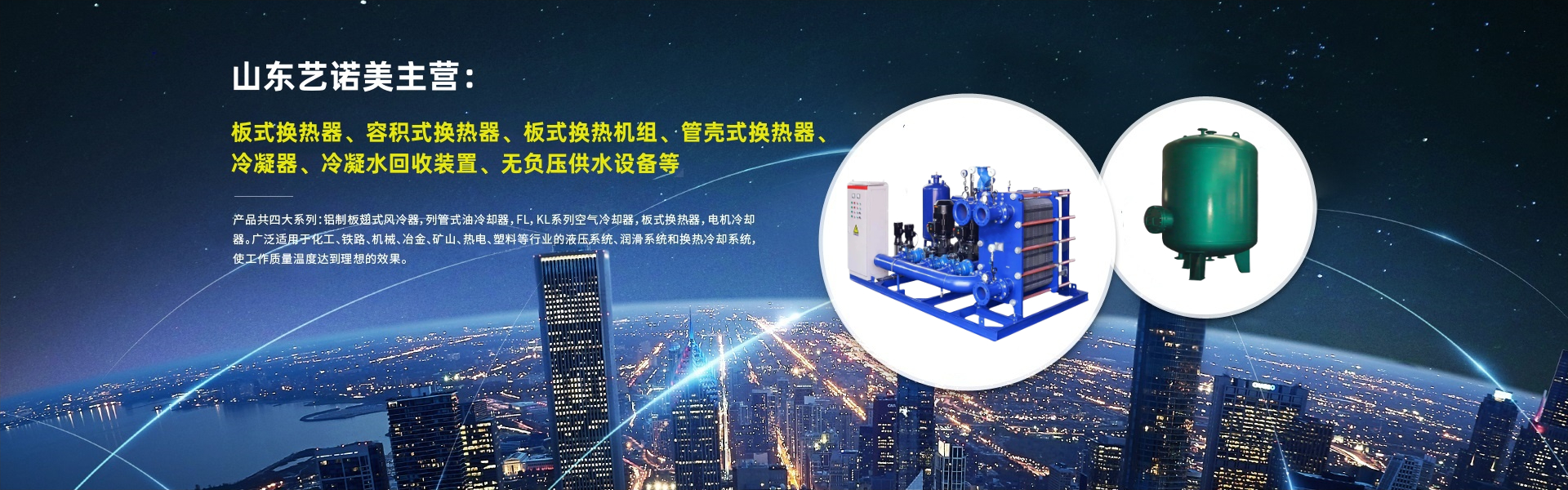


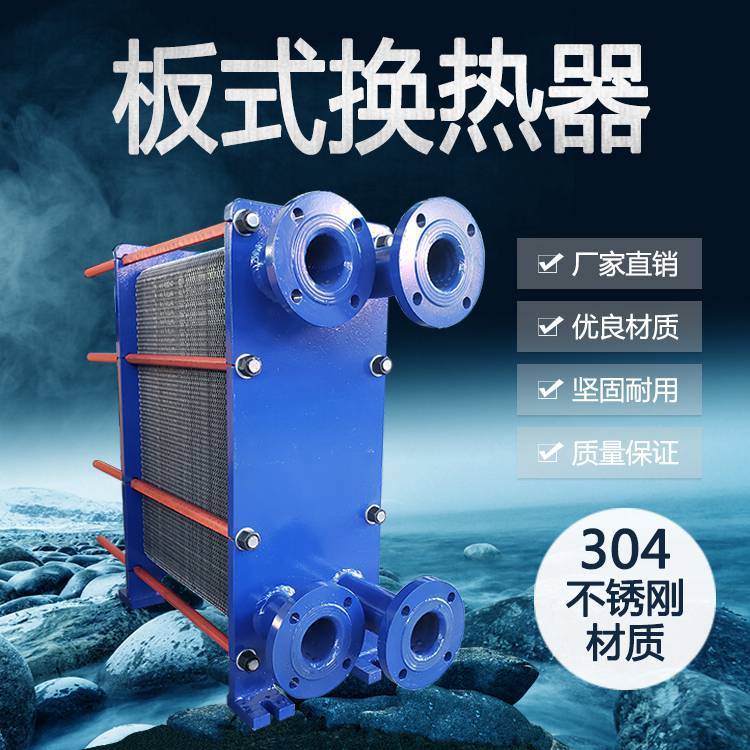


In our daily lives, semi-structured heat exchangers are highly popular, and this popularity is closely related to their inherent characteristics. Let's discuss the advantages they offer during daily use? It is crucial to adhere to the law of energy conservation. The heat side primarily comes from the heat generated by the heating system, but if there is not enough cool side cooling water to dissipate it, the temperature on the heat side cannot be reduced. No matter how large the heat exchanger is, it will be ineffective.
Many customers, when purchasing semi-rectangular heat exchangers, only provide the heat exchange area without specific data such as heat transfer rate, medium flow rate, and inlet and outlet temperatures. As a result, the purchased semi-rectangular heat exchanger, although the correct type and area, is not properly configured for the process, thus failing to achieve the desired effect. Increasing the area does not help in this case.
What are the advantages of semi-rectangular heat exchangers, and where can they be applied in everyday life? In shell-and-tube heat exchangers, two fluids flow separately in the tube side and shell side, generally in cross flow, with a small logarithmic mean temperature difference correction factor. In contrast, semi-rectangular heat exchangers mostly use concurrent or countercurrent flow patterns, with a correction factor typically around 0.95.
The ice storage system with semi-volumetric heat exchangers plays a regulating role in the power grid by flattening peak loads and filling valleys. This is achieved by using chillers to cool down at night, storing the ice in the ice storage tank, and then meeting the next day's cooling needs, reducing the peak load of air conditioning, and effectively saving energy and operation costs.
