
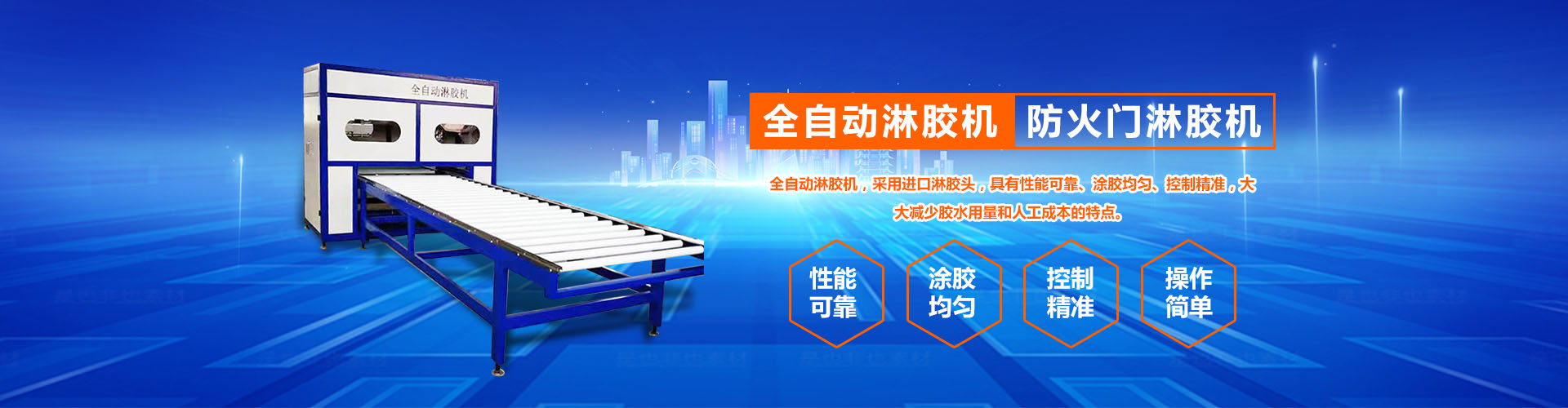

Introduction and Applications of Automated Spraying Equipment An automated spraying machine utilizing programmable logic controllers (PLC), servo controllers, and programmable human-machine interfaces (touchscreens) for control components is an automated spraying equipment.
Features: ●The control panel features a human-machine interface (touch screen) for simple and intuitive operation and parameter settings, allowing for the storage and direct use of memory parameters for various models. ●The main controller utilizes a programmable logic controller (PLC). ●The spray gun robotic arm is driven by servo motors, imported screws, and linear modules, enhancing both spray speed and accuracy. ●Mechanical screws and sliders achieve speeds up to 1000m/s with imported components. ●The spray machine employs a new water filter design. ●The ventilation system uses bottom ventilation with top purification filter blow-off to prevent ink splatter; waste gas emissions are minimized to reduce external pollution. ●The gun is equipped with an imported automatic spray gun, symmetrically mounted for automatic rotation. ●The feeding system incorporates double-diaphragm pumps and mixers, capable of automatically mixing ink and setting ink flow (suited for products like computers, TVs, laptops, monitors, LCD panels, cameras, smartphones, etc., with convex surface coatings being more suitable for plastics, metals, leather, glass, magnesium alloys, and other materials).
In the first phase of bridge construction, where extensive railway and road networks are being built over the bridge surface, it is crucial to apply a large-scale waterproof coating, which is one of the key factors for maintaining the durability of the bridge and its waterproofing on the deck. In current technologies, spray machines are controlled by construction workers, and they are placed on vehicles, with the sprayer operated by individuals inside the vehicle to control the spray machine. This method of spraying primarily has the following drawbacks: first, the labor intensity is low, efficiency is low, and there are many workers, which cannot meet the requirements for large-scale construction work; second, the quality of the paint is unstable, with poor uniformity, leading to paint waste; and low quality, with the spray quality entirely controlled by manual experience. An automatic spraying equipment has been developed to address the issues of low labor intensity, high efficiency, large number of samples, unstable coating quality, poor uniformity, and paint waste associated with the existing spray machine control.
