



 通过中商114认证
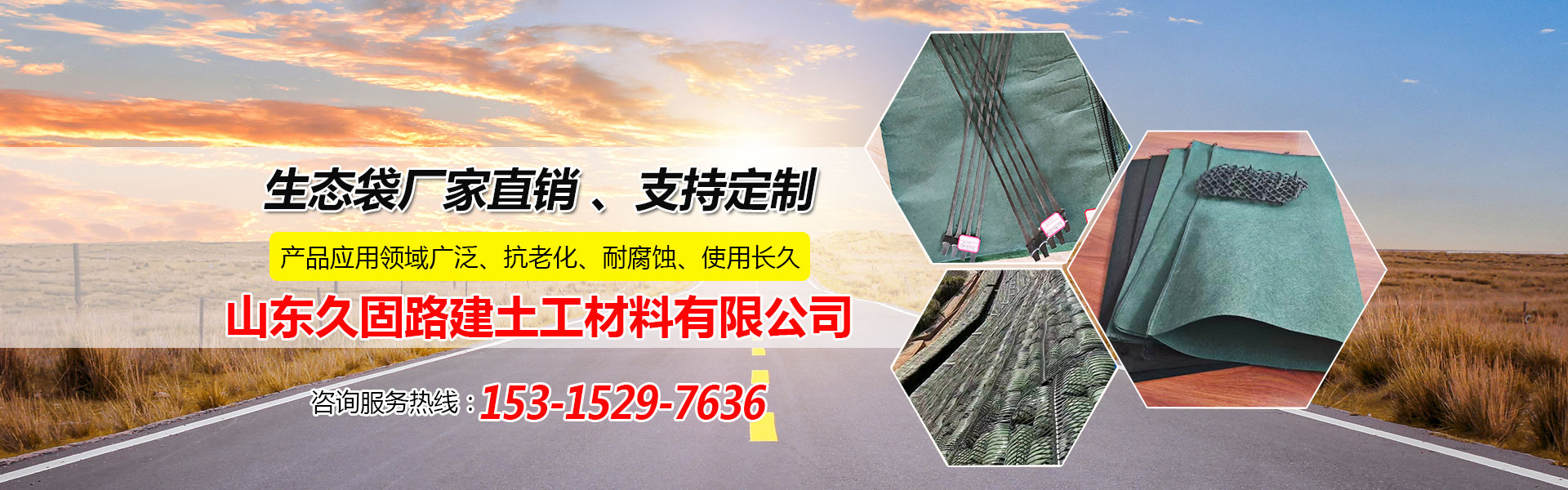
What are Eco-Bags? How to Choose Eco-Bags? Eco-bags, which greatly assist in waste management, have gained significant attention due to their ability to degrade quickly. The main characteristic of eco-bags is their composition, as the majority of materials used in their production are biodegradable. These materials directly impact the usability of eco-bags, offering a better market presence and the potential to reduce costs. Therefore, the production of eco-bags is highly beneficial for environmental protection.
The foundation soil is compacted to 95% density, with no significant settlement or deformation. When using concrete or stone as hard foundations, stack ecological bags on the interface. Secure the first row of ecological bags with anchor bolts or钉the three-dimensional drainage joint clips (single-sided nail removed) onto the hard interface with stainless steel nails. Alternatively, cement mortar can be used in conjunction with the fixing.
可选on-site filling construction. Remove waste materials, bark, roots, grass shavings, and sharp objects. When filling with clay, break the soil and choose fill material with optimal moisture content (forms a ball in hand, breaks apart on impact); for larger bags, shake the fill material tightly after filling 1/3 of the bag, ensuring it is as compact as possible. The tie should be sturdy, and a firm pull should confirm its strength.
When sealing the burlap bags, it is necessary to fill the soil inside completely, gently tap it to compact it before tying, leaving a bag opening of 5 to 7 cm after sealing. Avoid not filling the bag to capacity; do not tie the bag before properly arranging the opening. Since the sealed bags cannot be easily opened after tying, it may simply result in waste and affect the overall quality.
