


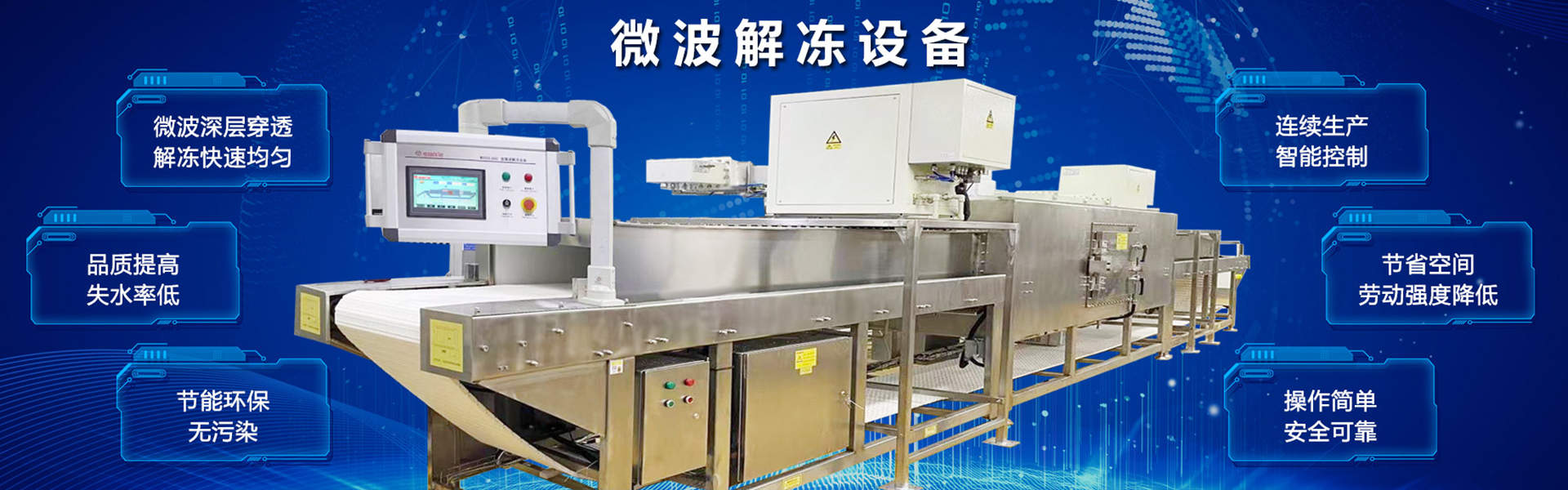

Frozen food can inhibit the decomposition of most microorganisms to prevent food spoilage, while also preventing internal physical and chemical changes, and achieving long-term storage. Most frozen and thawed foods must be thawed before processing. Freezing the product and thawing it is a consistent process in terms of time. In industrial production, selecting the appropriate thawing method and employing different thawing materials can not only combine thawing rates and the quality of thawed food but also integrate some factors such as production, equipment, and work environment.
Microwave Defrosting Equipment: Defrosting Methods
Microwave heating is converted into thermal energy, utilizing the molecular thermal energy of the electrodes within the material to simultaneously heat components within it. Studies reveal that the microwave electromagnetic field produces two effects: 1) Microwave energy is converted into thermal energy of the material to heat it.
Interactions with bioactive components (such as proteins and enzymes) or mixtures, thereby inhibiting or stimulating their biological activity (the frequency and intensity of the electromagnetic field, as well as the material's inactivation threshold, are fixed) through thawing methods.
Advantages of the Continuous Leg Microwave Antifreeze Equipment:
The leg of lamb defrosting device is microwave rapid.
Microwaves generated by the continuous microwave defrosting equipment can also heat samples within the surface. Many polar molecular compounds like water, proteins, and glycogen in the leg have a high absorption capacity, thus allowing the continuous microwave defrosting equipment for lamb legs to defrost quickly.
Extensive thawing times, particularly in large ice crystal venous residential areas, can easily lead to protein denaturation, starch aging, lipid oxidation, juice loss, and accelerated recurrence of microorganisms, all of which impact the quality of lamb legs. Additionally, overlong thawing times on the other hand can extend product processing times, decrease production efficiency, and lower factory utilization. The benefits of continuous microwave freezing equipment are protective.
2. High-Grade Material Restores Sugar Content in Continuous Microwave Defrosting Equipment for Lamb Chops
The non-thermal effects of microwave defrosting for lamb can also promote sugar leaching to address glucose, thus making the microwave defrosting method highly efficient. On the other hand, due to the longer defrosting time, the air defrosting method allows bacteria and enzymes to degrade or convert some substances in the sample, leading to a reduction in reducing content. Additionally, using frozen extraction for more air juice results in significant sugar loss.
High-powered microwave defroster for leather-legged lamb legs.
Extended thawing of meat air, combined with the easy reactivation of bacteria, promotes protein breakdown in the legs, such as ammonia and trimethylamine, due to bacterial and enzymatic activity during the thawing process. Compared to this, the lamb chop continuous microwave thawing equipment has a shorter thawing time and offers some bactericidal effects, promoting the loss of enzymes and thus reducing the rate of protein breakdown, resulting in higher quality lamb legs. Considering thawing time and meat quality, selecting the continuous microwave thawing equipment for lamb leg thawing is more suitable, and it also meets the demands of modern production lines. The thawing process and equipment selection in actual production hold significant guidance value.
Microwave technology is becoming a future trend in the food industry, with microwave drying equipment also receiving positive attention. Due to the unique advantages of microwave food processing technology, it is increasingly attracting worldwide attention and even highlights the lamb continuous microwave defrosting equipment, which holds promising prospects compared to traditional defrosting equipment.
