


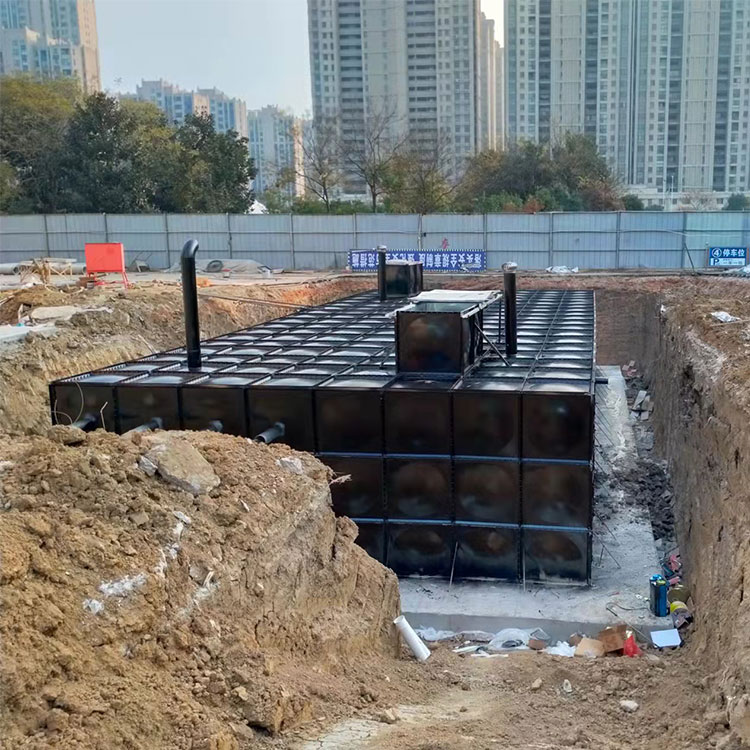
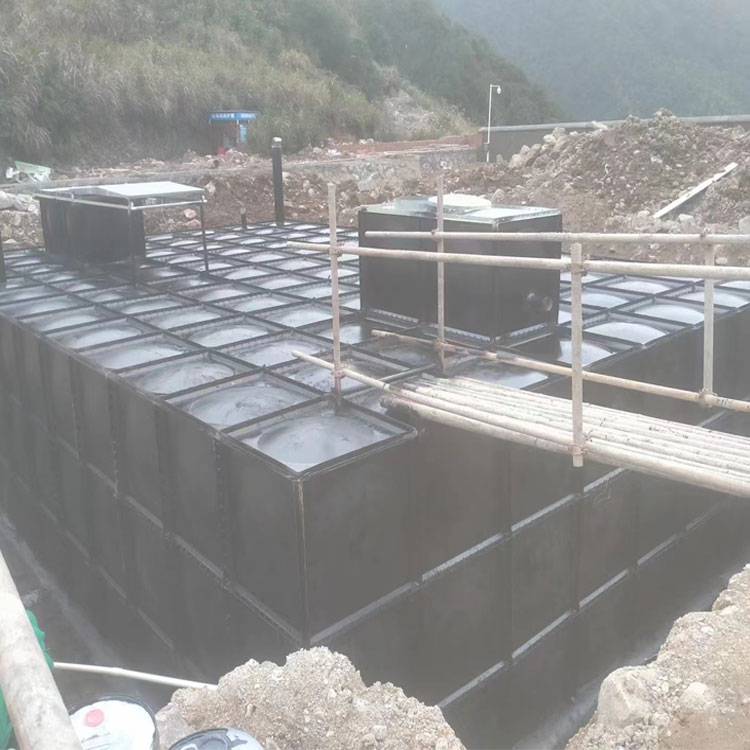
Detailed Description:

Submersible pump package
Now, let me introduce to you the Runping buried ground.Integrated pump boxWhat sets our water tank apart from the standard ones:
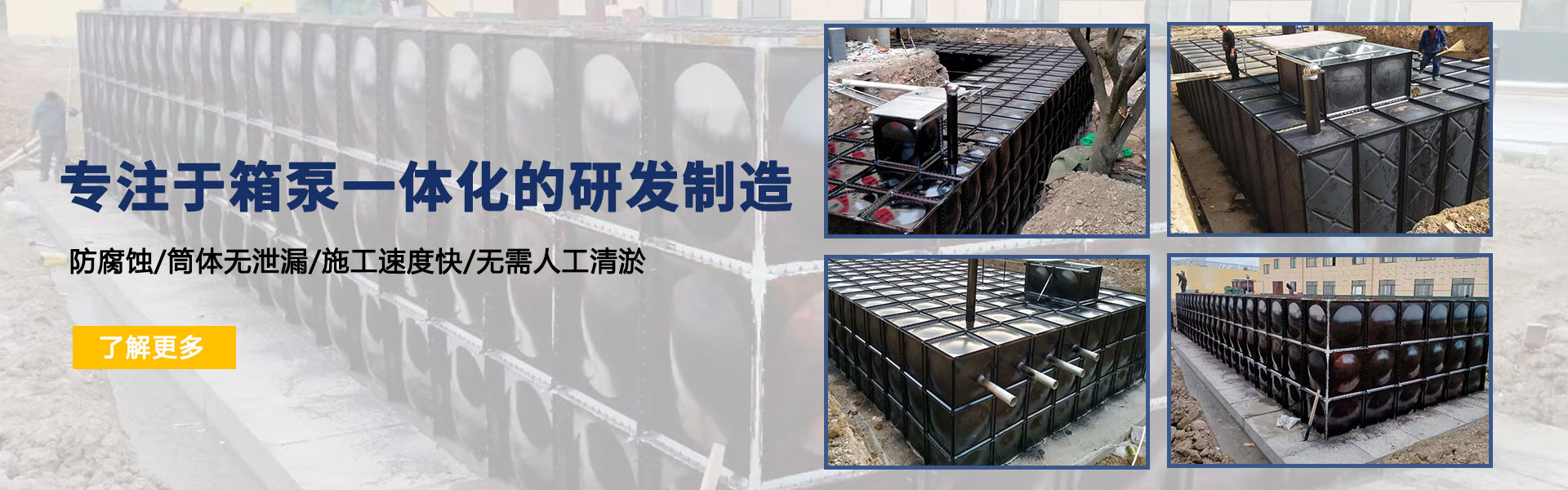
1. Standard water tanks are welded, while the integrated buried water tank pumps are bolted together. The integrated water tanks for buried water tank pumps come in a total of 3 types:
Galvanized steel plate, molded into shape, all the die-cast blocks of the stamping plates are bolted together.
(2) SUS304 stainless steel material, shaped, the forming blocks of each stamping panel are connected by bolts.
(3) Composed of 3mm galvanized steel sheet and 0.4mm stainless steel composite, these materials vary greatly in price.
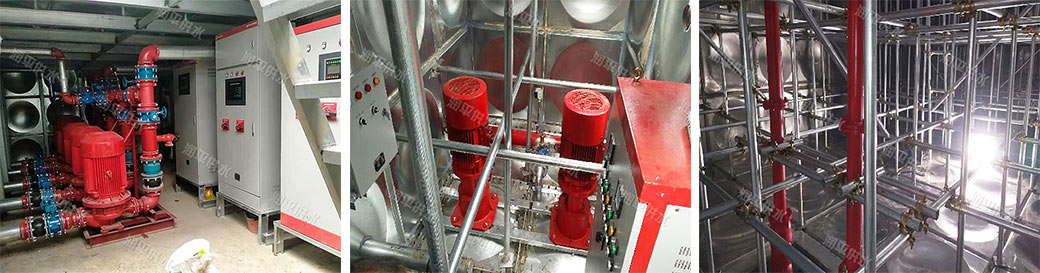
Submersible pump and tank integrated water tankWith ordinaryStainless Steel Water TankConstruction plans vary, and I will introduce them to you below.Buried pump boxIntegrated water tank construction plan
To ensureSubmersible pump and tank integrated systemThe water tank meets high design standards during production. Our company operates in accordance with the corporate standards issued by the Jiangsu Provincial Bureau of Technical Supervision, with the code Q/320925YLP001-2013.
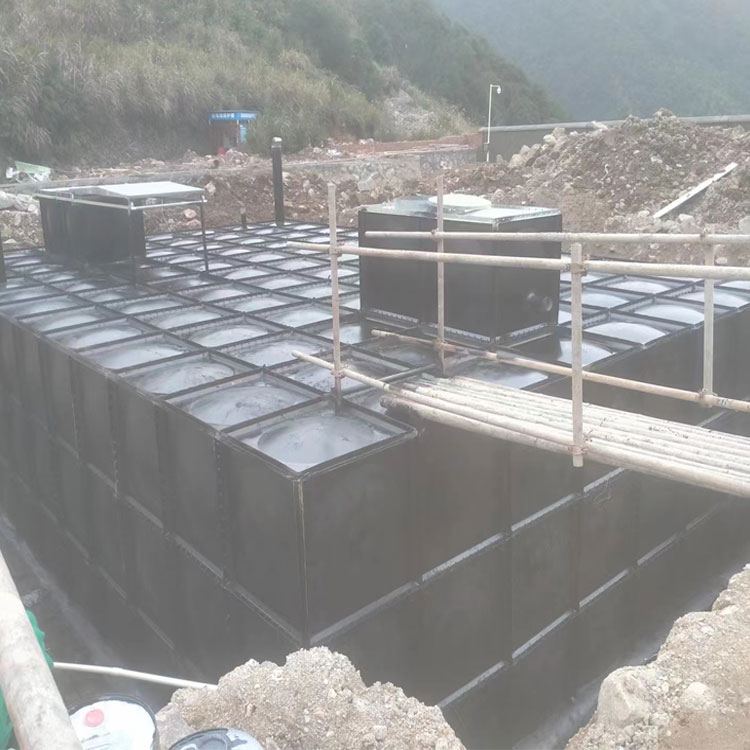
Tank specifications: 25m x 18m x 2.5m = 1125m³
Sheet specifications: Top panel 2.0mm, Side panels 3.0mm/3.0mm/3.0mm, Bottom panel 3.0mm
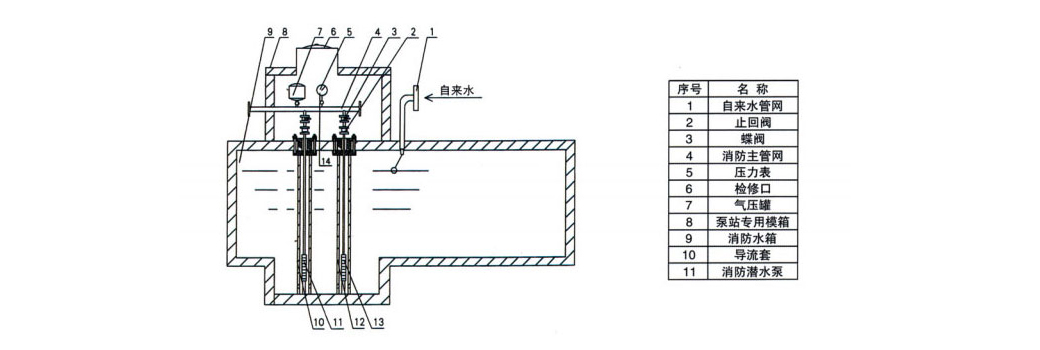
Anti-float buried water tank construction procedure:
Bottom panel cutting → Bottom panel installation → Bottom panel connection → Bottom panel sealing inspection → Side panel cutting → Side panel connection → Side panel connection sealing inspection → Top panel cutting → Top panel connection → Top panel installation
1. Based on the design requirements for the water tank specifications and models, we use lubricated assembly-type modular tank panels within the factory. First, we mark the panels, then send them to the cutting machine to be cut into 106×106cm pieces. After cutting, we trim the four corners to 90-degree angles, and then send them to the hydraulic press to mold them into 100×100cm and 50×50cm embossed and concave panels, with all flanges being 90 degrees.
2. Upon arrival at the site, first assemble the molding plates, using bolt and seal technology for sealing connections. Bolt the plates together according to the tank's dimensions (length x width x height), or divide them into several sections for bolted connections based on the tank's length and height. The top layer of the water tank is connected using bolts.
3. After assembling the panels, prepare for the bottom assembly connection. When bolting the bottom panels together, the manufacturer of the buried type integrated pump should first seal the bottom panel dimensions. Arrange the bottom plate on the bottom panel for sealing connection. After the bottom plate is connected, conduct oil leakage and visual inspections of the sealing section to prevent loose seals and other issues.
4. After the base panel is connected, proceed with the connection of the wall panel to the base panel. First, place the code on one side of the base panel using bolts. After placing the codes on all four sides, adjust the flanges for connection. The general relative angle of the dimensions should be below 2mm, ensuring straight lines with the corners requiring a 90-degree connection between the bottom and the wall.
5. The bottom of the water tank is sealed to the wall with bolts and gaskets, followed by connecting the top to the wall, ensuring the edges form a basically level straight line. According to customer specifications, the manhole of the water tank is connected at the designated location, usually installed near the float ball of the inlet.
6. After the water tank connection is sealed, proceed to open the inlet, outlet, overflow, drain, fire hydrant, and install the ladder near the manhole.
