
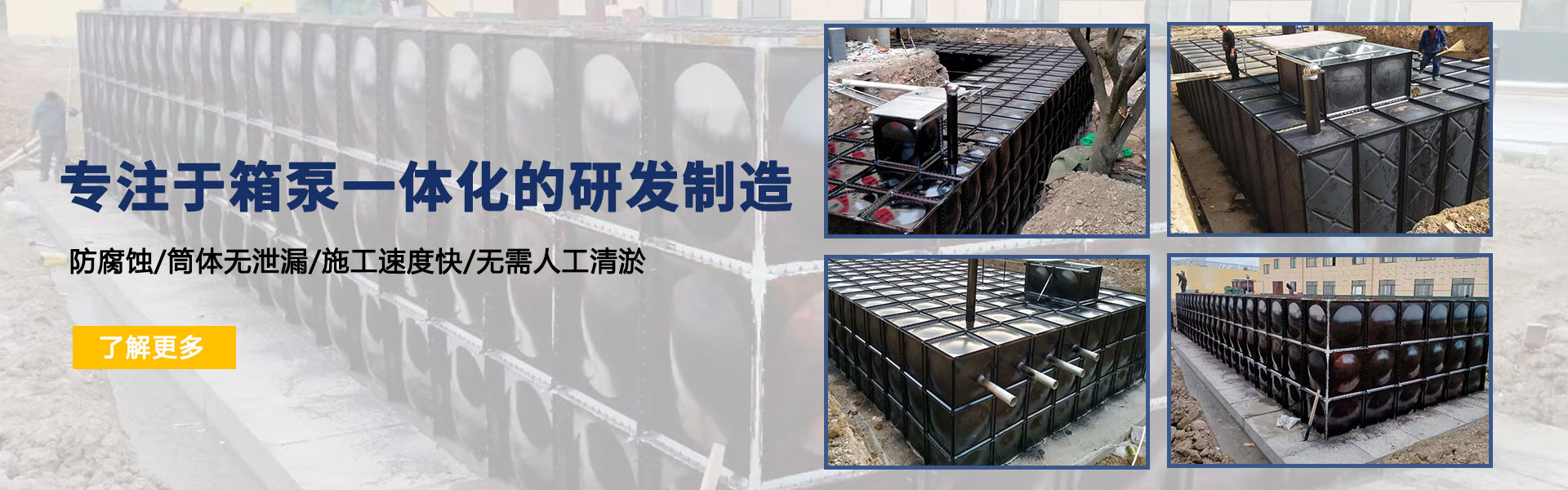

Stainless steel fire-resistant water tanks are gaining increasing recognition from customers. The primary reason is that they are made of unit rectangular compression plates, optimally combined and easily assembled, using minimal materials. By utilizing material deformation techniques, they achieve enhanced strength. The streamlined and three-dimensional shape of the finished tank is particularly appealing. These stainless steel fire-resistant water tanks are also widely used in hotels, apartments, office buildings, leisure facilities, and more for storage of water for domestic and fire protection purposes, making them extremely versatile. Now, what is the working principle of stainless steel fire-resistant water tanks?
Upon the initial operation of the stainless steel firewater storage tank equipment, the pressure protection value is first set according to the local potable water network inlet pressure limit. The potable water enters the pump group inlet and the tank, with the air in the tank automatically discharged through the vent. The equipment is powered on and placed in automatic operation mode. The microcomputer control system continuously monitors the potable water network inlet pressure and the user network supply pressure.
During off-peak water usage times, when the water supply from the public water network is sufficient and the water pressure fully meets the users' pipeline pressure requirements, the microcomputer control system of the stainless steel firewater tank allows the pump to enter sleep mode or switch to the pressure maintenance system to maintain pressure. Users' water supply is directly provided through bypass pipes adjacent to the equipment, ensuring energy efficiency. √
During peak water usage periods, when the municipal water supply network has sufficient flow but insufficient pressure, the microcomputer control system adjusts the frequency of the pump's soft start based on the incoming water pressure at the pump intake and the required water usage by the customers. It applies incremental pressure to compensate for any deficit, ensuring that the existing pressure in the water supply network is maximized while maintaining a constant pressure for the customers' needs.
When the pressure of the public water supply network drops to the pre-set protection pressure value, the microcomputer control system, through the intelligent superimposed protection device, ensures that the water pressure of the public water supply network will not drop further, the pressure of the bottom-level direct supply network is not damaged, and the water volume for pressurized users is still sufficient.
When the water supply from the public water supply network is insufficient and the pressure is low, the microcomputer control system and the intelligent superimposed protection device work in coordination. The intelligent inlet device connected to the inlet pipe of the pump in the water tank automatically opens, drawing water from the tank to supply water to the users with variable frequency, ensuring that the equipment does not create a negative pressure on the public water supply network while fully guaranteeing the normal water usage of the users.
When the power system shuts down, the natural water supply of the water pipeline network is restored; upon power restoration, it automatically wakes up.
When the water supply to the public water system is interrupted and the water level in the reservoir drops to a certain level, the system automatically shuts down. Upon the resumption of water supply, the system returns to normal operation.
