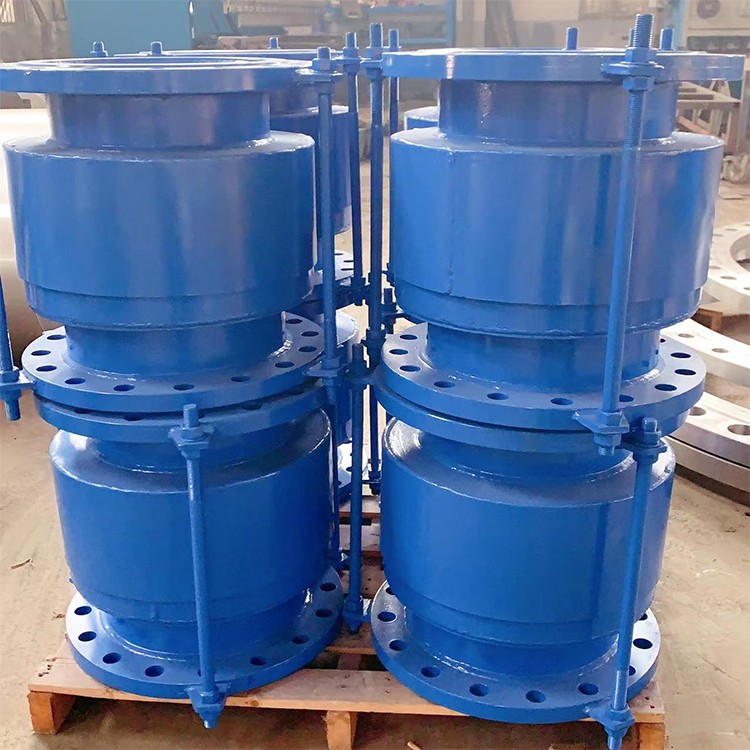



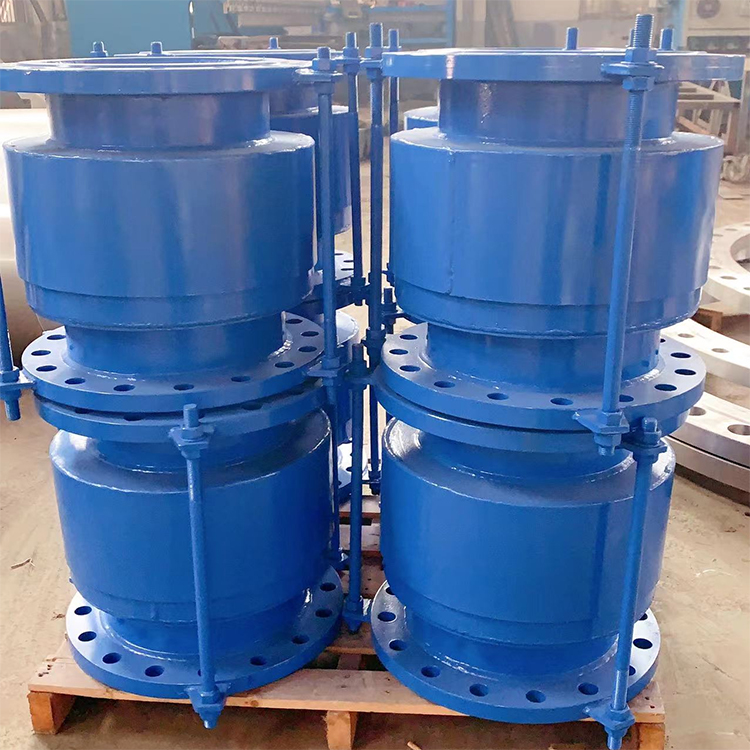
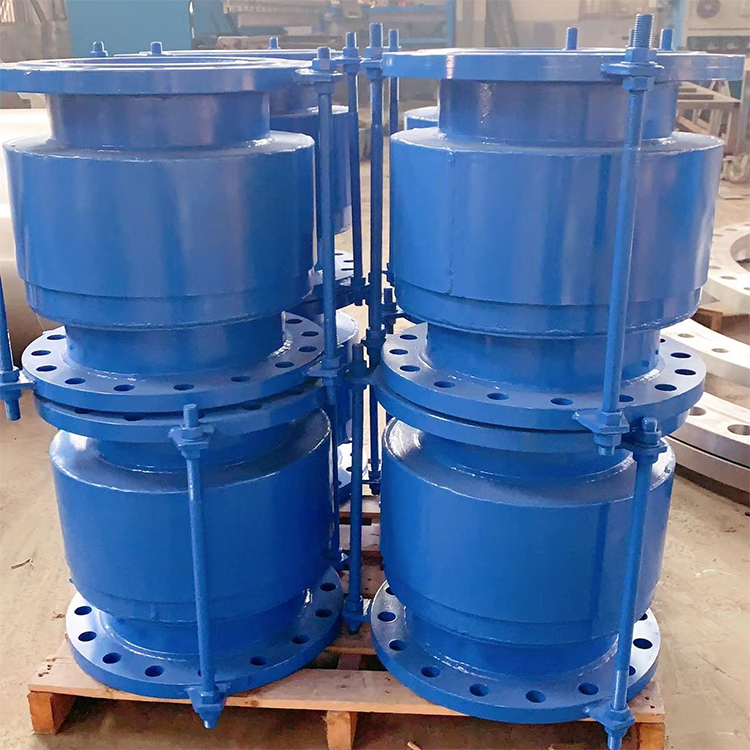
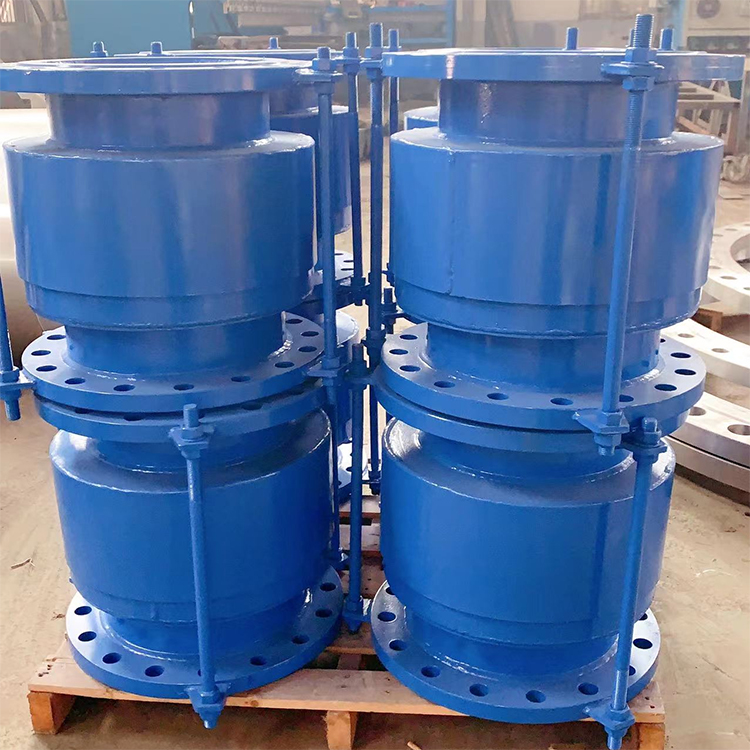
The Application of Bellows Expansion Joints: The bending force balanced bellows expansion joint is used for the connection between equipment, serving to compensate for the thermal expansion of the pipeline between the two equipment, reducing the force exerted on the equipment due to misalignment, and facilitating equipment operation. The use of the bending force balanced bellows expansion joint ensures that the equipment is not subjected to blind plate forces caused by internal pressure, improving the equipment's stress condition, and allowing for simple equipment fixation. Bellows expansion joints are used as flexible connecting pipes for pumps on the pump's inlet and outlet pipelines. The general-purpose expansion joints installed on the pump's inlet and outlet pipelines compensate for pipeline thermal expansion, reduce the thrust on the pump caused by pipeline thermal expansion, or absorb...
Relevant Introduction
Application of Bellows Expansion Joints:
The curved tube force balanced bellows expansion joint is used for connections between equipment, serving to compensate for thermal expansion in the pipeline between the two equipment, reducing the force exerted by equipment misalignment, and facilitating equipment operation. The selection of a curved tube force balanced bellows expansion joint allows the equipment to be unaffected by the blind plate force generated by internal pressure, improving the equipment's load condition, and allows for simplified equipment mounting. The bellows expansion joint, as a flexible connection for pumps, is used in the inlet and outlet pipelines of pumps. A general-purpose expansion joint is installed in the inlet and outlet pipeline of the pump to compensate for pipeline thermal expansion, reduce the thrust caused by pipeline thermal expansion on the pump, or absorb vibrations generated during pump operation. Although the constraints are quite complex, any complex piping system can be divided into several simpler individual pipes, such as "Z" type and "π" type pipe sections, by using several fixed supports at different locations. Each pipe section's deformation and compensation amount should be separately acknowledged. Since there are many types of compensators, selecting the correct type is very important. Therefore, during the overall planning of the piping system, it is essential to fully consider the pipeline layout and the planning of the support system (including fixed pipe supports, guide sliding pipe supports, etc.), as well as the design and equipment of compensators, to ensure a safe, reasonable, applicable, and economic combination. The bellows compensator, centered around the bellows, is a flexible element that provides compensation in three directions: axial, lateral, and angular. The axial type compensator is designed to reduce the self-excited phenomenon of the medium. As there is no inner sleeve pipe inside the product, it greatly restricts the radial compensation capability, so it is generally used only to absorb or compensate for the axial displacement of the pipeline (if a small amount of radial displacement is required in the piping system, it can be specified at the time of ordering). The lateral displacement compensator (large bolt) primarily absorbs lateral displacement perpendicular to the compensator axis. The small bolt lateral displacement compensator is suitable for absorbing lateral displacement and can also absorb a combination of axial, angular, and any three-directional displacements: the hinge compensator (also known as angular compensator). It is used in pairs or triples of compensators to absorb lateral deformation within a single plane. The universal hinge (angular) compensator, consisting of two or three compensators, can absorb deformation in three-dimensional directions.