
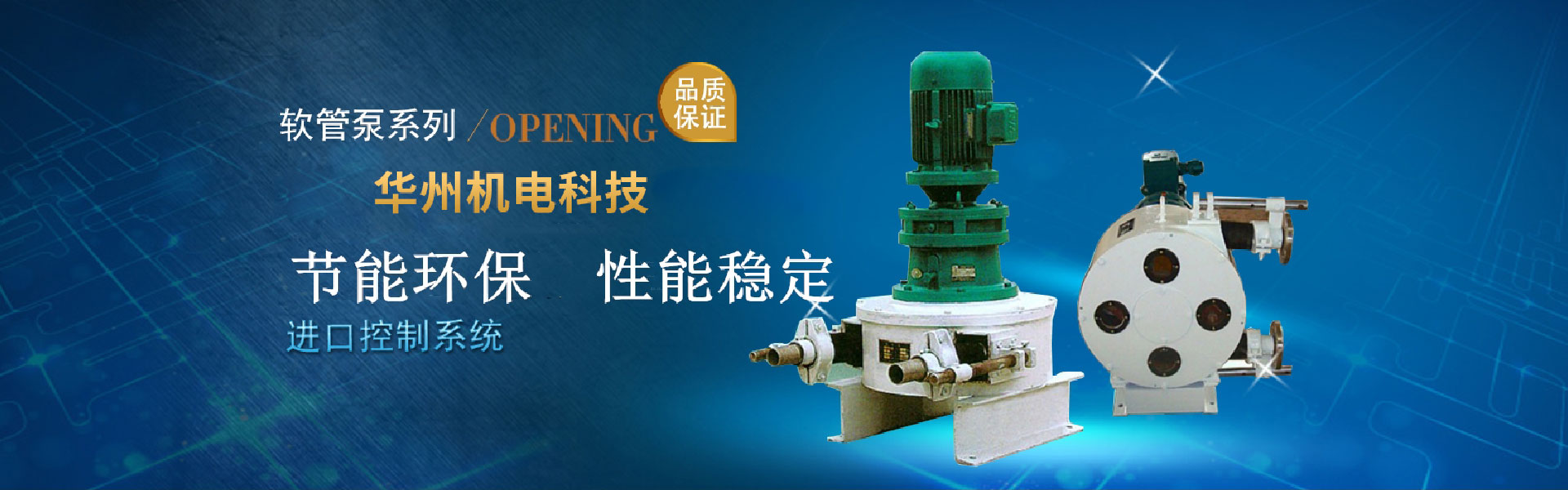
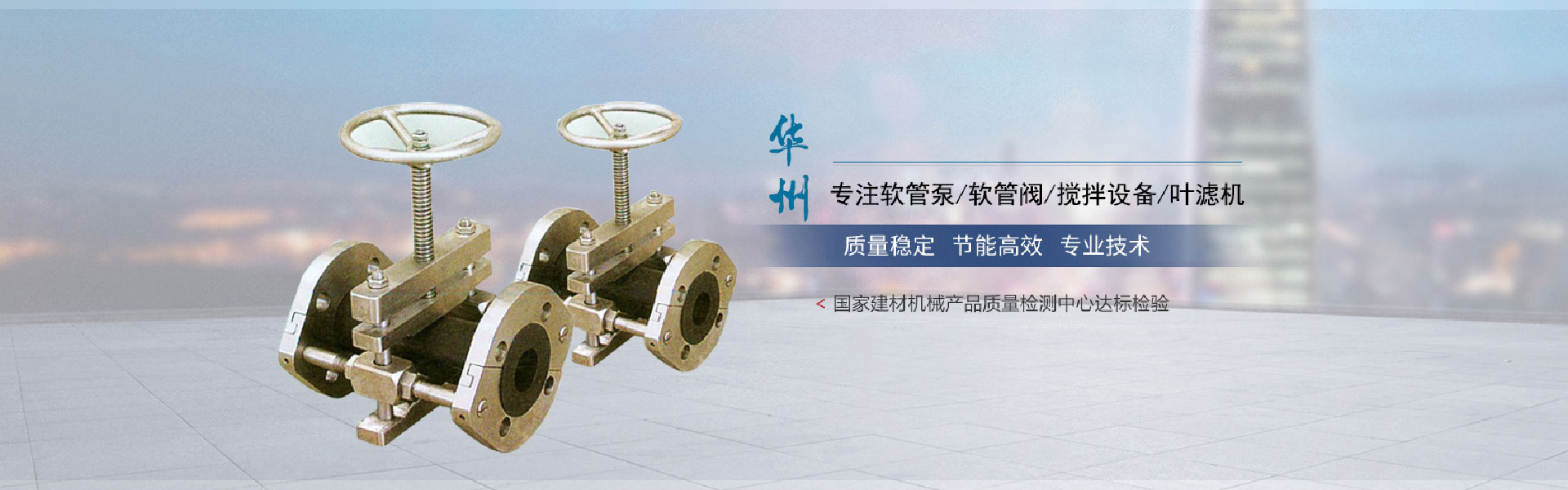

Flexible hose pumps have been applied in the industrial field for many years.The original design of JXHIN Hose Pumps can be traced back over half a century. Early on, these pumps were used by firefighters in Connecticut, USA, to transport lime slurry.
Hose pumps belong to the category of peristaltic pumps. Peristaltic pumps are a type of positive displacement rotor pump, named for their operation principle, which is similar to the digestive tract's peristaltic method of transporting gas, solid, and liquid three-phase media. There is no strict distinction between hose pumps and peristaltic pumps. Generally speaking, peristaltic pumps refer to low-flow pumps (in milliliters.../Peristaltic pumps are commonly used in the sanitation and laboratory measurement fields due to their low discharge pressure (not exceeding 3 kg/cm2). On the other hand, hose pumps are suitable for industrial applications requiring high flow rates (up to 80 cubic meters per hour) and high output pressure (up to 16 kg/cm2) for large-scale transportation and measurement.
The primary focus for both designers and users of hose pumps is their ability to handle highly abrasive media. They are valveless and sealless, and come into direct contact with the medium.No content provided for translation.The component is the inner cavity of the rubber hose, with the rotor of the compressed hose completely independent of the medium.
Furthermore, the hose pump boasts numerous unique features: it has superior self-priming capability compared to other types of pumps, nearly able to create a perfect vacuum for liquid suction; it can handle gaseous and foamy liquids without airlock; it is also proficient in transporting high-viscosity and shear-sensitive media; it delivers a fixed discharge volume per revolution, unrelated to the outlet pressure, making it a natural choice as a metering pump.
Multiple advantages make SoftKP tube pumps are increasingly widely used in industries such as gold refining, non-ferrous metal refining, chemicals, mining, food processing, brewing, ceramics, and water treatment.
A high-quality hose pump has a lifespan ofFrom 7 to 10 years, the major challenge lies in the hoses of the hose pump, which is the core component of the pump. Its lifespan directly affects the operational costs of the pump. It can be said that the design of the hose pump revolves around maximizing the lifespan of the hoses.
Some people intuitively believe that the abrasiveness of the medium determines the lifespan of hoses, which is a misconception. Abrasive media do indeed wear down the inner wall of hoses, thinning the known wall thickness and causing internal leakage or backflow and a decrease in flow due to poor compression; further internal leakage accelerates the wear rate of the inner wall; however, high-quality hose pumps should be equipped with hose compression adjustment devices, which need to be continuously adjusted during the pump's operation to prevent internal leakage and a decrease in flow. Regardless of the compatibility between the conveying medium and the hose material, the lifespan of hoses conveying both abrasive and non-abrasive fluids is the same. In reality, besides the type of rubber and the manufacturing quality of the hose itself, the primary factor determining the lifespan of a hose is the number of times it is compressed.NextThe factors are the method, force, and the resulting frictional heat of compressing the flexible hose. In other words, the failure of the hose is due to the cumulative compression次数 and fatigue aging caused by the frictional heat. A good way to maximize the hose's lifespan and extend the downtime interval is to reduce the number of times the hose is compressed, and to use a compression method that causes minimal damage to the hose.AccurateThe compression intensity.
