
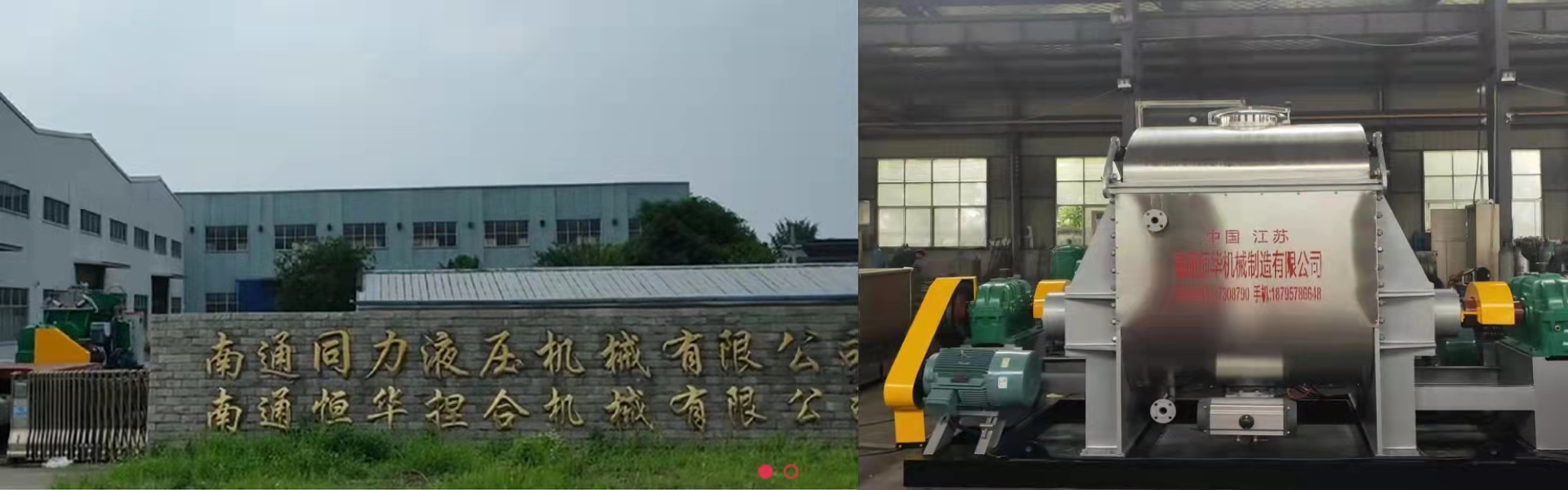
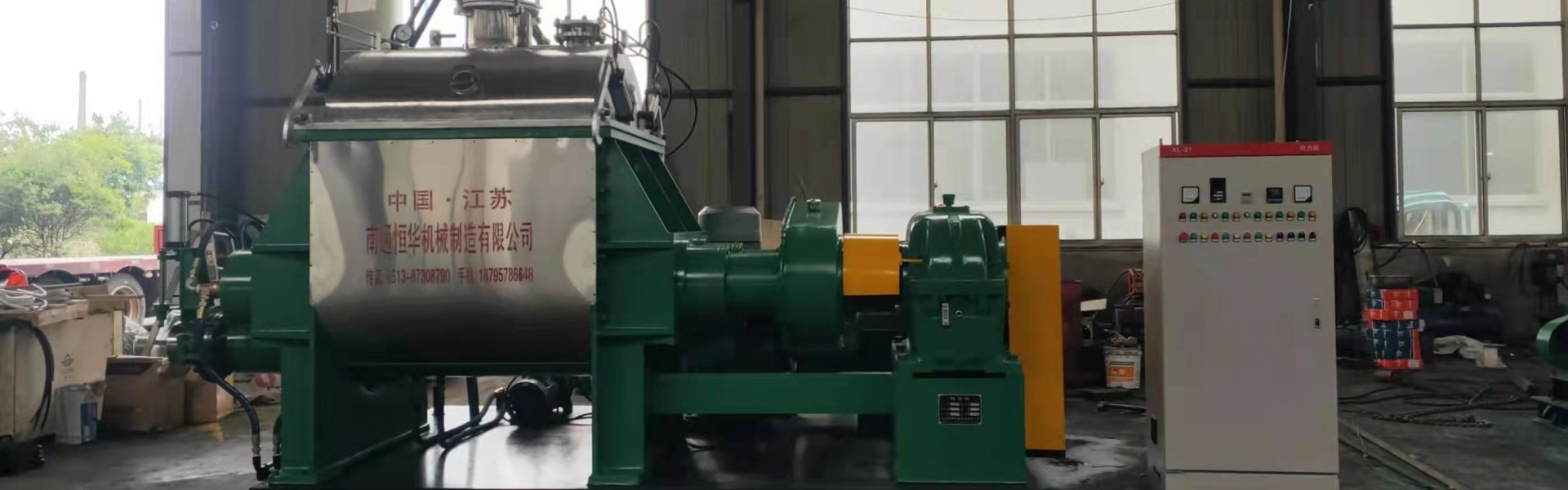
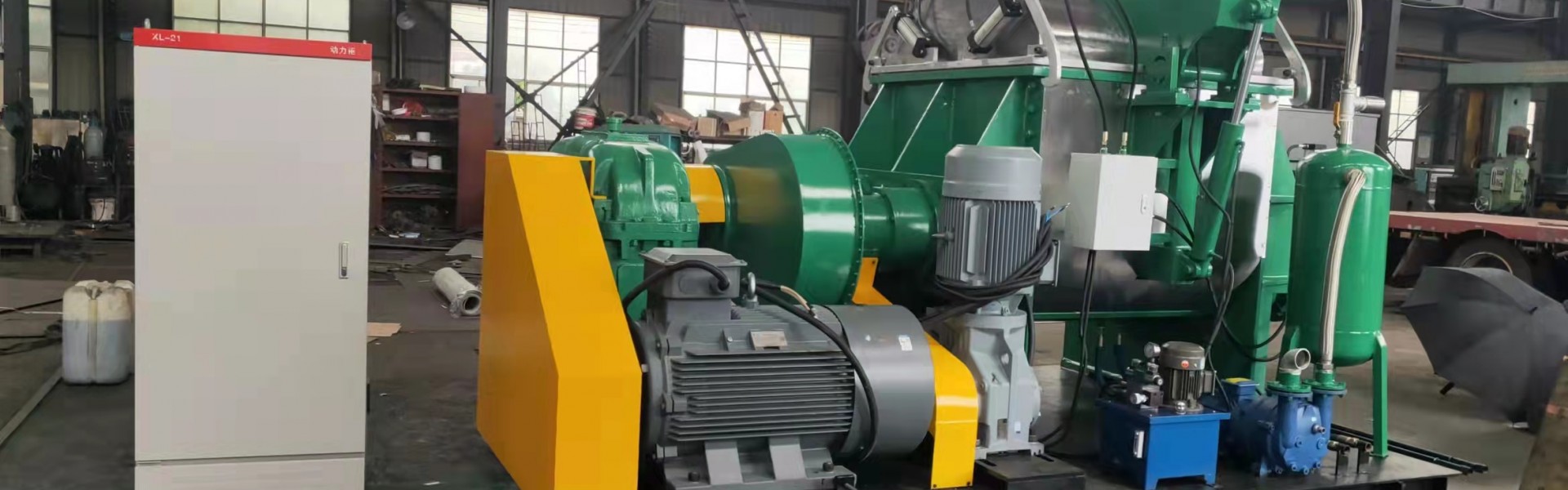

The kneader consists of a pair of blades that work together and rotate (usually in the shape of...).ZThe equipment, which generates intense shearing action, enabling semi-dry or rubbery thin plastic slurries to rapidly react and achieve uniform mixing and blending, is an ideal device for mixing, kneading, crushing, dispersing, and re-aggregating various high-viscosity elastoplastic materials. It boasts the advantages of even mixing, no dead corners, and high kneading efficiency. It is widely used in industries such as high-viscosity sealants, silicone rubber, neutral and acidic glass glue, chewing gum, bubble gum, pulp, cellulose, and also in batteries, inks, pigments, dyes, resins, plastics, rubber, and cosmetics.
The kneading machine is mainly composed of six major parts: kneading section, base section, hydraulic system, transmission system, vacuum system, and electrical control system. The kneading section consists of cylinder bodies, paddle shafts, wall plates, cylinder covers, etc. The hydraulic system is controlled by one hydraulic station to govern two small cylinders and two large cylinders, completing the functions of opening and closing the large cover and reversing the mixing cylinder. The electrical control system features both manual and automatic control options, allowing users to freely choose and request, ensuring convenient and reliable operation. The transmission system is composed of an electric motor, a reducer, and gears, which are matched with the motor according to the kneading machine model. During the transmission process, the motor's synchronous speed can be transmitted through a flexible coupling to the reducer, where it drives the output device to achieve a regular speed, or the speed can be adjusted using a variable-frequency inverter.

