
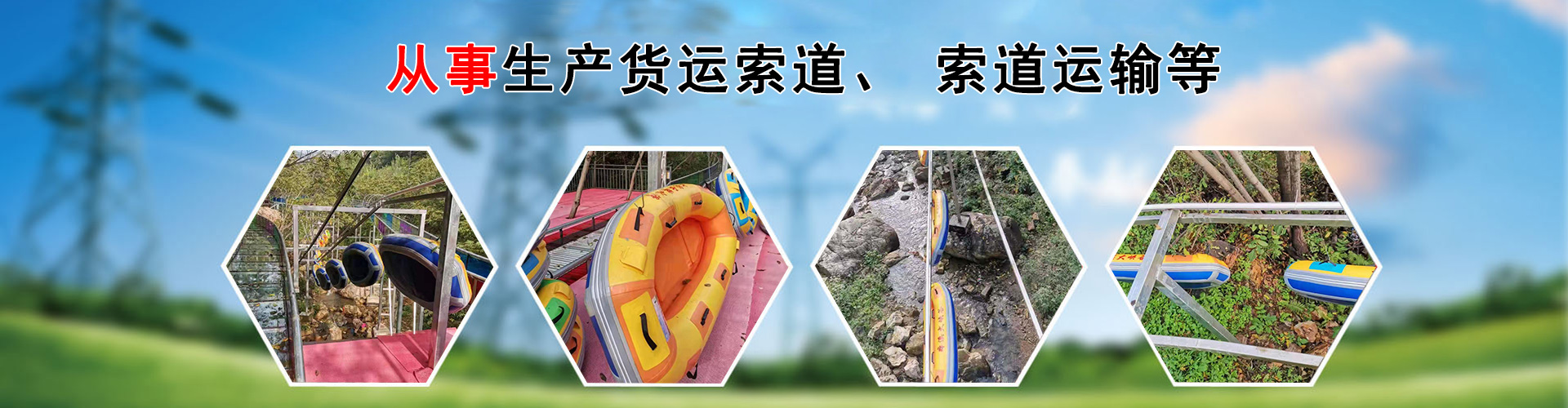
With technological advancements, many labor-saving machines have been invented to assist people in their work and daily lives. A conveyor belt is a mechanized or semi-mechanized transportation channel that primarily relies on cables for support and transmission under the influence of a uniform gravitational field. It can be categorized into four types: cargo cableways, passenger cableways, forestry cableways, and cable cranes. The supporting structure is an essential part of the cableway equipment, serving as the support for the line equipment to bear the steel wire ropes and maintain them and the transport tools in their normal operating positions. The safety of the supporting structure is crucial for the safe operation of the cableway.
One: Prior to daily operations, staff inspect the along-line supports in the maintenance carriage, focusing on whether the steel cables are centered in the sheave groove of the rope assembly, listening for any unusual noises in the sheave operation, and checking if surrounding vegetation affects the carriage's clearances. During the rainy season, additional observations are made for potential mudslides or landslides affecting the support foundations. During major holidays, staff conduct two inspections per day on the supports, closely monitoring the operation of the rope assemblies. Daily inspection records are kept meticulously.
We conduct a detailed walk-through inspection of the support brackets every week, checking for signs of water accumulation, immersion, dampness, or rust on the foot bolts. We closely observe the steel cables for any deviation, and inspect the sheave wheel linings for lateral wear, small dents, cracks, hardening, or carbonization. We measure the depth of the wheel groove with a caliper to ensure it is normal, carefully listen for any abnormal sounds in the sheave bearing operation, and observe for any axial or radial movement in the sheave. We check that the face of the tensioning and supporting sheave is on the same vertical plane. We inspect the welds on steel components such as platforms, guardrails, and ladders for cracks and document the inspection results.
Quarterly functional testing of the U-shaped needles is conducted, measuring the span distance of the brackets and maintaining a tracking record of the span. Monitor the trend of span changes and adjust and handle any brackets with abnormal variations promptly.
Every six months, tighten all bolts on the bracket and make position markings for easy observation of any loosening during routine staff inspections. Inspect all bracket components and welds for deformation, cracks, and rust, and apply rust removal and prevention treatment to rusty parts. Check the bracket foundation for cracks, settlement, and other hazards. Apply lubricant to the wire rope, bracket beam frame, suspension, and other components to evenly distribute grease around the shafts, sleeves, and oil-free bushes, reducing wear.
Every two years, we invite qualified professional measurement institutions to conduct re-measurement of the station house and center points of the support structures. After long-term load operation, the positions of the station house and center points of the support structures may shift, posing a risk to the safety of the wire ropes and passenger cabins. Therefore, great attention must be paid to the re-measurement work. After the cableway was renovated eight years ago, the frequency of re-measurement was increased from once every four years to once every two years. In 2012, based on the measurement results, adjustments were made to the foundations of the No. 4 and No. 7 support structures, ensuring their safe operation.
Every 6 years, dismantle and clean the rope drum assembly, inspect the crossbeam frame and suspension (including suspension bolts) for cracks, deformation, wear, and rust. Perform rust removal, anti-rust treatment, and replacement as necessary. Regardless of the amount of wear, replace the sleeve and bushing. Dismantle and inspect to replace these critical components to ensure the normal operation of the rope drum assembly. Additionally, invite a professional testing department to perform magnetic particle inspection on the shaft components. Use components that pass the inspection and meet requirements for size, wear, scratches, dings, and rust by rotating them 180° (can only be rotated once; new parts must be replaced during the next maintenance), and replace any components with issues in the inspection.
What are the working principles and advantages/disadvantages of cableways?
The cableway is widely used in daily life, as many high mountains are suitable for cargo transportation via cableways. Passenger cableways refer to "cableways" used for transporting passengers. They are categorized into two types: reciprocating cableways and circular cableways. The former has one or two carrying cabins suspended from the support cables on both sides of the route, which are pulled back and forth along the route by a single or double traction cable. The latter has several carrying cabins or swing chairs suspended at equal intervals from the steel cables on both sides of the route, powered by a motor to drive the cables in a circular motion. Below, we will introduce the working principle and advantages and disadvantages of cableways.
One, the working principle of the cableway
Steel cables are wrapped around drive wheels and turnaround wheels at both ends (upper and lower stations) of the cableway. The cables between the two stations are suspended in the air by several supports placed in the middle of the cableway route. As the terrain varies, the tensioning or compression wheels installed at the top of the supports lift or lower the cables. Passenger-carrying vehicles are hoisted onto the cables by grippers, and the drive mechanism moves the cables, propelling the vehicles along the track to transport passengers. The tensioning device ensures that the cable tension remains approximately constant under all operating conditions.
Section II: Advantages
Compared to other modes of transportation, passenger cableways stand out for their ability to directly cross mountains and ground obstacles, offering strong adaptability; short transportation distances, saving travel time; compact structures, requiring minimal construction work, and causing minimal damage to natural landscapes; low energy consumption (usually powered by electricity), with no pollution; and a relatively lower investment compared to other transportation methods, with faster returns. In recent years, passenger cableways have experienced rapid development in our country.
III. Drawbacks
The cableway extends several meters, tens of meters, or even hundreds of meters above ground, placing passengers in a high-altitude dynamic state. This is both the charm of the cableway and its inherent danger. The passenger cableway serves casual riders who lack cableway expertise and cannot undergo professional training. Throughout their cableway journey, whether experiencing psychological fear, physical discomfort, or engaging in risky behavior due to ignorance, or even the impact of sudden weather changes, these factors can lead to serious safety issues.
The cableway operates under centralized control at the cableway station. In the event of an issue, passengers are unable to independently control the operational status at any time and cannot disembark or board at will. For other types of machinery, once motion ceases, the dangerous condition is lifted. However, for cableways, whether problems arise due to passenger actions during normal operation, or due to lightning strikes, power outages, equipment failures, or other reasons causing the cableway to stop, or during rescue operations, the dangerous condition is not lifted as long as people are at a height. This is especially true for cableways in our country, which are often located in outdoor, open areas, surrounded by majestic mountains and rivers, with complex terrain, objects, and weather conditions, which add difficulties to cableway rescues. The safety of passenger cableways must be given sufficient attention.
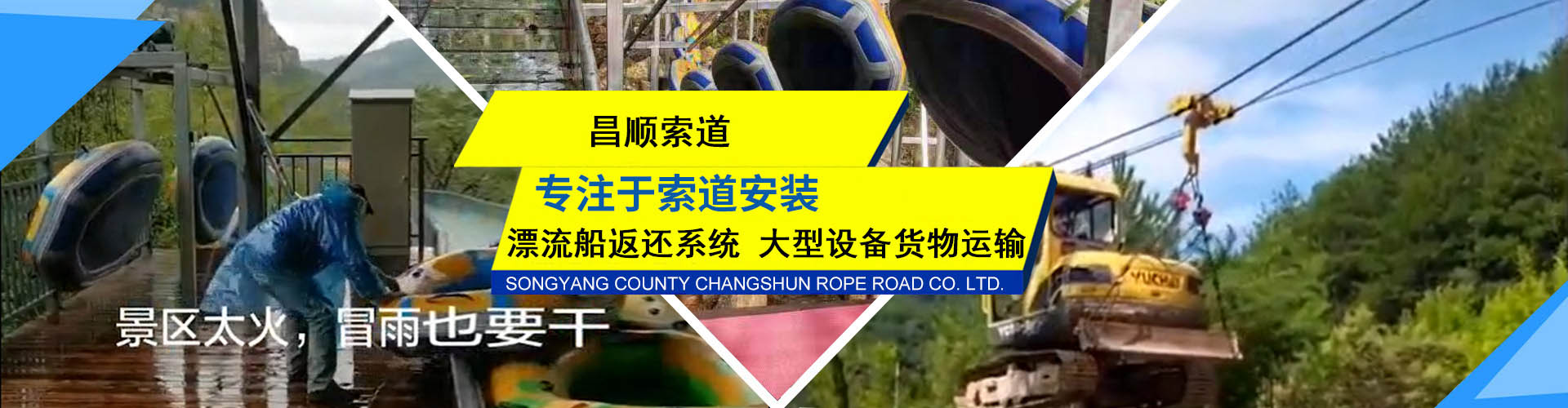
Here's the compiled information about the working principle and pros and cons of cableways. We hope it's helpful to all! Our company primarily offers various types of cargo aerial cableways, construction of walkways, cableway cargo services, bridge engineering projects, sales of cableway components, and services for installation, renovation, and maintenance.
