


 通过中商114认证
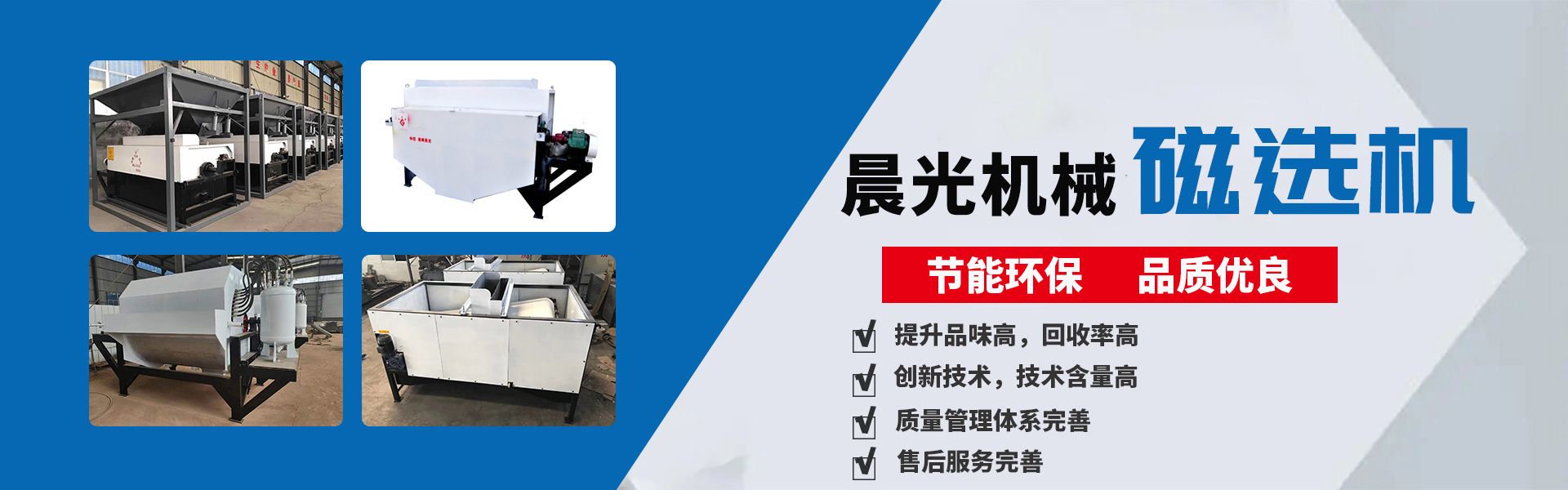
The Dry Magnetic Separator is a magnetic separation equipment used for dry magnetic separation in various mineral processing operations. Corresponding to it is the Wet Magnetic Separator. This type of equipment offers certain advantages in mineral processing, particularly suitable for certain minerals and under specific processing conditions.
The dry magnetic separator operates without the need for water or other mediums, allowing mining operations to take place in water-scarce environments such as the western regions of Xinjiang and Gansu in China, thereby reducing natural constraints on mining production. Additionally, as wet magnetic separation requires the recycling of water, the dry magnetic separator reduces the costs associated with water treatment and recycling, enhancing the profitability of mining operations.
The dry magnetic separator is suitable for ore beneficiation of medium and fine-grained ores. Compared to the wet magnetic separation process that requires grinding with a mill, it has a simpler beneficiation process, lower equipment investment, and avoids the use of tailings ponds, reducing environmental and safety pressures.
Dry magnetic separators can reduce the need for additional equipment and investment in product dehydration and drying after wet magnetic separation, for the beneficiation of special minerals and materials that require low moisture content or dryness as final products, thereby lowering production costs.
During dry magnetic separation operations, as water is not used as a medium, the forces acting on minerals during beneficiation are relatively simple. Additionally, by employing methods such as quantitative feeding and vibrationally even feeding, stable and adjustable working conditions can be achieved. Consequently, in some cases, it can not only reduce beneficiation costs but also yield good beneficiation performance indicators. In non-metallic beneficiation, such as quartz sand and feldspar, where the required particle size range is narrow (glass quartz sand is 20-140 mesh), the beneficiation processes for dry magnetic separation, as shown in the figure (A for wet magnetic separation, B for dry magnetic separation), show little difference in beneficiation results. However, considering the differences in beneficiation costs such as crushing, grinding, and water treatment between the two processes, the dry magnetic separation process is more suitable for this mine.
