




 通过中商114认证

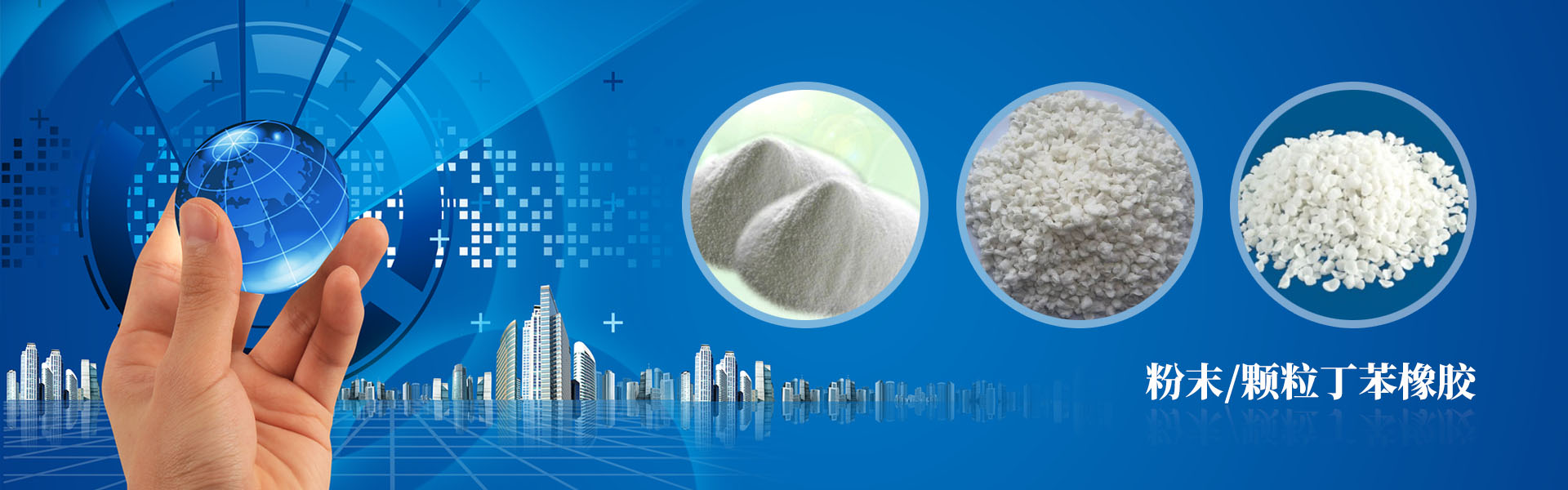
SBR rubber powder is a powdered form of synthetic rubber. Since the introduction of acrylonitrile butadiene rubber powder, it has primarily been used as a modifier for plastic toughness. In recent years, other types of SBR rubber powders, such as styrene butadiene and ethylene propylene, have also been sold as commercial products.
Processing Method
There are mainly three methods for manufacturing SBR rubber powder:
Mechanical crushing method achieves rubber particle size down to 1mm.
2. Spray drying is a method that involves blowing latex containing a separator or additive through a nozzle into a drying chamber, where the water rapidly evaporates and the dried powder deposits. The SBR rubber powder produced has a particle size smaller than 0.1mm.
3. The coagulation method, through the mixture of water-soluble starch, xanthate, or carbon black with rubber latex to form a suspension, induces coagulation under acidic or saline conditions. The coagulated material is then filtered, dried, and milled to produce SBR rubber powder. Compared to block or sheet rubber, SBR rubber powder eliminates the cutting process in rubber processing, reducing equipment investment and maintenance. It facilitates automatic weighing and batching, shortens mixing time, and offers better dispersion properties. It can reduce heat generation during processing, eliminate scorching, and improves processing characteristics. Raw rubber does not require plasticization or batch mixing and can be directly fed into extrusion and molding processes, allowing for mixing in a closed system. However, SBR rubber powder contains a significant amount of release agents, typically ranging from 30% to 15%, with increased usage as particle size decreases, making its cost 10% to 15% higher than that of block or sheet rubber.
Categories
Coarse SBR rubber powder with a particle size of 500μm (30 mesh) is typically processed from rubber blocks through a coarse crusher or gyratory crusher.
2. Fine SBR rubber powder, with a particle size of 300μm (47 mesh), is typically produced by repeatedly processing coarse SBR rubber powder using fine shredder screens or gyratory screens.
3. Fine SBR rubber powder, typically processed using low-temperature crushing equipment or a freezing crusher.
4. Ultra-fine SBR rubber powder. Utilizing the RAPRA grinding method of the British Rubber and Plastic Association, particles of less than 20μm (50 mesh) can be produced.
