




 通过中商114认证

Butadiene-styrene rubber (SBR) is not only one of the earliest asphalt modifiers to emerge and widely used, but also one of the earliest to begin and promote its use. It is generally believed that the characteristics of SBR modifiers include enhancing the low-temperature elongation of modified asphalt, increasing the viscoelastic properties of asphalt, and reducing its temperature sensitivity, significantly improving many of its performance attributes. Therefore, in the production of polymer-modified asphalt, the application of SBR ranks second only to SBS.
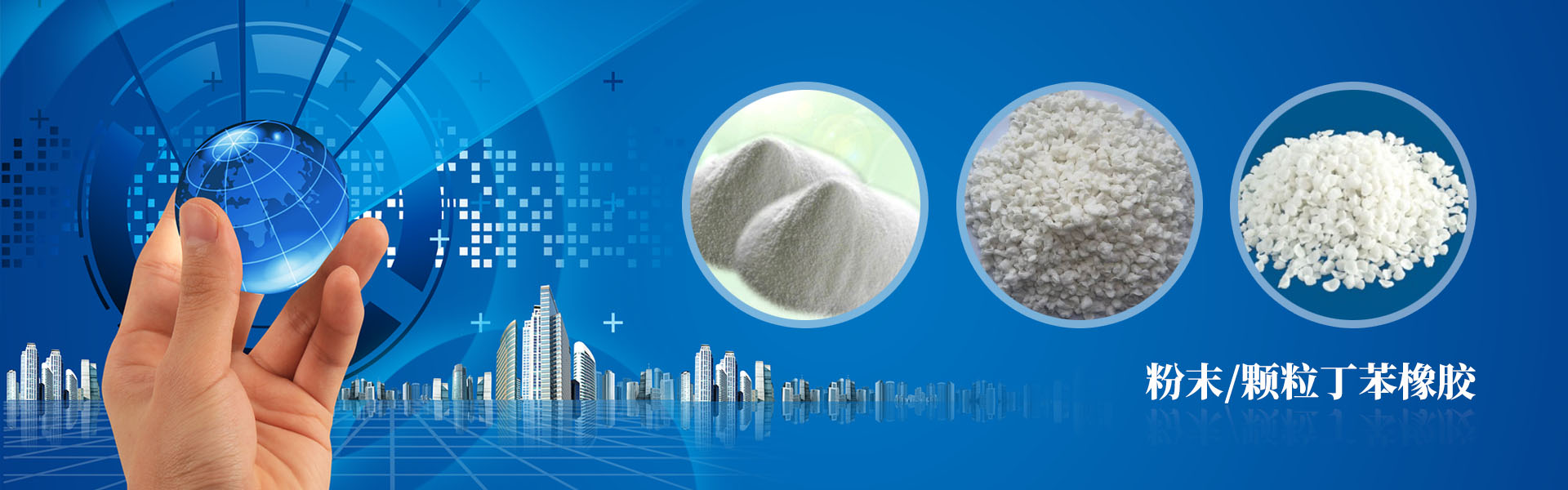
Currently, the SBR available in the market can generally be divided into three categories: solid block rubber, rubber powder, and liquid rubber latex. Solid block SBR is typically used as an asphalt modifier, usually through processes such as solvent methods and crushing. The drawback of the solvent method is that solvents are required to produce the SBR precursor, and even after recovery, there is still a small amount of solvent left in the product, leading to higher production costs and environmental pollution issues. The crushing process requires special equipment to prepare SBR into small particles, which is less efficient and involves a significant upfront investment, making it difficult for most companies to implement.
SBR powder is convenient to use, but its content is lower compared to block rubber. When liquid rubber latex is used as an asphalt modifier, whether through pre-mixing or on-site mixing, there is a process of water evaporation, making it unsuitable for large-scale asphalt production. To overcome the drawbacks of asphalt modifiers during asphalt preparation, a new granular SBR product (referred to as granular SBR) has emerged domestically. To assess the feasibility of this product as an asphalt modifier, the Fushun Petroleum & Chemical Institute conducted tests in the lab using granular SBR as a road asphalt extender and asphalt modifier. The results show that the tested granular SBR can be used both as an extender for producing Tarim crude oil asphalt and as a modifier for producing SBR modified asphalt.
SBR-modified road asphalt is one of the main modified asphalt products, and its usage has been on the rise in recent years. The introduction of particle SBR products undoubtedly provides convenience for the production and processing of modified asphalt.
The asphalt properties of the 90 and 70 grades, prepared from the mother liquid using our company's produced SBR granules and blended with Tar River crude oil vacuum residue, meet the technical specification requirements. Compared to the Tar River crude oil road asphalt with commercially available block SBR added, the only difference is a higher flash point, with all other indicators being essentially equivalent.
2. The thermal storage test results indicate that, whether it's the decrease in penetration and elongation or the increase in softening point and penetration ratio, the granular SBR is always lower than the comparative block rubber. This demonstrates that the granular SBR has better heat storage resistance than the comparative block rubber.
3. Using granular SBR as a modifier, we can produce modified asphalt products that meet the required specifications. Their performance is comparable to that of commercially available block rubber-modified asphalt.
The SBR granule boasts the advantages of a simple production process for asphalt and ease of use, serving both as an extender for producing Tar River crude oil asphalt and as a modifier for manufacturing SBR modified asphalt.
Numerous studies and practical applications have demonstrated that granular SBR styrene butadiene rubber is feasible as an asphalt modifier.
