
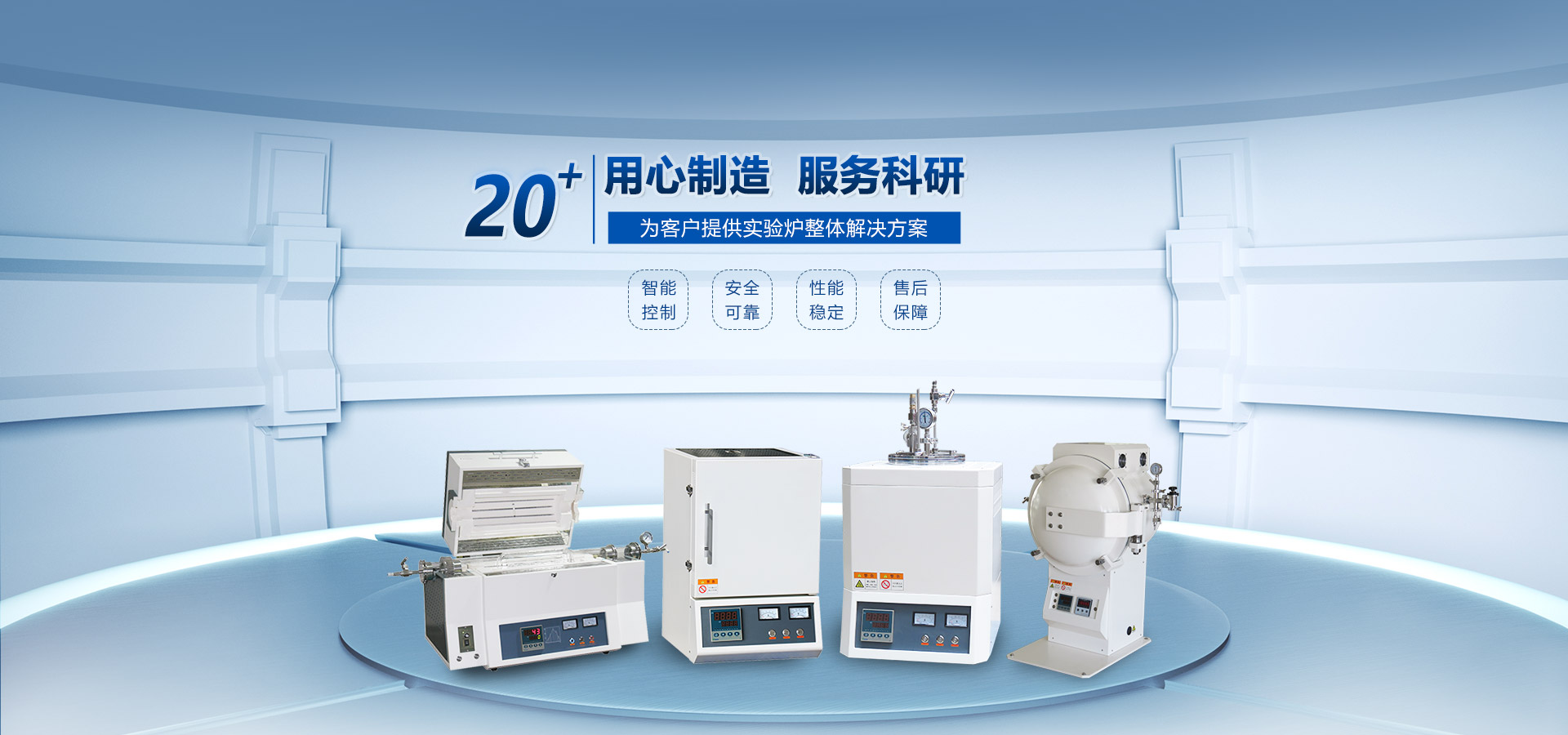


Commonly used heating equipment in the laboratory includes muffle furnaces, high-temperature furnaces, and tubular furnaces. Most research on materials such as metals, ceramics, and polymers requires vacuum experiments. Among these, tubular furnaces have better vacuum performance. However, many laboratory staff do not follow the correct operating procedures, resulting in low internal vacuum levels and excessive residual air in the tubular furnace, which in turn reduces the accuracy of experiments and fails to meet the standard testing conditions. In response to these issues, the following solutions have been proposed:
What are the purpose and function of vacuuming in a tubular furnace?
To enhance the precision of vacuum extraction, we first summarize the purposes and functions of vacuum extraction in tube furnaces. The primary purpose of vacuum extraction is to reduce the air inside the tube furnace, allowing the test materials to be in an oxygen-free environment, thereby preventing oxidation-reduction reactions of the test materials.
Why is the vacuum level low? Why isn't the experiment reaching the desired state?
Low vacuum levels present several issues; 1. Aging vacuum pumps, which naturally achieve lower vacuum levels; 2. Aging vacuum piping, leading to leaks in the pipes and at joints; 3. Aging seals in the tube furnace, incorrect installation methods.
The solutions include: Firstly, replace the aging pipelines and seals, and check for any air leaks at the interface locations. Especially, many manufacturers use quick-connect gas pipe interfaces that do not meet the vacuum requirements, leading to hidden air leaks that are difficult to detect. Secondly, apply vacuum grease to the seals to enhance the sealing at the seal locations, with a focus on inspecting the sealing effectiveness of the seals installed at the flange positions.
The vacuum pump for the tube furnace has poor vacuum extraction performance. An experiment can be conducted by replacing it with a higher precision vacuum pump. The price of vacuum pumps for tube furnaces ranges from $1,000 to $3,000, while molecular pumps can cost tens of thousands of yuan.
However, to save costs, we can fill the tube furnace with inert gases such as nitrogen or argon, which are used to exclude oxygen. This reduces the oxygen concentration, preventing oxidation-reduction reactions in the experimental materials. The operational steps are as follows:
Firstly, we connect the tube furnace to the vacuum pump and nitrogen cylinder, then close all valves, turn on the vacuum pump and vacuum valve, and observe the pressure gauge until the vacuum pump's vacuum level stabilizes, after which we close the vacuum valve and the vacuum pump; next, open the gas cylinder and the intake valve, and close the intake valve once the pressure gauge returns to normal pressure. This reduces the air concentration inside the tube furnace, but some air still remains. By repeating the above steps, we can obtain a higher purity of nitrogen by displacing the air. For experiments requiring even higher purity, the process can be repeated multiple times. Pay attention to the sequence of opening and closing the pump valves and gas cylinders.
Certain lab tube furnaces require experiments to be conducted under vacuum. The vacuum pump's accuracy is high, yet it does not meet the experimental requirements. It could be due to the direct shutdown of the vacuum pump without closing the vacuum valve after evacuation, as the vacuum pump's non-operational state allows air to reflux. This results in air entering the tube furnace tubes. To resolve this issue, we simply need to close the vacuum valve before shutting down the pump after evacuation.
