









(1) Construction Process:
Sorting of base embedment → Sectional sleeve connection of pole → Inserting steel wire rope and cables → Installation of head → Hoisting → Adjusting the verticality of the pole → Power on → Installation and adjustment of light panel → Installing lighting fixtures → Adjustment
(II) Construction Method:
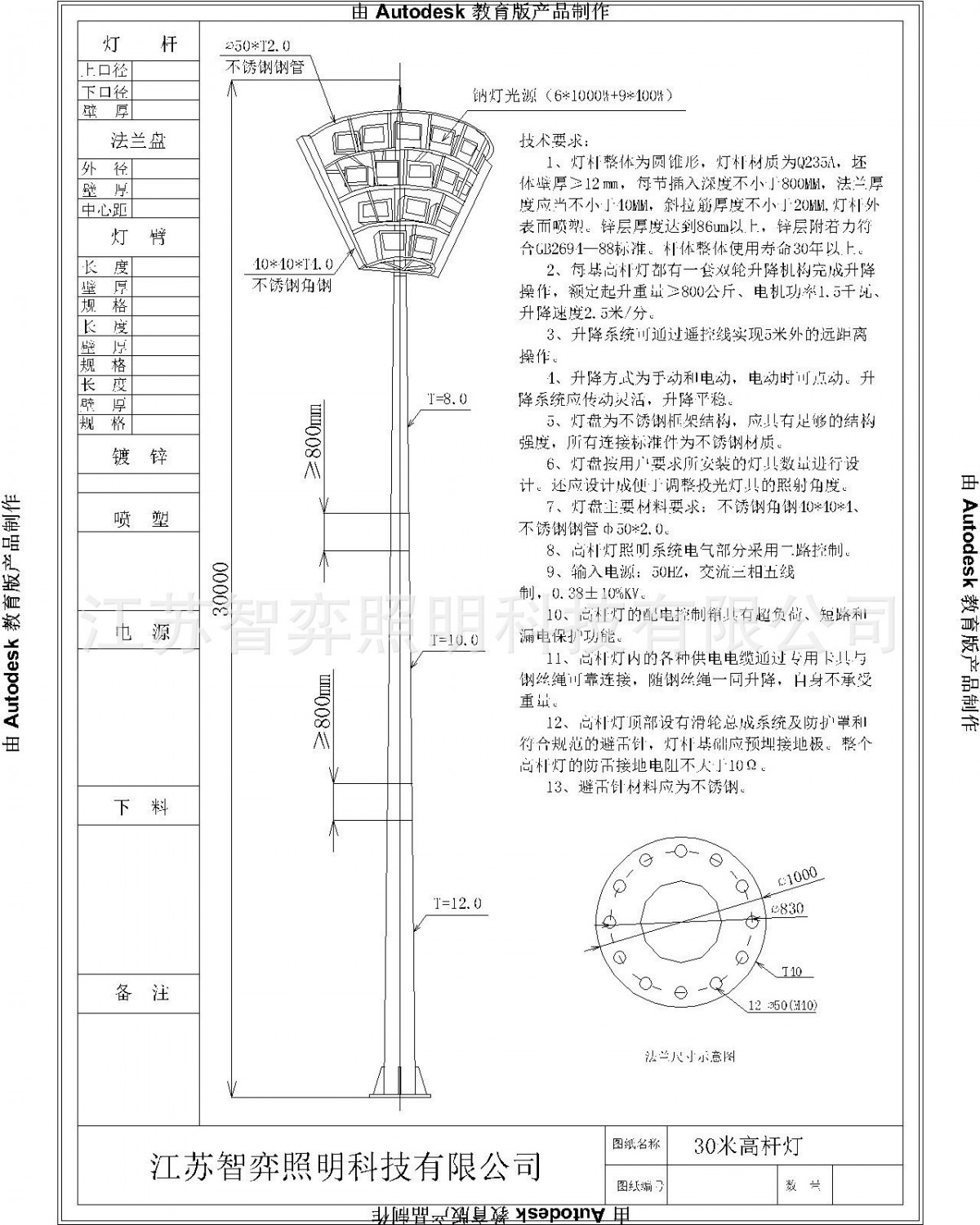
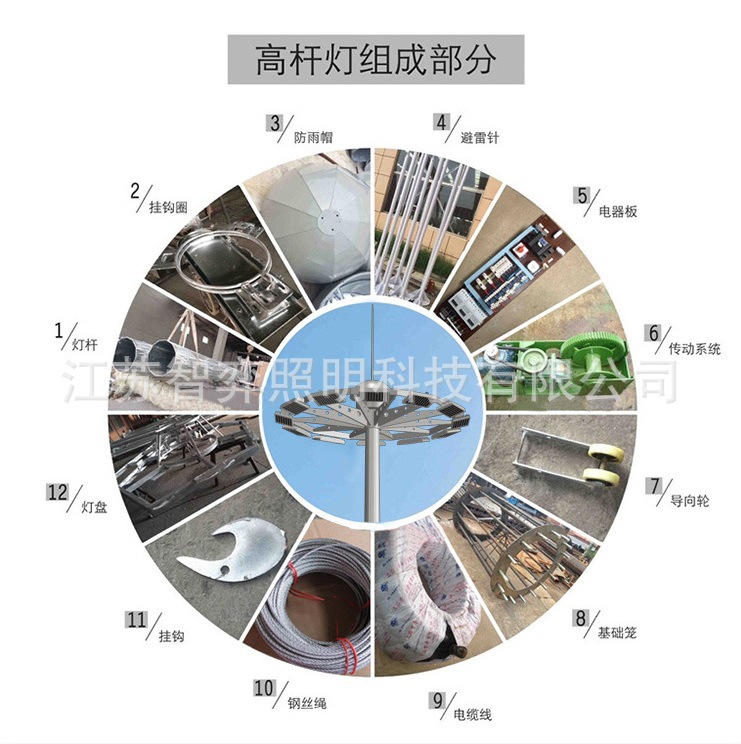
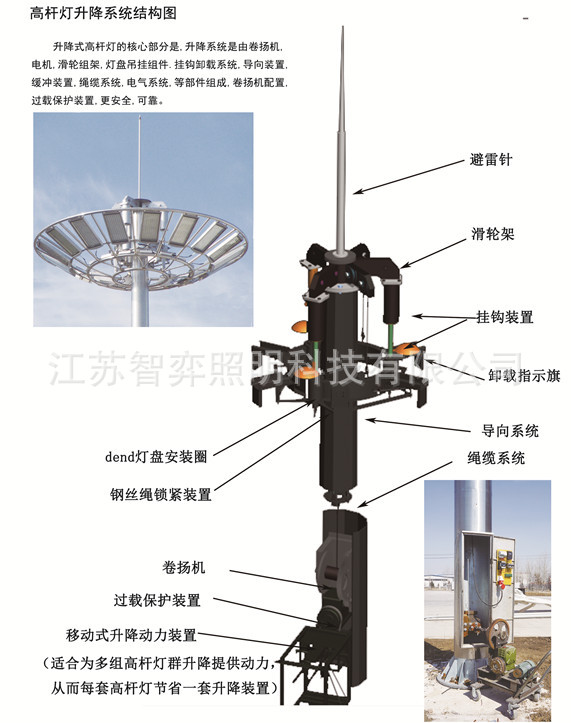
The winch and electrical panel of the telescopic lifting pole are pre-installed within the pole before shipment. The hook mechanism and head are assembled as a complete unit, and the entire system has been assembled and debugged in the factory. The goods delivered to the site are divided into pole sections, head assembly, hook mechanism assembly, rain cover, light panel, and accessories (such as wire ropes, cables, lightning rods, light panel brackets, electric tools, etc.).
1. Organizing the foundation embedment components:
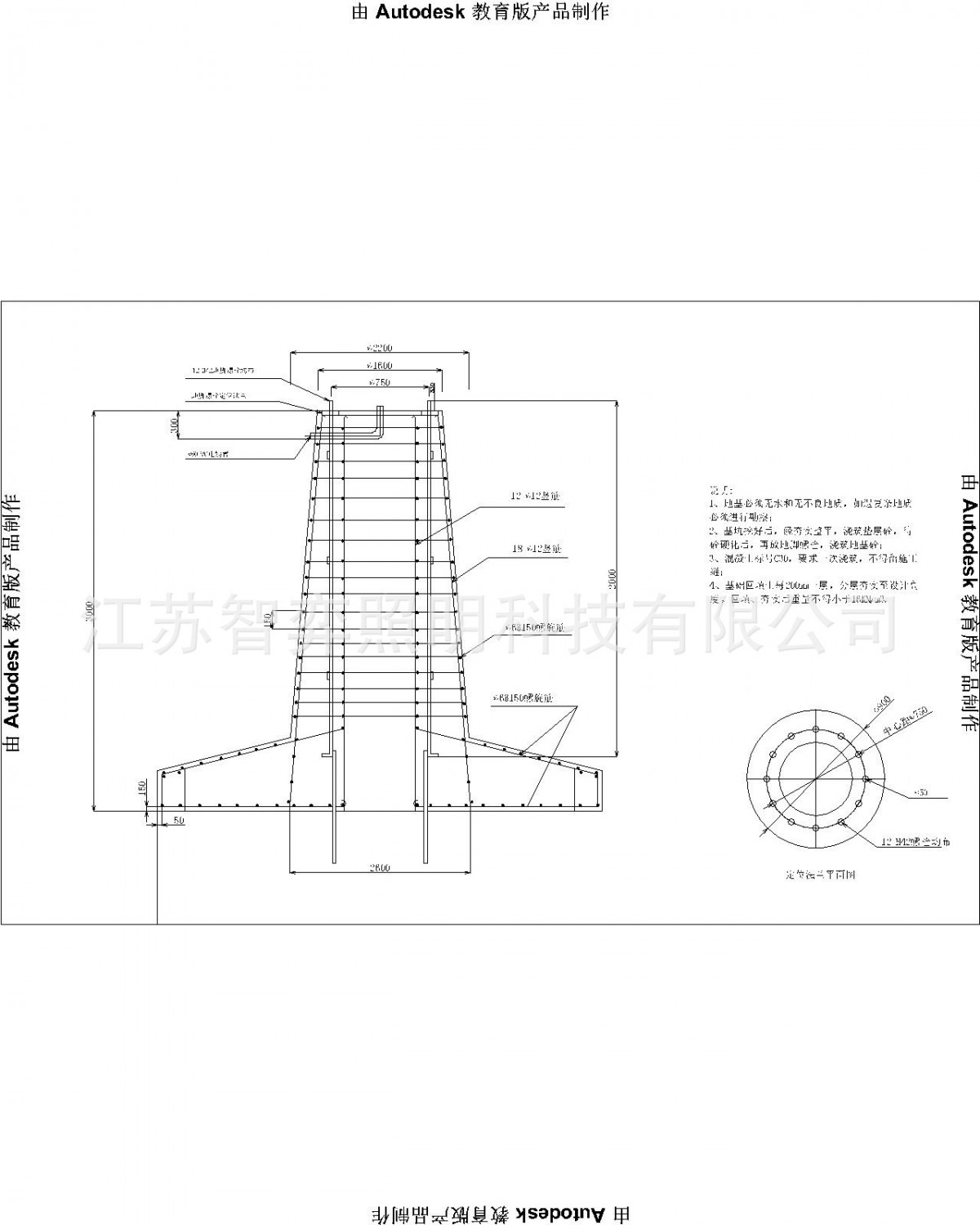
Clean debris from the concrete foundation surface, remove protective materials wrapped around the embedded bolt, check the spacing dimensions between all bolts (including diagonal dimensions), and confirm that the bolt positions match the dimensions shown in the drawings. Visually inspect the bolt threads for damage; if necessary, repair the threads to ensure that the nuts can be freely tightened onto the bolts.
2. Socketing of the rod body:
Prior to the start of the sleeve process, a thin steel or iron wire longer than the rod height should be threaded through the electrical door into the rod body. This will serve as a guide for threading wire ropes and cables later on. The threading of the steel or iron wire should be conducted simultaneously with the sleeve rod assembly. (See Figure 1)
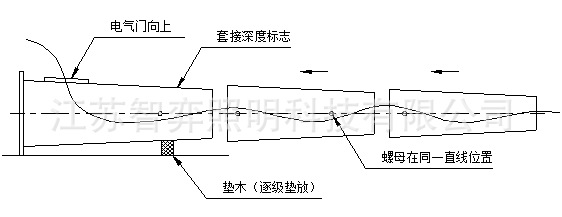
Starting from the very bottom section of the socketed rod, proceed upwards section by section.
Position the base section with flange close to the foundation in the appropriate location (place the electrical maintenance door upwards), ensuring the flange is on the ground. Use wooden shims to elevate the front end of the base section approximately 1.5 meters from the front, allowing the front end to clear the ground, leaving sufficient space for the insertion of the upper section rod sleeve.
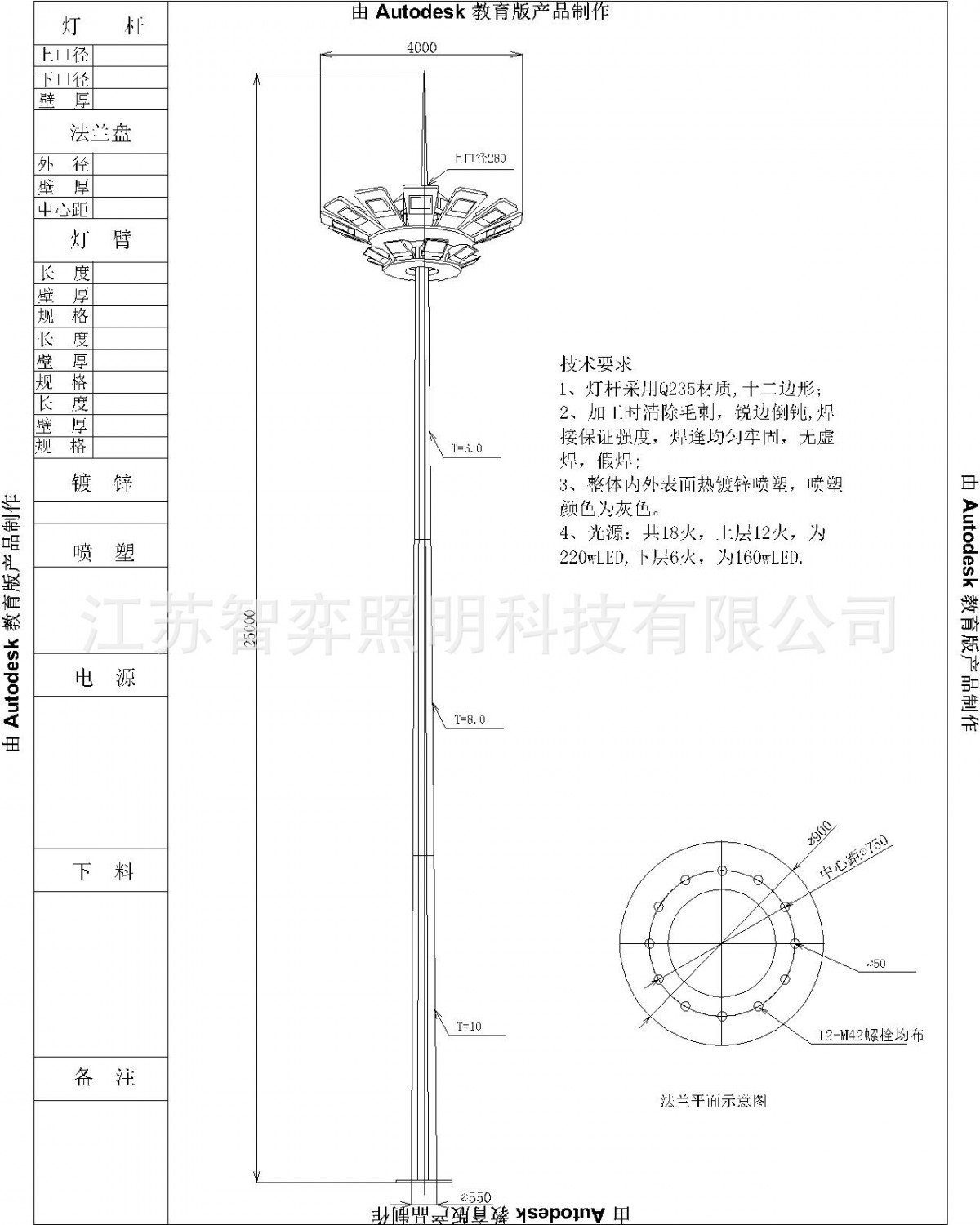
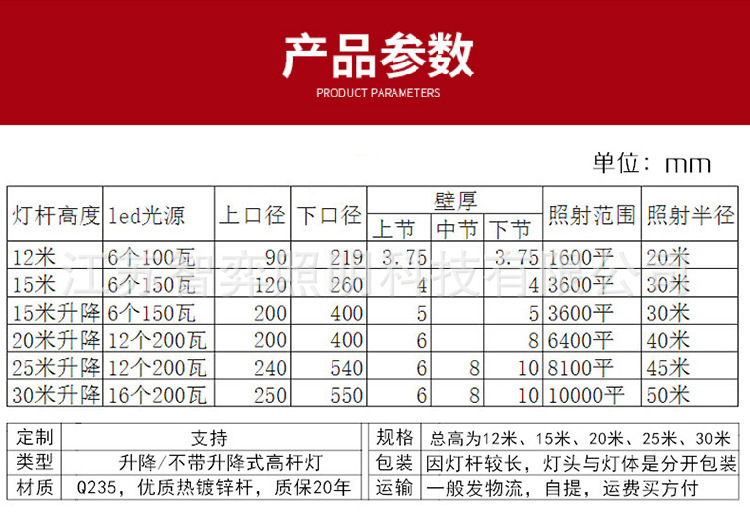
Mark the socket depth on the base section, the socket depth between each section shaft, which varies with the size of the shaft diameter, can be found in the drawings.
Nuts are welded on both sides of the rod body for hanging and tightening the wire rope. When lifting, confirm the position to ensure that the nuts of the upper and lower sections are aligned in a straight line.
Hoist the rod body from the previous section with a crane, aligning the larger end with the front end of the base section, and slowly slide it in. Try to fit it as deeply as possible, and also place wooden blocks in front of this section.
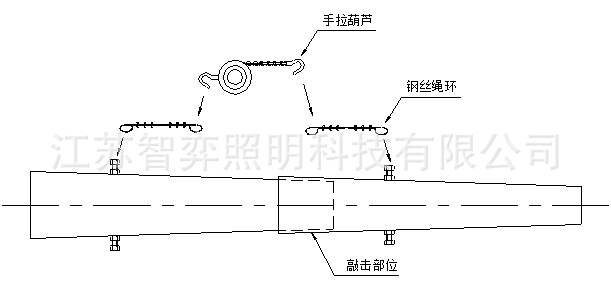
Tighten bolts on the nuts on both sides of the upper and lower rod bodies, and securely install the tensioned wire rope and hand winch as shown in the following illustration on both sides of the rod bodies.
Simultaneously tighten the manual winch on both sides of the rod until the sleeve depth mark is reached. If you feel significant resistance while tightening, use a hammer to strike the sleeve section of the rod to create vibration, aiding in the rod's tight fit. When striking, use a wooden board or other padding to prevent damage to the rod's surface. (See Figure 2)
Follow the aforementioned steps and methods, sequentially connect the other sections of the rod.
3. Wire rope and cable threading
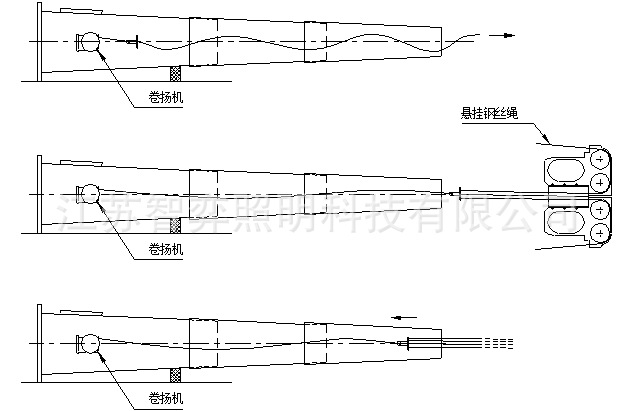
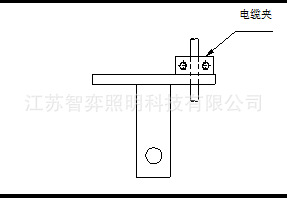
After the rod sleeve is assembled, connect the rigging connector to the winch's main steel wire rope, then attach it to the guide wire left in the rod inside the electrical door and secure it. Release the winch to allow the main steel wire rope to unwind from the drum (if using electric operation, refer to the external electric winch lifting pole operation instructions). Simultaneously, pull the guide wire at the other end of the rod to pull the rigging connector out of the rod's small end. Move the head to the appropriate position at the front end of the rod, and thread the ends of the three suspended steel wire ropes without loops and the cable through the head sleeve, through the pulley groove, and out through the head opening. Then connect the other end of the suspended steel wire rope with loops to the rigging connector (the cable connection method is shown in the figure). Operate the winch to retract the main steel wire rope, causing the rigging connector to retract and enter the rod (about 100cm into the rod). (See Figure Three)
4. Head Installation:
Lift the front end of the rod, which has been fitted with sockets and through which cables and wires have been threaded, using a support (the electrical door of the rod facing upwards). The height of the support should allow the installed head to clear the ground.
Tighten the set screw onto the nut of the head sleeve, lift the head with a crane, and insert it into the rod body. The fork position with the cable pulley on the head should align with the electrical door's orientation. (See Figure 4)
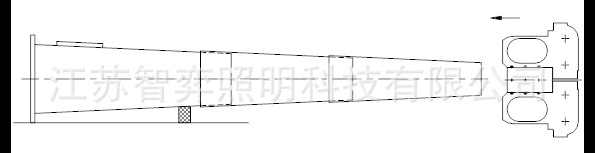
Tighten the bolts in sequence, adjusting the depth of each bolt to ensure the clearance between the head sleeve and the rod body is consistent (i.e., align the axis of the head sleeve with the axis of the rod body). The purpose is to have the axes of the three pulley sets at the same horizontal plane after the rod is erected.
Pull three suspended steel wire ropes and cables towards the bottom of the pole, up to the level of the electrical door, ensuring the distance from the ground can be connected to the fixed points of the lamp disk. Temporarily tie them up on the pole with ropes to minimize interference during the hoisting process.
Later, install a rain cover, lightning rod, and connect the jumper wire at the top.
5. Hoisting
After completing the above steps, please carefully inspect and verify to ensure there are no omissions and it is secure, then prepare for hoisting.
Based on the specific conditions of the 35-meter, 15-meter, and 8-meter steel lamp posts, select the crane and rigging equipment. During the lifting process, the site supervisor will coordinate to ensure a reliable and orderly operation of the lamp post installation.
Theodolite and level gauge used for verticality testing; allowable deviation: 2H/1000 for up-and-down movement, 3H/1000 within a 10-meter pole height and not exceeding 20 (H represents the pole height in mm).
Please note the following points for the hoisting of telescopic tall poles:
5.1 The head of the machine should be positioned below the top of the lamp post during the lifting and installation process.
5.2 The lifting point should be located at two-thirds of the rod's length.
5.3 The load on the lifting equipment must meet the weight of the rod body.
5.4 The lifting position should be convenient for the light pole to be positioned in the pre-determined direction.
6. Light panel installation and adjustment:
Tighten the set screws onto the lamp housing nut, lift the lamp housing with a crane, and fit it onto the front end of the pole. Gradually tighten the set screws, adjusting the depth of their insertion to ensure the gap around the lamp housing and the pole body is consistent (aligning the axis of the lamp housing with the axis of the pole).
Later, install lightning rods on the lamp plate.
7. Cable Dressing
Prior to stringing the cables, a guiding steel or iron wire should be inserted first. This step can be pre-completed during the rod sleeve connection (refer to the rod sleeve connection section) or after the rod is mounted on the base.
At the front end of the rod or through the cable entry hole of the lamp plate, wrap and secure the guide wire around the cable. Pull the guide wire while aligning the cable, and insert the cable into the rod body.
8. Lighting Installation:
Install lighting fixtures at the designated positions on the light panel, wire them up, supply power, and conduct a 24-hour lighting test.
