

- AllProduct Category
-
YFA-L Type Vertical Top-Pressure Valve Hydraulic Test Bench
YFA-H Type Pressure-Actuated Valve Hydraulic Test Bench
YFA-F Type Valve Hydraulic Test Bench
YFA-FQ Submerged Suction Pressure Valve Hydraulic Test Bench
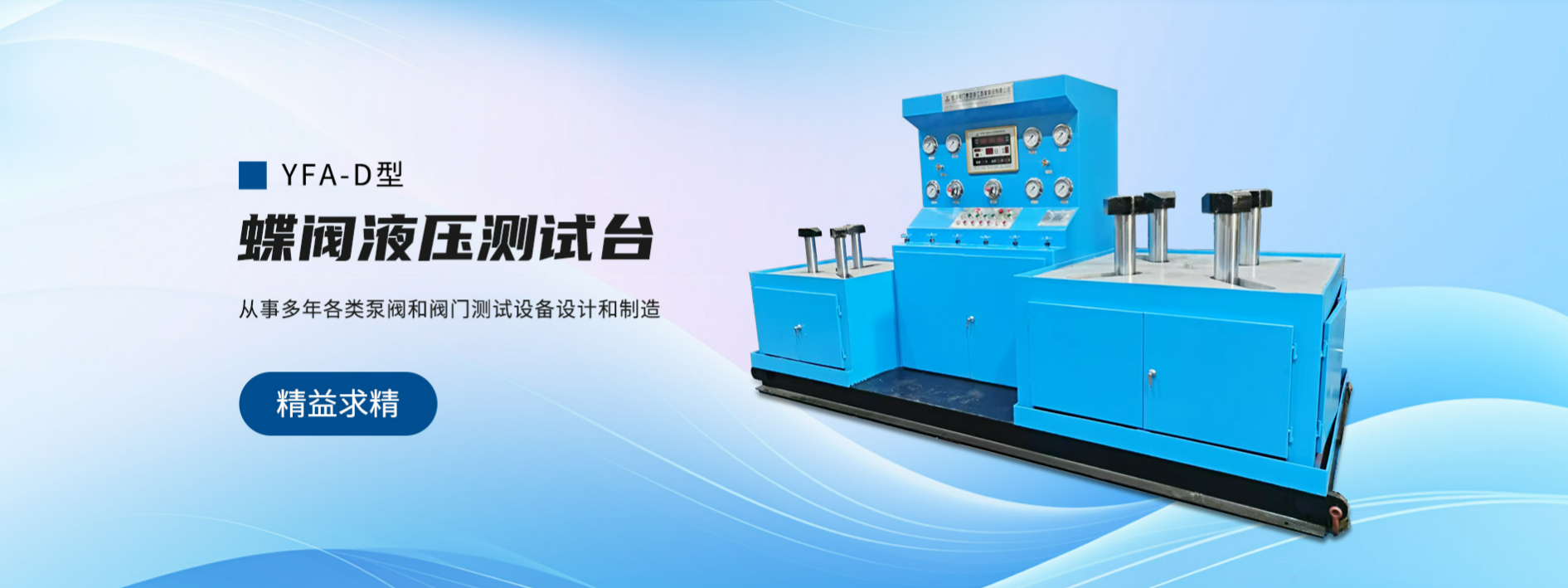
YFA-D Type Butterfly Valve Hydraulic Test Bench
YFA-A Type Safety Valve Hydraulic Test Bench
Planetary Grinder with DOM Design


详情描述
I. Product Overview:
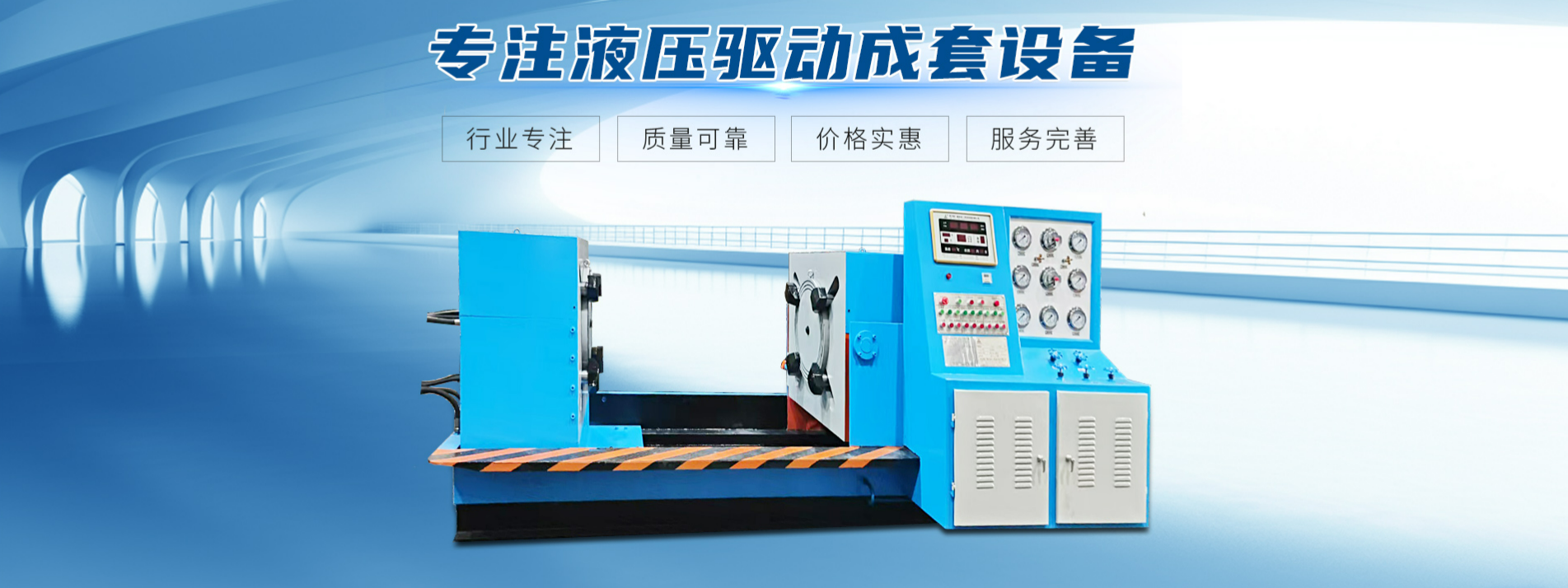
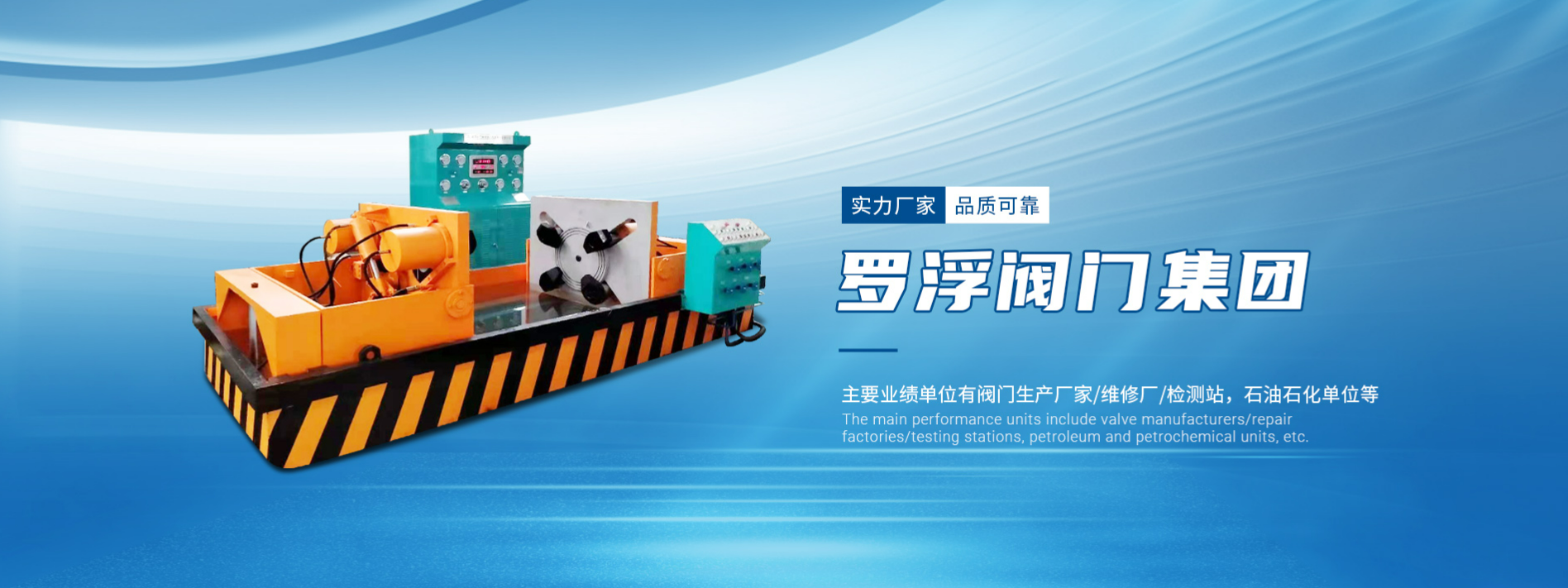
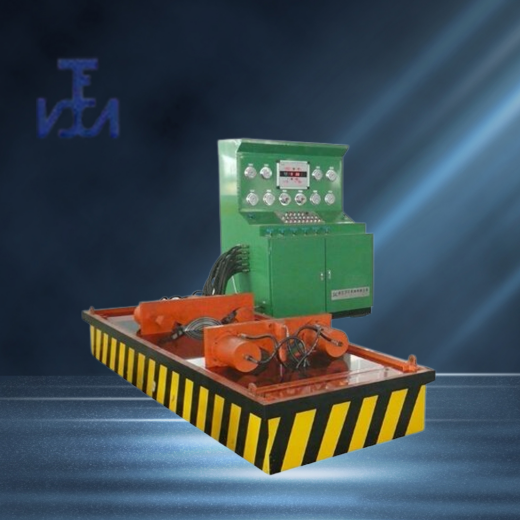
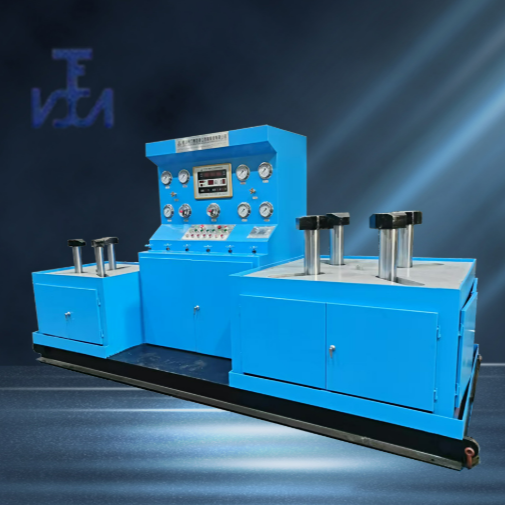
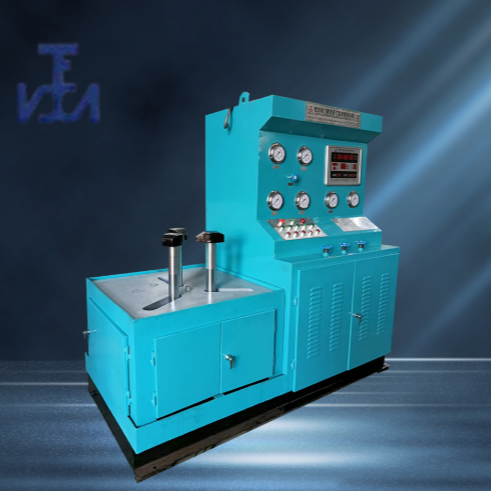
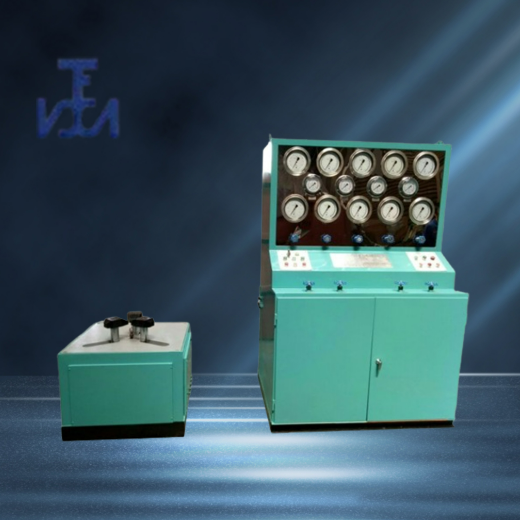
YFA-FQ type hydraulic valve test bench, which is developed based on our years of experience in manufacturing valve testing equipment, strictly adheres to GB/T13927-2008 "General Valve Pressure Test" and JB/T26480-2011 "Testing and Inspection of Valves."American Petroleum Institute StandardDesign and production must comply with test pressure requirements of specifications such as API 598.
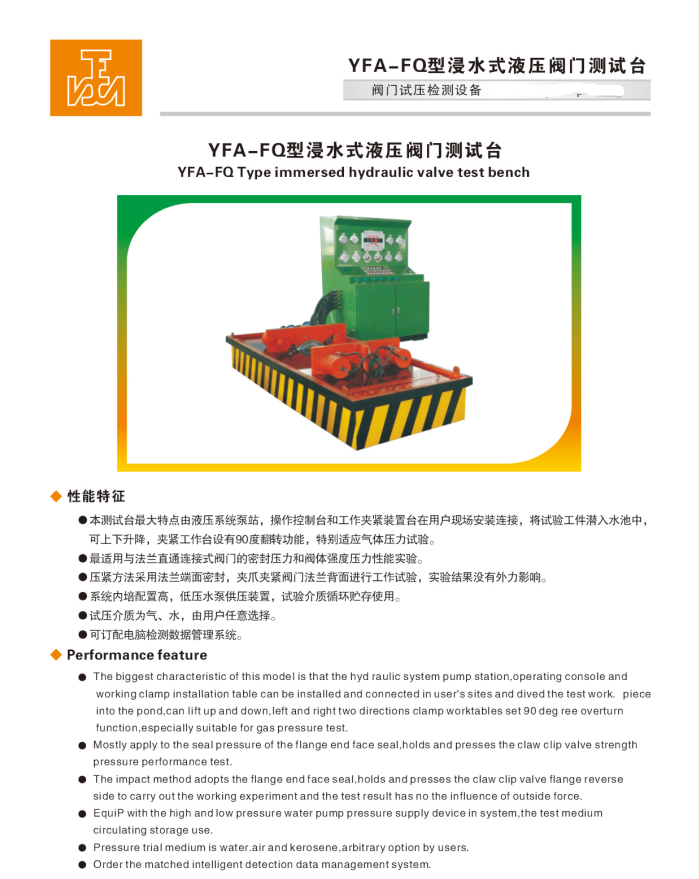
This unit integrates hydraulic, mechanical, electrical systems, pressure supply units, and medium storage circulating water tanks into one. The entire testing process is automatically controlled and executed by hydraulic and electrical components. It boasts advantages such as reasonable structure, comprehensive functions, stable performance, convenient operation, and high degree of automation. It is widely used in high, medium, and low-pressure direct flanged valves for pressure-sealing performance and shell strength endurance tests. Applicable valve types include gate valves, stop valves, check valves, ball valves, and more. It is suitable for valve manufacturers, the petrochemical industry, and hydropower stations.Natural GasIdeal valve testing and inspection equipment for industries such as pipeline components, sewage treatment plants, valve maintenance stations, and more.
Section II: Specification Range:
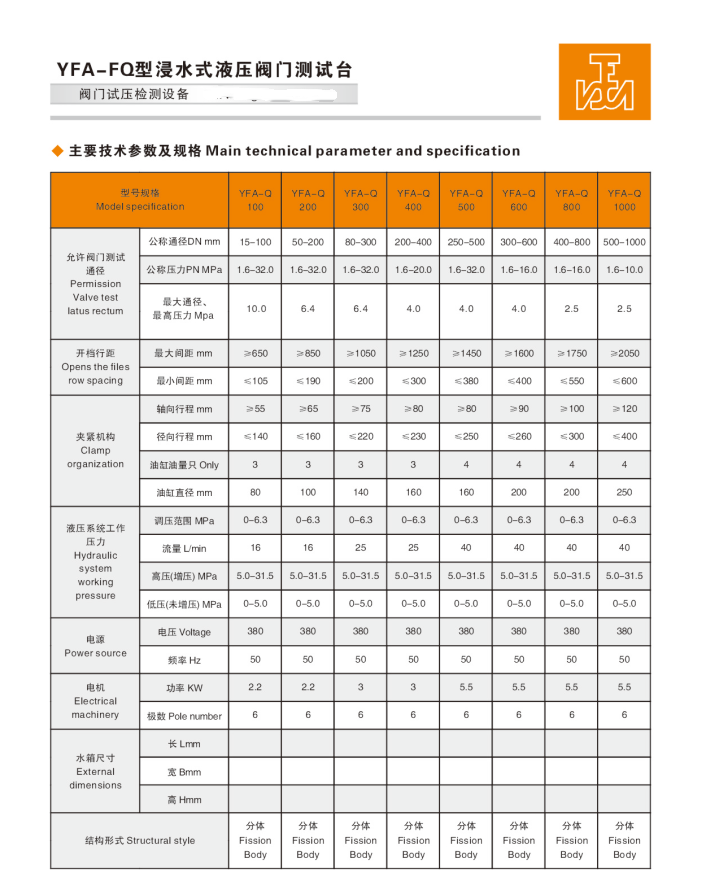
DN15-800mm
3. Pressure Range: 1.6-63.0 (MPa) / 150-2500 (Class)
Four: Performance Features:
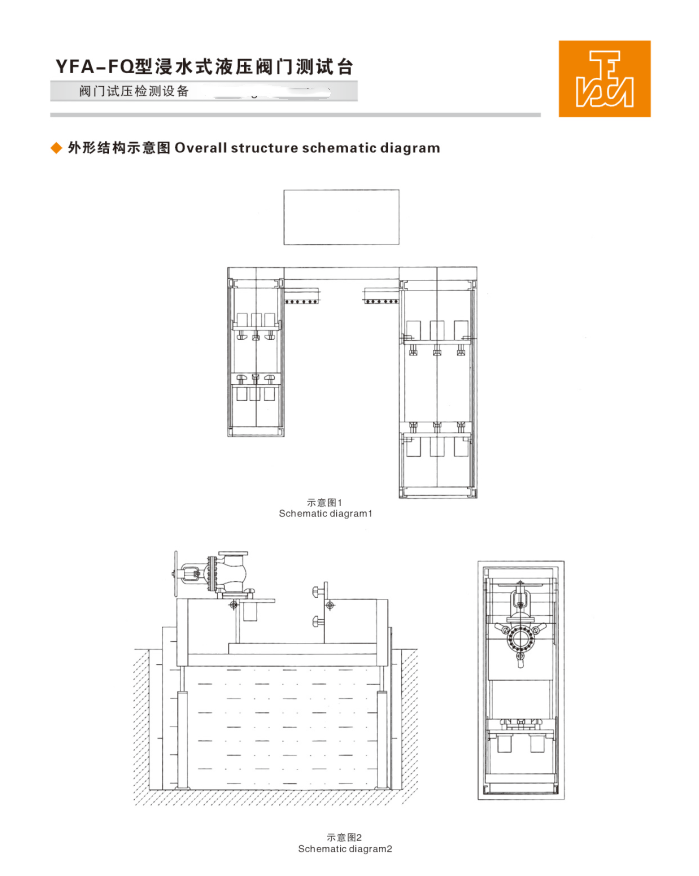
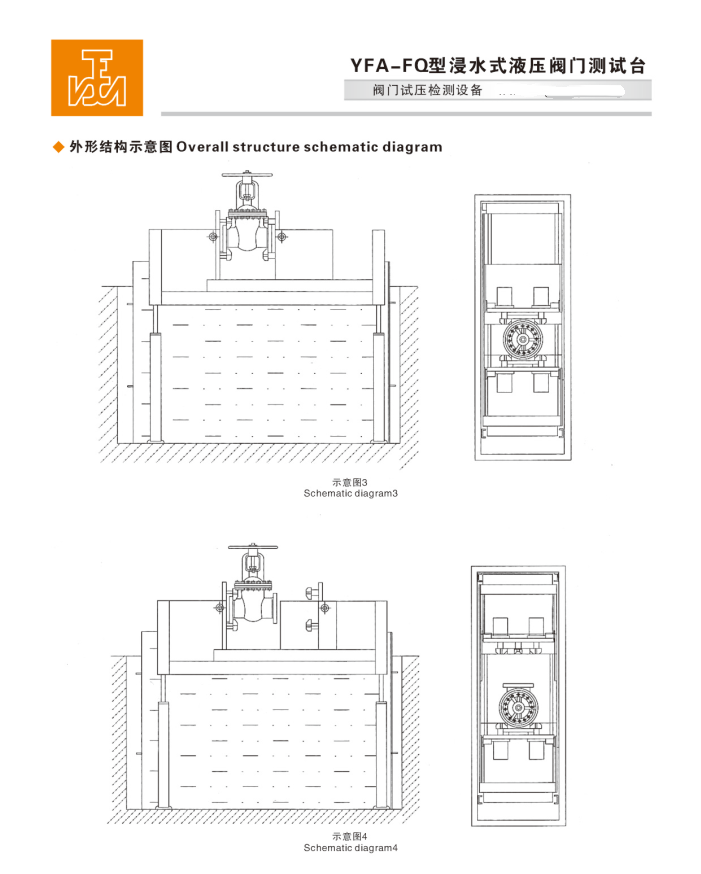
Gate valves, stop valves, check valves, ball valves, etc., suitable for direct flange connections, utilize flange face sealing with a hydraulic clamp gripping the back of the flange, allowing adjustable clamping force. Test results show no additional force influence. During valve testing, the right-hand working disc can be flipped 90 degrees, especially suitable for gas sealing performance tests. The other working disc can move forward and backward, with free adjustment of the length spacing, unrestricted valve length, significantly improving work efficiency.
Clamping Method: Each dual-action disk is equipped with a removable hydraulic clamping mechanism. It can automatically synchronize and adjust the position of the clamping jaws according to various valve specifications, achieving automatic centering and positioning. The hydraulic clamping jaws automatically grip the back of the valve flange, with adjustable clamping force, having no external force impact on the tested valve itself. The clamping process is fully controlled by an integrated button and executed by hydraulic components.
This testing bench features up-and-down lifting capabilities, allowing both the machine and the valve under test to be submerged in water simultaneously. It is particularly suitable for testing the strength, sealing, and gas pressure performance of valve seats. It revolutionizes the traditional testing method of using foaming agents to clean the surface of the valve housing, shortening testing time and greatly enhancing work efficiency, making it the most ideal choice for a dual-air-water testing device.
Hydraulic Valve Test Bench Working Principle and Operation Method:
I. Working Principle:
Select a sealing blank compatible with the valve model and install it on the equipment. Push the electrical switch, the equipment power indicator light illuminates. Press the oil pump start button to activate the hydraulic system motor, ensuring the motor runs in the correct direction (clockwise). Move the left side frame back to exceed the length of the test valve. Radially move the left and right clamps to exceed the outer diameter of the valve flange. Extend the left and right clamps axially to exceed the thickness of the valve flange.
Secure the test valve flange tightly against the right-hand workbench with a blind flange aligned at the center. Move the radial clamp, position it close to the valve flange, press the clamp tightening button to reduce the clamp spacing, and press against the back of the valve flange to ensure it won't come off.
Move the left-hand trolley to the right-hand workbench, approach the法兰of the valve at the other end, abut the left-hand pressure-test blanking plate, and align with the center position. Move the left radial clamp closer to the valve flange, press the clamp button to shorten the clamp stroke, press against the back of the valve flange, and complete the overall clamping of the valve.
During gas pressure testing, the machine and the valve under test can be submerged in water simultaneously. For hydrostatic testing, simply raise the machine to the correct position.
II. Seal Pressure Testing Method:
1. Fill the hydraulic system oil tank with 30#-46# hydraulic oil or 20# mechanical oil; the oil level must not be below the lower limit of the oil gauge.
2. Power on, press the oil pump start button, and check if the motor is rotating in the correct direction (clockwise).
Adjust the hydraulic system pressure to 5.0 MPa and it will be ready for normal operation.
4、Secure the test valve flange flat against the right-hand workbench with a blind flange in alignment with the center position. Move the radial clamp jaws close to the valve flange, press the clamp button to reduce the jaw spacing, and firmly press against the back of the valve flange to ensure the valve does not come loose.
5. Shut off: Left water inlet valve → Main air inlet valve → Right pressure relief valve → Test valve → Right pressure gauge switch.
6. Open: Right water inlet valve → Main water inlet valve.
7. Refer to the pressure chart for clamping requirements (for hydraulic cylinders) and adjust the clamping pressure. For pressures exceeding the pump source by more than 5.0 Mpa, press the (right claw pressure boost) button to increase the pressure to the required clamping level. Press the (upper right flip) button to flip the right working plate up to a horizontal position.
8. All mounting is complete. Set the low-pressure pump electrical contact pressure to 1.8 (Mpa). Set the electrical contact pressure (take the valve sealed at 4.0MPa as an example, adjust the red pointer of the electrical contact pressure gauge to 4.0MPa).
9. Start the low-pressure water pump. When the low-pressure water pressure reaches the set value of 1.8 (MPa), it indicates that the valve chamber is fully filled with water. The low-pressure pump will then automatically shut off, and the high-pressure pump will automatically start to supply pressure. When the high-pressure water reaches the set value of 4.0 (MPa), the high-pressure pump will automatically shut off, and enter the pressure maintenance timing period (such as 2 minutes/client-defined). Check the valve sealing surface and connection points, as well as for any leaks on the valve body surface and for any pressure gauge fluctuations, to confirm the sealing surface performance. After the test, open the (pressure relief valve) switch to exhaust the pressure and proceed to the next test.
Note: The process of loading and the testing method for the left-side are the same as those for the right-side.
Section 3: Tensile Strength Testing Method:
1. Intensity pressure test: Based on the sealed test fixture process, advance the left-hand moving frame towards the right-hand workbench, close to the opposite end's valve flange. Press against the left-hand test blind flange, aligning with the center position. Move the left radial clamp jaw towards the valve flange, press the clamp button to shorten the jaw travel, and firmly press against the back of the valve flange. The overall fixture of the valve is completed.
2. Refer to the pressure comparison table (for the required pressure of the cylinder clamping), increase the pressure to the desired value. Once all clamping is complete, set the low-pressure pump electrical contact pressure to 1.8 (Mpa), and adjust the electrical contact pressure gauge (for strength pressure, use a 6.0MPa valve as an example) by moving the red pointer to 6.0MPa.
3. Open: Right inlet valve → Left inlet valve → Test valve.
4. Shut off: Main inlet valve → Right pressure relief valve → Left pressure relief valve → Right pressure gauge switch → Left pressure gauge switch.
5. Start the low-pressure water pump. When the low-pressure water pressure reaches the set value of 1.8 (MPa), it indicates that the valve chamber is filled with water. The low-pressure pump will automatically stop, and the high-pressure pump will start to supply pressure. When the high-pressure water reaches the set value of 6.0 (MPa), the high-pressure pump will automatically stop, and enter the pressure-holding timing period (such as 2 minutes/client-defined). Check for any leaks at the valve connection points, the valve body surface, and ensure the pressure gauge is not inverted, to confirm the valve's pressure strength test is合格. After the test is complete, open the (pressure relief valve) switch, release all pressure, relax the clamps, and remove the valve.
Section 6: Usage Precautions and Requirements:
1. Ideally, the site should be arranged in a level indoor space, with the level position checked and the base feet secured with concrete. The environment temperature should be between (1-40)℃ for normal conditions or in a heated workshop during winter. Surroundings should be free of high concentrations of dust and corrosive gases. Avoid areas near grinding wheels or polishing machines with poor conditions. Ensure good ventilation. Leave at least a 1m space around the equipment installation for ease of operation and maintenance.
2. Operators must undergo professional training before starting work, adhere to standard procedures, and strictly avoid using equipment beyond specifications or pressure. Non-specialists are prohibited from operating.
3. Operators are strictly prohibited from leaving their posts during the pressure testing process. They must continuously monitor the pressure to prevent it from exceeding safe levels.
4. After completion of the test, the pressure must be relieved to zero before releasing the clamps. The power supply should be disconnected when not in use.
5. All moving parts of the testing bench should be regularly lubricated to maintain clean and smooth operation.
6. Use 46-grade anti-wear hydraulic oil (use anti-freeze 46-grade anti-wear hydraulic oil below 0℃), and ensure the oil level does not fall below the indicator's lower limit. Regularly check the oil level and hydraulic oil; after one year of use, it should be drained and cleaned.Washing OilBox, replace with new oil.
7. Water source must be clean and free of impurities. In case of water quality deterioration, timely replacement is required. Add new rust prevention powder to meet testing requirements. To ensure that the test valves are not corroded, it is usually necessary to add rust prevention powder regularly to the circulating water tank to prevent rust caused by the medium water from affecting the normal operation of pipes, pumps, and check valves.
Note: Common anti-rust powders include:Sodium nitriteSodium sulfate, sodium potassium sulfonate (non-toxic powder).
8. The equipment work surface should be kept clean, and there should be no debris between the test valve flange and the pressure testing blank flange.