


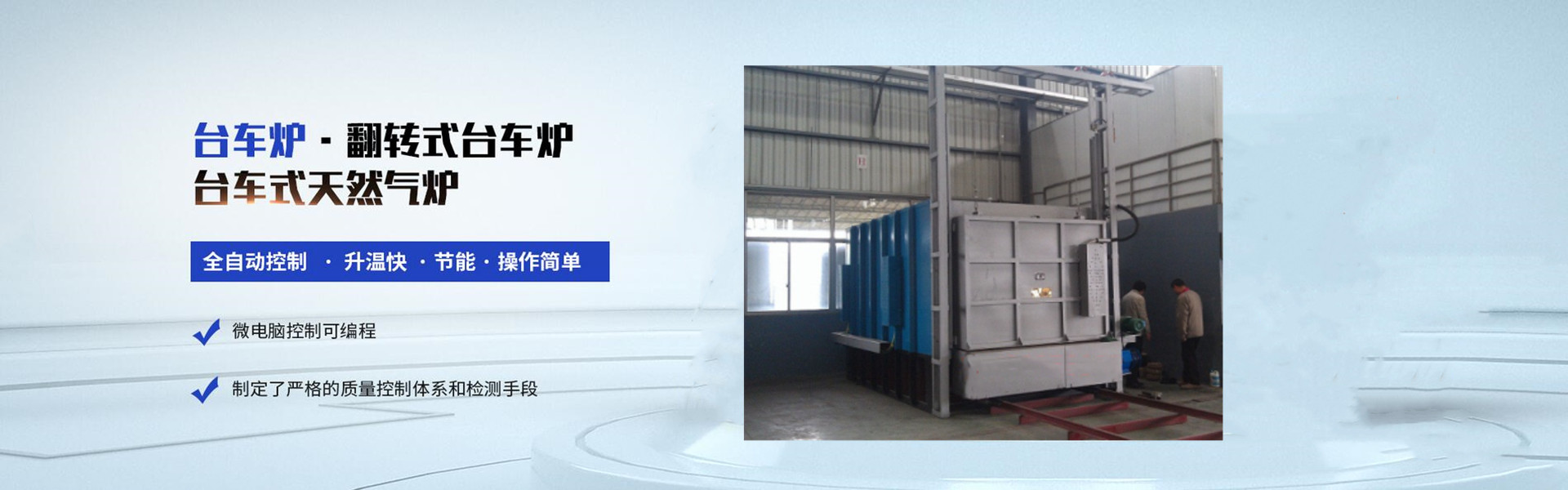

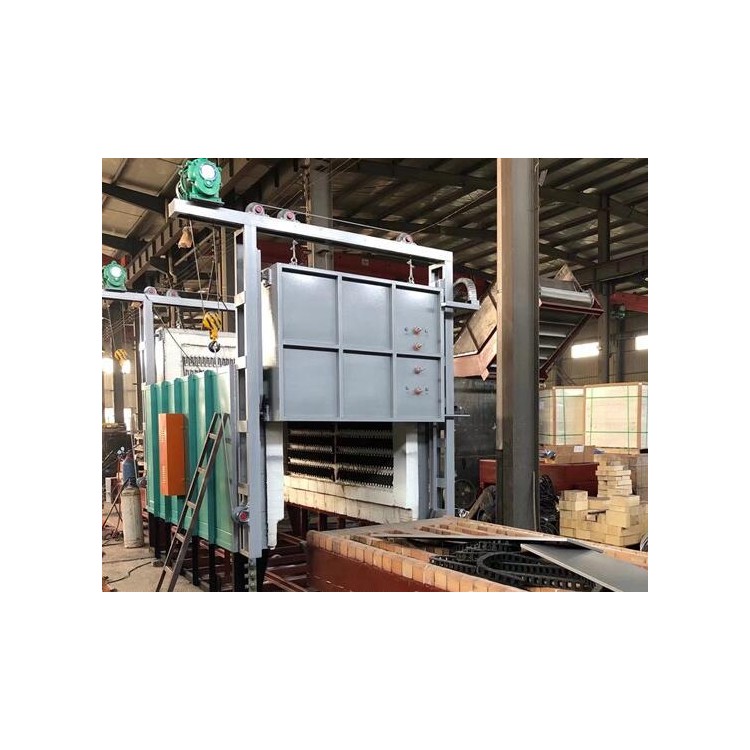
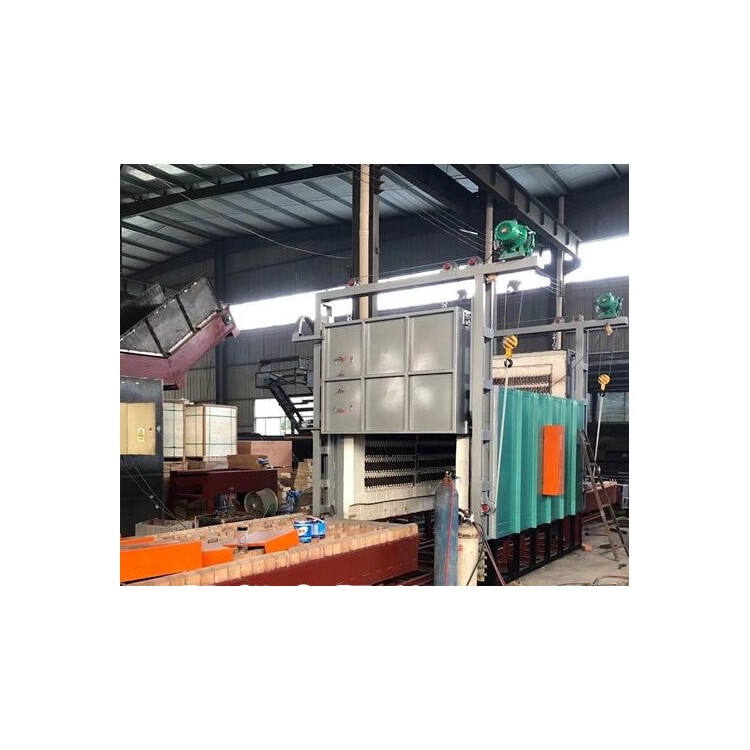
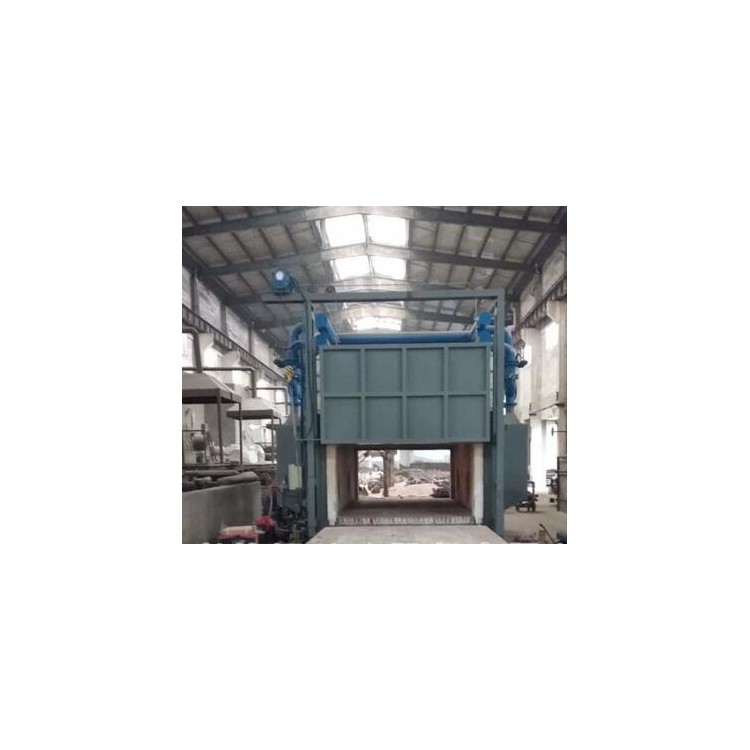
Dual-door trolley-type resistance furnace for normal metal components, providing heat treatment such as normalizing, annealing, quenching, and tempering in air.
The car-type resistance furnace is a national standard energy-saving periodic operation furnace with ultra-energy-saving structure, utilizing fiber construction for a power-saving efficiency of up to 60%. Production employs a composite high-alumina ceramic pin assembly, collision-proof and sealed carriage bricks, automatic sealing carriage, and furnace door, with an integrated rail system, requiring no foundation installation; it can be used directly on a level ground. Mainly used for hardening, annealing, aging, and heat treatment of various mechanical parts, including high-chromium, high-manganese steel castings, nodular cast iron, roller, steel balls, 45 steel, stainless steel, and more.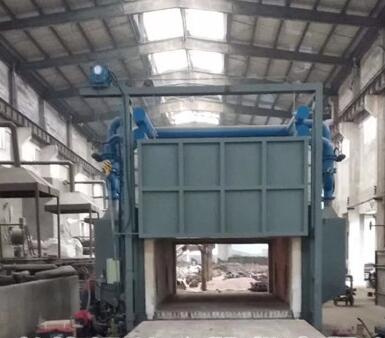
The trolley frame is constructed using steel welding, ensuring rigidity and no deformation under full load. The interior is lined with refractory bricks, with heavy-duty bricks used in areas prone to collision and weight-bearing sections to enhance the refractory structure's strength. The trolley's movement is achieved through an independent structure, powered by a reducer and chain wheel to roll along the track. The trolley is sealed with an automatic labyrinth structure and soft contact double seal. Upon entering the furnace, the trolley rises automatically due to the cam and roller斜面 action, followed by sealing. When the trolley exits, the sealing groove automatically lowers, and the sealing sand within, once refilled, requires no frequent replenishment. The trolley's exit and door opening/closing are electrically controlled, equipped with an electromagnetic brake to prevent inertia-induced collisions with the furnace body. The system features interlocking control, where slightly opening the furnace door automatically cuts off the heating element power and restores the trolley's power supply. Once the furnace door is fully closed, the trolley's power supply is automatically cut off, and the heating element power is restored.
