
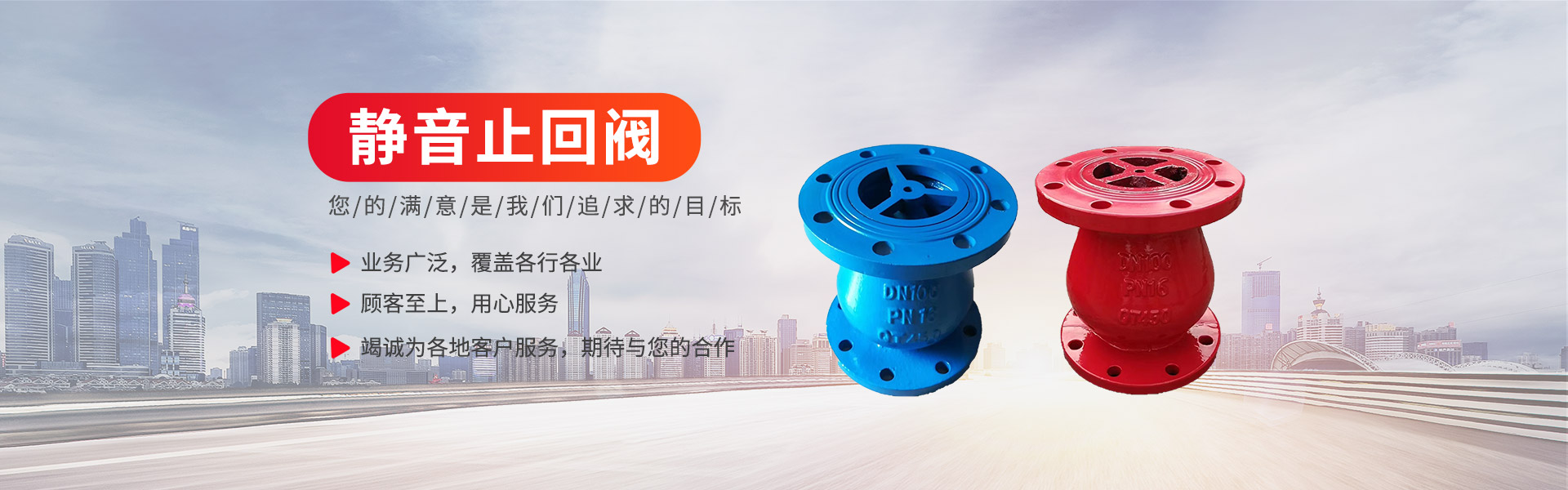


A silencer check valve is a valve that automatically opens and closes its disc based on the flow of the medium itself, used to prevent backflow of the medium. It is also known as a non-return valve, one-way valve, silencer check valve backflow preventer, and back pressure valve. The check valve is a type of automatic valve, primarily used to prevent backflow of the medium, prevent the reversal of pumps and driving motors, and release the medium in containers. Check valves can also be used on pipelines that supply auxiliary systems where the pressure may rise above the system pressure. Check valves are mainly divided into swing check valves (rotating around the center of gravity) and lift check valves (moving along the axis).


An anti-siphon valve, also known as a non-return valve, one-way valve, reverse flow valve, and back pressure valve, is a valve that automatically opens and closes its disc based on the flow of the medium to prevent reverse flow. It is a type of automatic valve primarily used to prevent reverse flow of the medium, prevent pumps and driving motors from reversing, and to prevent the release of medium from containers. It can also be used in supply lines for auxiliary systems where the pressure may exceed the system pressure. Anti-siphon valves can be mainly categorized into swing check valves (rotating around the center of gravity) and lift check valves (moving along the axis). Internal threaded check valves and butterfly check valves are examples of this type, including swing check valves and lift check valves. Swing check valves have a hinge mechanism and a disc that freely rests on the inclined seat surface like a door. To ensure the disc reaches the correct position on the seat surface each time, the disc is designed within the hinge mechanism to provide sufficient swing space and ensure a true, full contact with the seat. The disc can be made entirely of metal, or it can be fitted with leather, rubber, or synthetic coatings, depending on the performance requirements. In the fully open position, the swing check valve allows fluid pressure to flow almost unhindered, resulting in relatively low pressure drop through the valve. The lift check valve has a disc seat that rests on the body seat sealing surface. Besides the disc, which can freely rise and fall, the rest of the valve operates like a gate valve, with fluid pressure lifting the disc from the sealing surface, and the medium's return flow causing the disc to fall back onto the seat, thereby stopping the flow. Depending on the operating conditions, the disc can be a full metal structure or fitted with rubber pads or rings on the disc bracket. Like gate valves, the flow channel through a lift check valve is narrow, resulting in a higher pressure drop compared to a swing check valve, and the flow rate through the swing check valve is less restricted. These valves should generally be installed horizontally in pipelines.
