
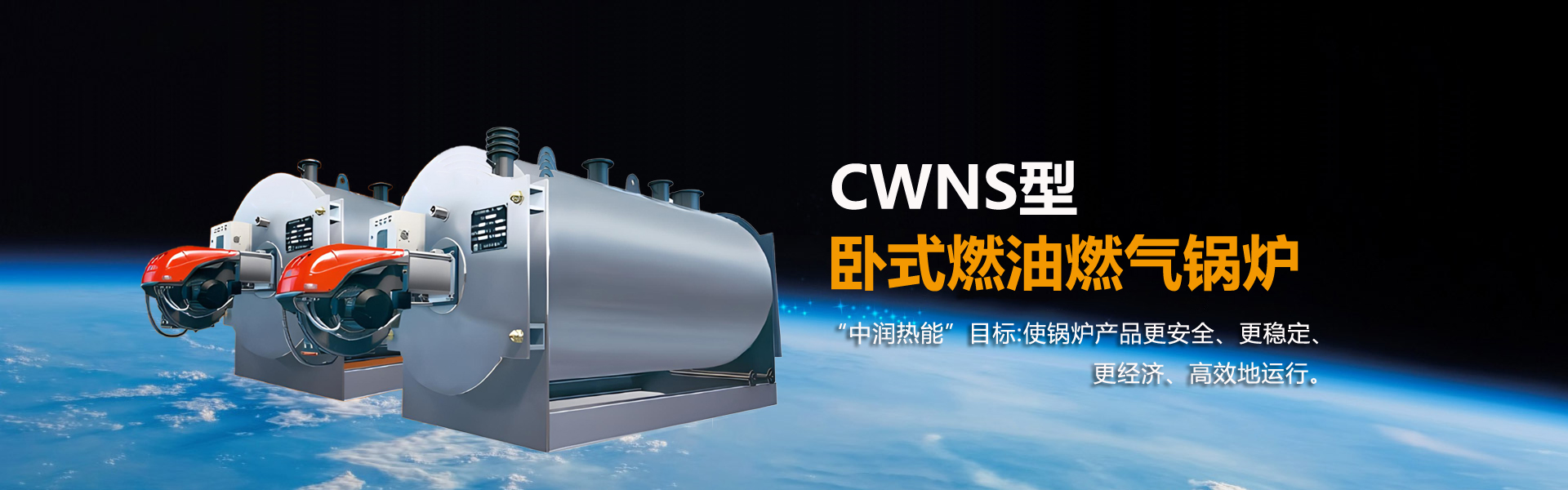

The full name of the vacuum boiler is the vacuum phase change boiler, paying attention to the two nouns: vacuum and phase change. The vacuum boiler forms a vacuum environment with negative pressure inside a sealed furnace body, fills it with heat transfer water, heats the heat transfer water through combustion or other methods, and then the heat transfer water evaporates and condenses on the heat exchanger, which in turn heats the water that needs to be heated.
The basic principle of vacuum hot water boilers originated at the Swiss Federal Institute of Technology in Zurich in 1972. In 1975, ***TAKUMA Company developed the vacuum hot water boiler based on this principle, which was subsequently patented. The technology has gradually gained recognition and popularity worldwide, and it has been researched and developed by Korean enterprises, leading to the emergence of Korean TAKUMA.
In the late 1980s, some domestic manufacturers began to develop vacuum hot water boilers. However, due to technical issues, primarily the inability to resolve the electrochemical reaction between water and iron in a sealed vacuum state, which leads to the formation of immiscible gases and a continuous decline in vacuum degree, this development has not been achieved. In the 1990s, South Korean production enterprises relatively entered the market. Later, around 2003, domestic boiler manufacturers began producing vacuum boilers.
