



1. Mineral Oil Industry: Purification of bunker fuel and lubricants for marine engines, land-based diesel engines, power stations, etc.
2. Dairy Industry: Clarification and purification of fresh milk, and fat removal.
3. Palm Oil Industry: Refining and clarification of palm oil, degumming, desaponification, dehydration, and dewaxing in vegetable oil refining.

4. Beverage Products Industry: Clear beer, juice, beverages, etc.Plant ProteinExtraction, wastewater treatment, etc.; clarification of fermentation broth in biotechnology.
5. Starch Industry: Concentration and Grading of Starch Paste
6. Industry: Purification or clarification in the extraction process of antibiotics and biochemical drugs, clarification of traditional Chinese medicine preparations, etc.
7. Chemical Industry: Purification or clarification of chemical raw materials.
8. Wool Fat Industry: Extraction and purification of wool fat from wool washing wastewater.
9. Latex Industry: Purification and Concentration of Natural Rubber乳浆
10. Other Industries: Including laboratories, oil, coking, kaolin, pulp recycling, electrolyte treatment, wastewater treatment, environmental protection, and the extraction of animal and plant proteins, as well as the extraction and refining of animal fats, and the separation of mixed fatty acids.
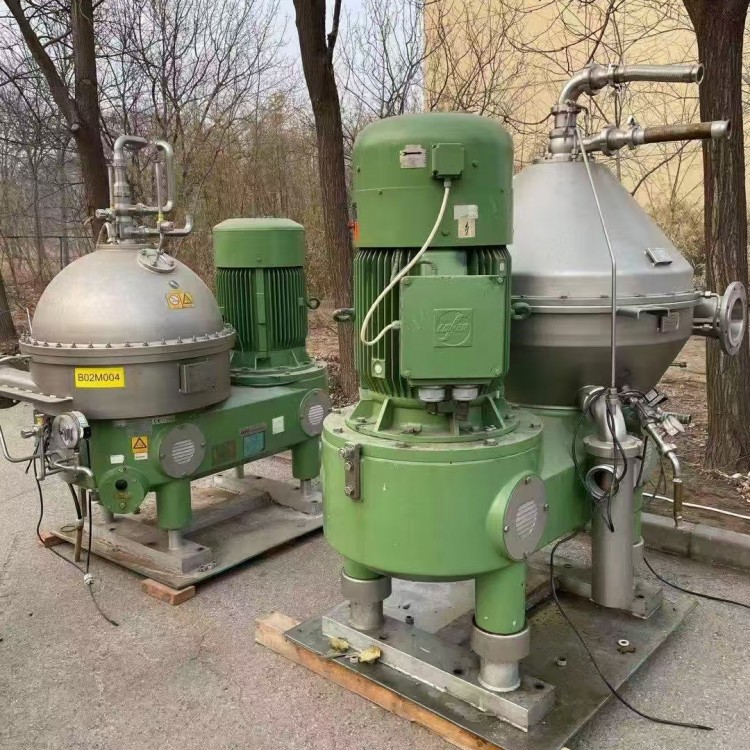
Marine Disc SeparatorPrimarily used for removing moisture and impurities from the fuel and lubricating oil in marine diesel engines and other equipment, to reduce mechanical wear and extend the service life of the equipment. The design, manufacturing, and acceptance of the marine disc separator meet the standard GB/T5745-2002 for marine disc separators.
Principles and Structure
Broadcast
Editor

A disc separatorVertical centrifugeThe drum is mounted at the top of the vertical shaft and is driven by an electric motor for high-speed rotation. Inside the drum, there is a set of disc-shaped components, the discs, which are stacked one inside the other with very small gaps between them. The suspension (or emulsion) is added to the drum through an inlet pipe located at the center of the drum. As the suspension (or emulsion) flows through the gaps between the discs, solid particles (or droplets) settle onto the discs under the force of the centrifuge, forming a sediment (or liquid layer). The sediment slides off the disc surface and accumulates in the larger diameter area of the drum. The separated liquid is then discharged from the drum through an outlet. The discs function to shorten the settling distance of solid particles (or droplets), expand the settling area of the drum, and significantly increase the separator's production capacity due to the discs' installation. The accumulated solids in the drum are removed manually after the separator is shut down by dismantling the drum, or they can be discharged through a slagging mechanism without shutting down the separator.
The Disc Separator can perform two operations: liquid-solid separation (i.e., separation of low concentration suspensions), known as clarification; and liquid-liquid separation (or liquid-liquid-solid separation), known as separation.
