

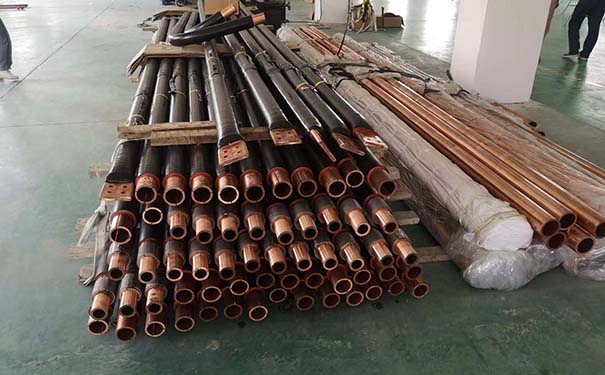
With the rapid and steady growth of the national economy and the swift development of urban construction, the electricity consumption of enterprises and residents has surged, leading to the continuous increase in the main transformer capacity of substation. Consequently, the rated current on the low-voltage side of transformers has also risen, and the power sector increasingly requires a high-current-carrying, high-safety-factor conductive product to replace the existing rectangular busbars. Under this premise, our company's technical staff and some cable manufacturing experts innovatively developed a new conductive product, the tubular busbar, in 2003, referencing the insulation structure of cross-linked cables. This product has been applied in actual projects, yielding positive results and contributing to the safe operation of substation, improving the reliability of power supply, and reducing energy losses.
2. Tubular busbars offer the following advantages compared to conventional rectangular busbars:
2.1 Low skin effect, high current density per unit cross-section
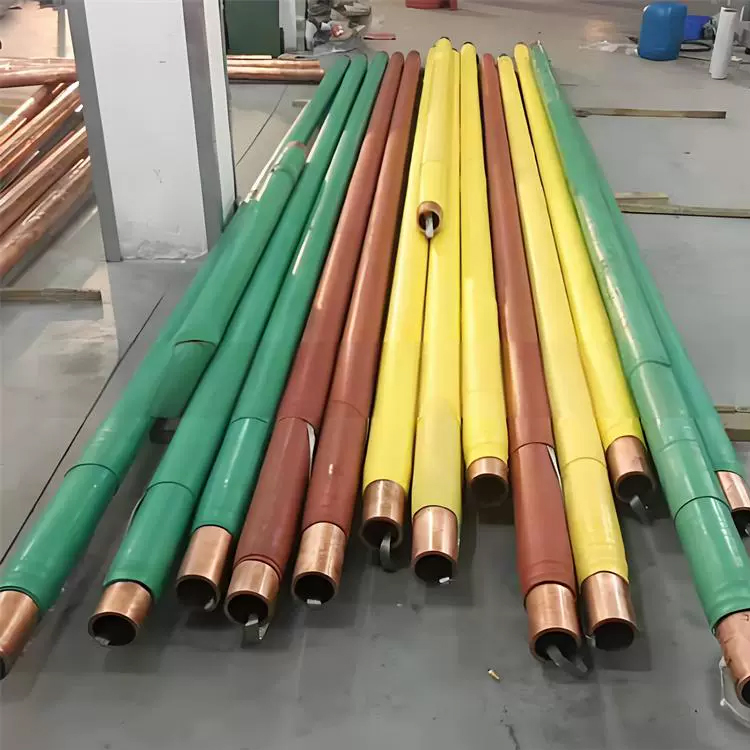
The tubular busbars use copper tubes as the main conductor, with a round surface on the outer layer of the copper tube. The charge distribution is uniform, unlike the rectangular busbars which have sharp edges. Surface charge is prone to accumulation at the edges, leading to localized overheating of the busbar and waste of energy. Additionally, the copper tubes are hollow conductors with low skin effect, and the current carrying capacity per unit cross-section is greater than that of conventional rectangular busbars. For example, with a copper tube conductor of Φ100×5, the cross-sectional area is 1491.5mm², and the current carrying capacity can reach 3150A, with a current density of 2.11A/mm² and a temperature rise of ≤45K. In contrast, for a rectangular busbar carrying 3150A, two copper bars measuring 120×10 would be required, resulting in a current density of 1.31A/mm², but with a higher temperature rise.
2.2 Good heat dissipation conditions
Conductive products generally should avoid overheating. Tubular busbars, due to the use of steel pipes as the main material, are hollow in the middle, allowing for air convection within the conductor, resulting in good heat dissipation conditions. This is an effect that conventional rectangular busbars and cables cannot achieve.
2.3 Allow for high stress, large span, and high mechanical strength
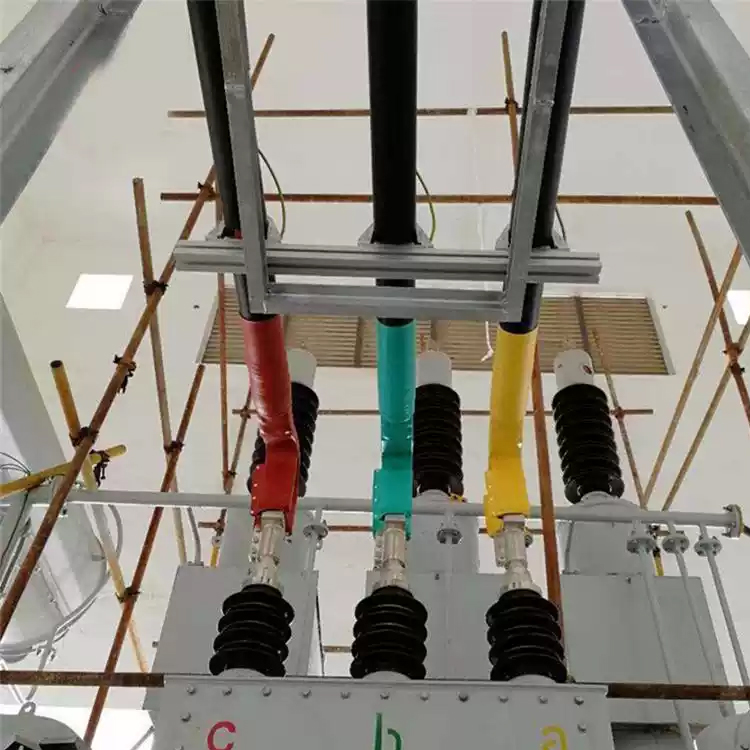
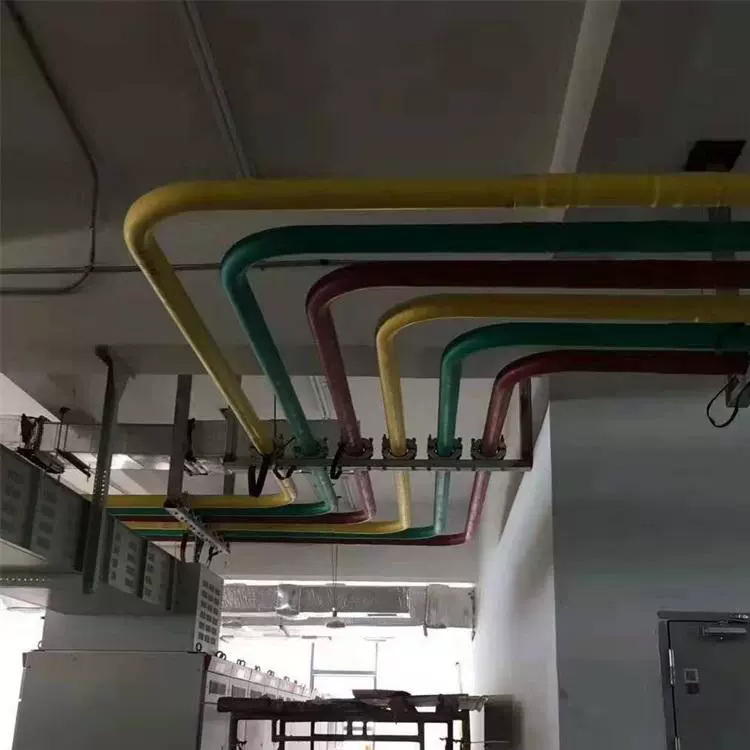
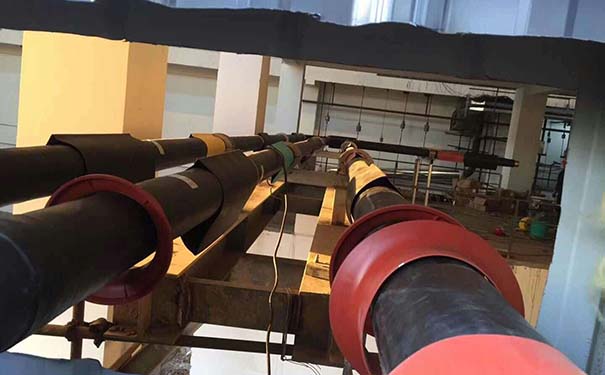
From the "Electrical Engineer's Handbook of Conductive Materials," we learn that copper tube has a stress of 294MPa and a tensile strength of 320MPa, which is four times that of rectangular copper busbars. This makes the tubular busbars capable of withstanding much greater short-circuit electrical forces than rectangular busbars. The span of copper tube busbars can reach 9 meters, and with a double steel frame structure, it can reach 14 meters, allowing direct connection to high-voltage rooms, switch cabinets, or reactors, thereby reducing the need for conventional busbar支柱insulators, busbar fittings, and civil engineering. Additionally, the busbars' steel frame support provides strong seismic resistance.
2.4 Strong electrical insulation performance, high stability of main insulation material
The insulation of tubular busbars is a structure formed by alternating multiple insulation materials and shielding materials. The potential decreases layer by layer from the inside to the outside, reaching zero at the surface. Multiple shielding layers ensure uniform charge distribution on the surface of each insulation layer, preventing local discharges on the surface of the insulation layer and interference from the electric field and magnetic field of other phase busbars. Additionally, with the main insulation material being PTFE, it boasts excellent electrical properties and chemical stability, low dielectric loss, flame retardancy, resistance to aging, and a long service life.
