

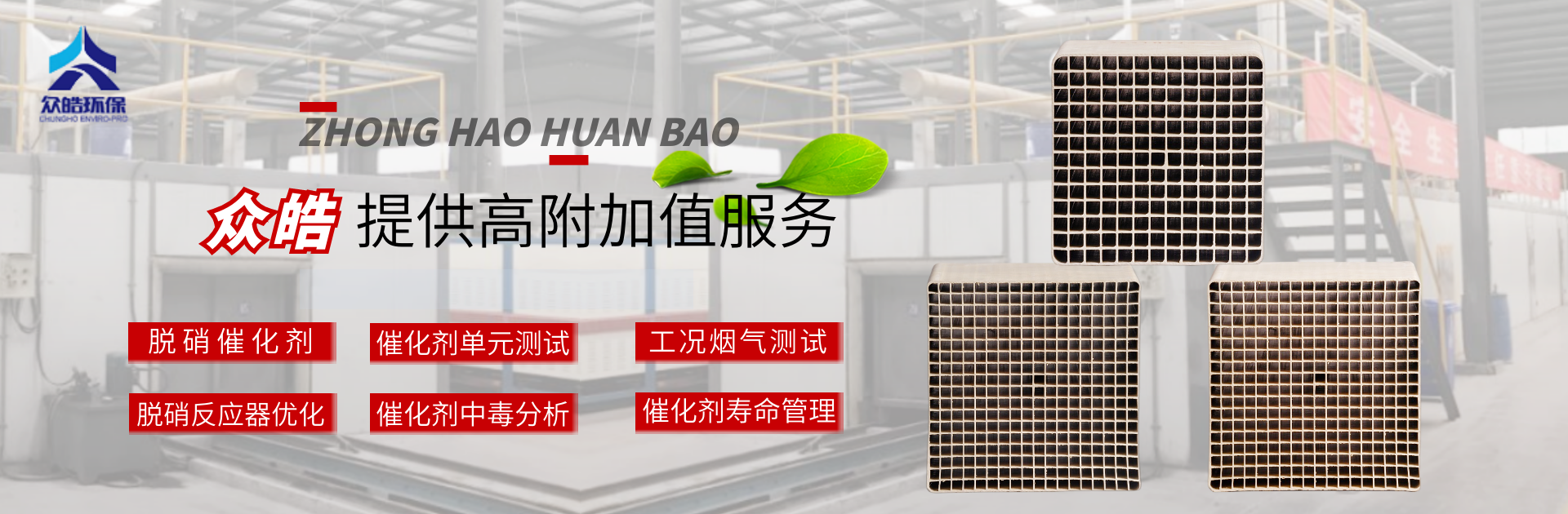

Denitrification catalysts can be widely applied in industrial and automotive exhaust treatment to reduce environmental pollution. In this article, we will thoroughly explain the working principle and mechanism of denitrification catalysts.
The working principle of denitrification catalyst can be simply summarized as "reduction." When it enters the reactor of the catalyst, it is reduced to nitrogen and water. This process involves two steps: adsorption and reaction.
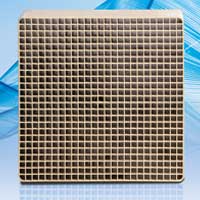
Adsorption refers to the process where gas molecules adhere to the surface of a catalyst. During the adsorption stage, molecules bind to active sites on the catalyst surface. These active sites are typically metals or metal oxides with high catalytic activity, such as molybdenum, tungsten, iron, and copper.
During the reaction phase, molecules adsorbed onto the active sites will be reduced to nitrogen and water. This process usually requires heating to provide sufficient energy to excite the chemical reaction. During this process, the active sites provide the catalytic ability needed for the reaction, making it easier to occur.
Beyond the active sites, the structure and surface morphology of the catalyst also affect the catalytic performance. For instance, the pore structure on the catalyst surface can influence the diffusion and adsorption of reactant molecules, thereby impacting the reaction rate and catalytic efficiency. Therefore, the design and optimization of the catalyst are a crucial aspect of denitrification catalyst technology.
Additionally, reaction conditions can also affect the performance of denitrification catalysts. For instance, reaction temperature, gas flow rate, and reactant concentration are all factors that can impact the catalytic efficiency of the catalyst. In practical applications, the working conditions of the catalyst need to be adjusted and optimized based on specific application requirements.
Overall, denitrification catalysts are a crucial environmental protection technology. They effectively reduce emissions and lower environmental pollution. The working mechanism of denitrification catalysts involves two steps: adsorption and reduction, which require active sites of the catalyst and appropriate reaction conditions to achieve. Therefore, the design and optimization of catalysts are important aspects for the development and improvement of denitrification catalyst technology. In the future, with the enhancement of environmental awareness and stricter environmental regulation, denitrification catalyst technology will continue to be widely applied and developed.
In addition to the common SCR (Selective Catalytic Reduction) denitrification technology, there are other types of denitrification catalyst technologies. For example, the SNCR (Selective Non-Catalytic Reduction) denitrification technology utilizes certain chemical reagents, such as ammonia water or urea, to reduce nitric oxides without a catalyst. Another technique is OCNR (Oxidative Coupling of Nitric Oxide Reduction), which employs a reagent capable of oxidizing nitric oxide to generate free radicals. These free radicals can react with other gas molecules, thereby reducing nitric oxide to nitrogen and water.
In the future, as technology advances and innovates, denitrification catalyst technology will become increasingly refined. Simultaneously, the enhanced awareness of environmental protection will drive the application and development of this technology. We look forward to the wider application of denitrification catalyst technology in the environmental protection field, making greater contributions to safeguarding our environment.
