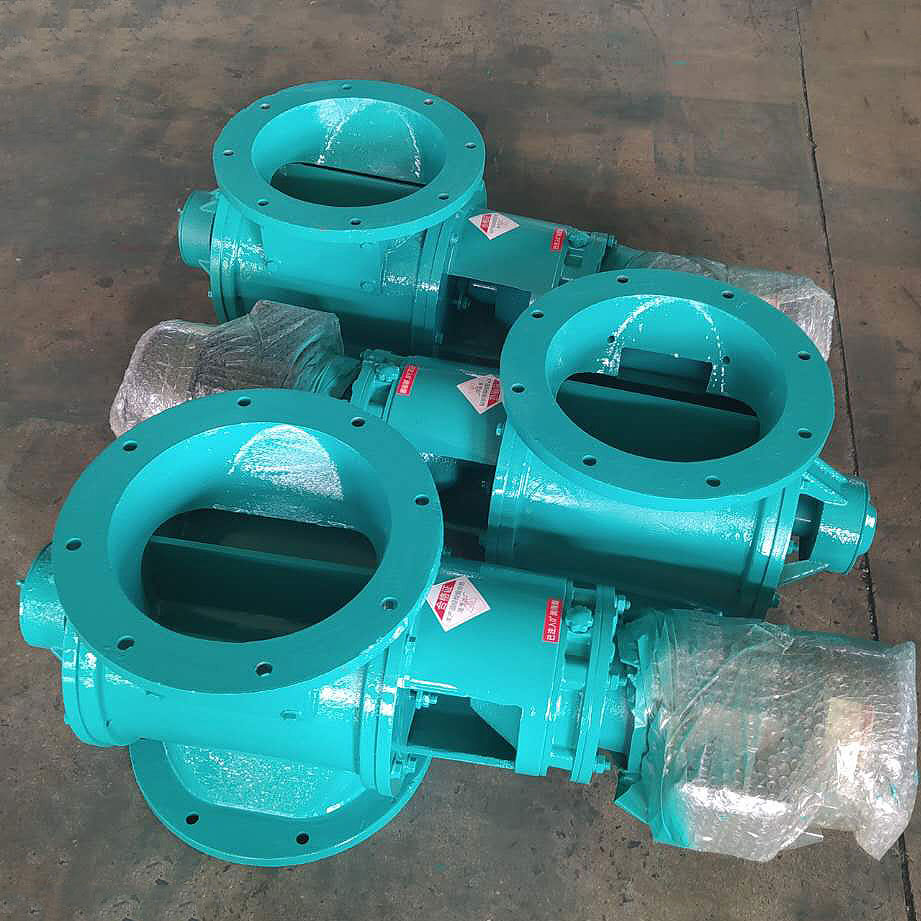

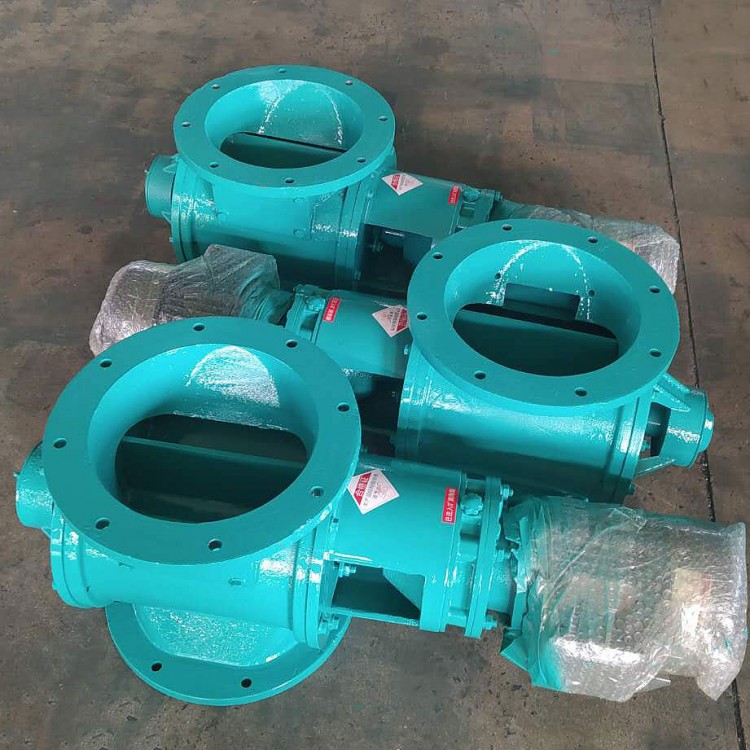

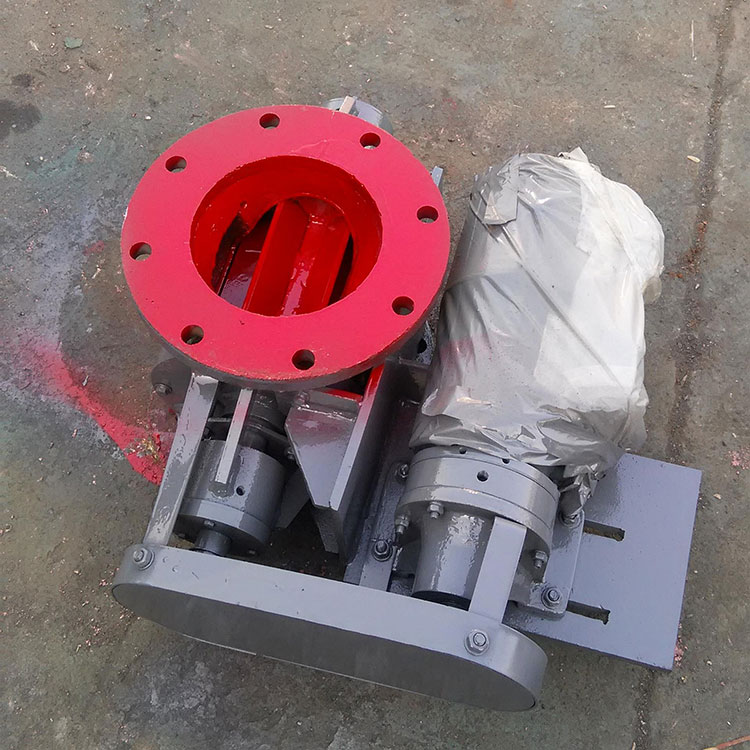
The YJD-B type star discharge valve, commonly known as a discharge valve or ash valve, consists of a rotor impeller with several blades, a housing, a reducer, and sealing components, offering the advantages of simple structure, easy operation, stable operation, low power consumption, low noise, and long service life. The YJD-B type star discharge valve is divided into round and square star ash valves based on its external structure. Its benefits include smooth operation, even and accurate discharge, optimized structure, compact size, good sealing performance, easy maintenance, lightweight energy efficiency, and long service life. It is also one of the equipment for drying, dust, particle, and solid conveying systems.
The YJD-B type star卸料器 is installed in the dust collector ash hopper for discharging, widely used in feeding and discharging systems in industries such as chemicals, metallurgy, mining, cement, dust removal, environmental protection, power, and grain. Customized non-standard star卸料 valves are also available upon customer request.
YJD-B Type Star Discharge Valve Operating Principle:
Relies on the gravitational force of the material and the forced action of the feeding mechanism to discharge the material from the storage and continuously and evenly feed it into the next unit. It is mainly composed of an electric motor, reducer, housing, impeller, main shaft, bearings, and left and right end caps. Utilizes a steel plate welding structure with strong blade strength, integrating the transmission device, shaft, and blades into one. Due to its outward protruding bearings and reducer, it can prevent dust from entering the bearings and large particles from getting stuck. During operation, the reducer motor drives the impeller to rotate through a coupling, evenly bringing the material from the upper part of the housing to the lower part, which is then removed by the next unit. Therefore, it can only be installed vertically and not horizontally, and the upper part of the feeder must maintain a stable material column.
YJD-B Type Star Discharger Operation and Maintenance:
1. This unit is designed for continuous operation, allowing forward rotation.
2. It is not allowed to directly hammer the output shaft and input shaft with other parts to prevent damage.
3. During transportation and installation, maintain stability and avoid collisions to prevent shell breakage and deformation.
4. The reducer is pre-filled with No. 00 grease before shipment, and the ash unloading valve is filled with lithium-based grease. Within 6-10 months after operation, the transmission and bearing sections should be replenished or replaced with grease. If the ambient temperature is high, humid, or there is excessive dust in the air, the oil extraction interval should be appropriately shortened.
5. During operation, if the equipment shows phenomena such as air leakage or dust leakage along the axial direction, you can tighten the screw of the pressurizing cover or replace the asbestos packing and then tighten the cover again.
6. Avoid equipment overload due to large material particles and strong adhesion during operation, or equipment jamming or motor short circuit caused by dust collector material, which may lead to equipment damage. It is recommended that users check promptly and install overload protection devices.
YJD-B Type Star Discharger Performance Advantages and Features:
1. This product is for processing with a locking gas feature, serving as a dosing feeder for powder in crushing and grading systems. It can also act as a discharge unit for systems like separation and dust collection, or be used in pneumatic conveying systems, either pressure or suction-assisted.
2. Equipped with a pressure equalization device, suitable for both positive and negative pressure conveying systems.
3. Available in a variety of materials including cast iron, cast steel, stainless steel, and titanium steel. The flange can be in square or round configurations, catering to diverse customer requirements.
The star unloader is the main equipment for dust removal, air supply, and feeding other equipment, suitable for powdered and granular materials. Widely used in industries such as environmental protection, metallurgy, chemical, grain, and food.