
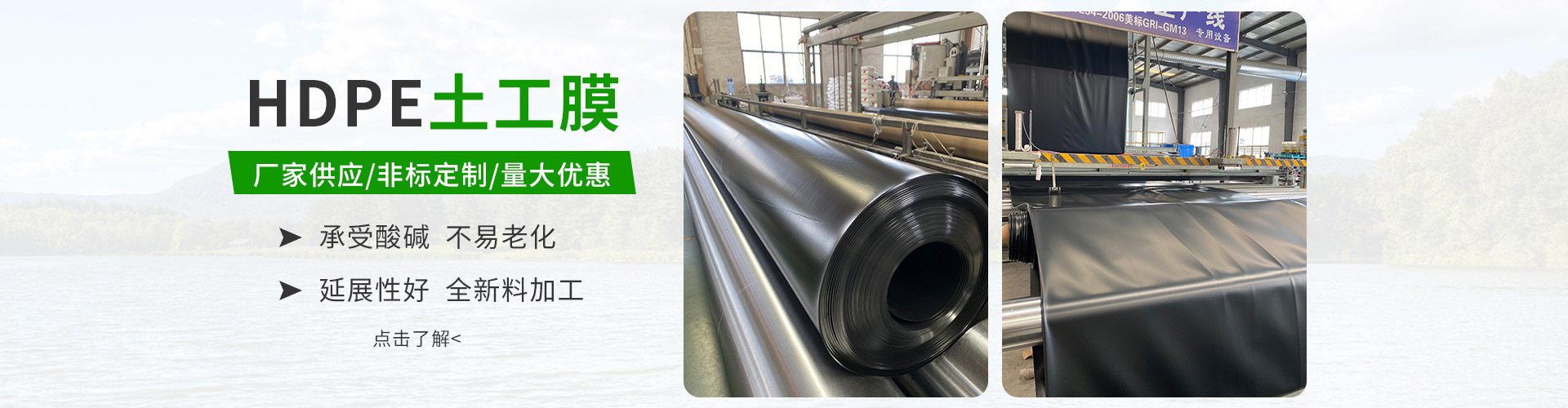
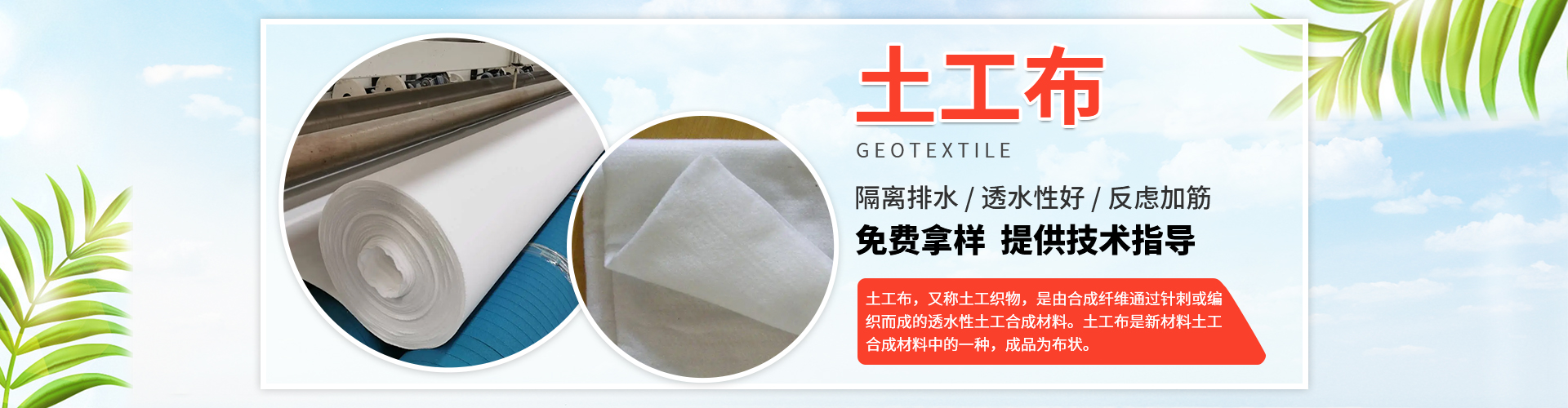

Composite geomembrane, also known as a waterproofing membrane, is made by bonding a plastic film with geotextile. As a commonly used geosynthetic material, its primary function is to prevent seepage, while also offering isolation, protection, and reinforcement. Thanks to its excellent chemical properties and mechanical strength, composite geomembranes are widely used in environmental protection, water conservancy, municipal, landscaping, petrochemical, mining, transportation facilities, agriculture, and aquaculture sectors. Let's take a closer look at the functions and applications of composite geomembranes.
What is the function of composite geomembrane?
Composite geomembrane is a composite product of geomembrane and geotextile. In addition to its excellent functions of anti-seepage, protection, reinforcing, drainage, and isolation, its high tensile strength and good resistance to chemical erosion and aging far exceed the performance indicators of using fabric or membrane alone. It is convenient for construction, does not require adhesives, and has a wider range of applications and greater ease of use. The main functions of composite geomembrane include:
Isolation Effect
Placing composite geomembrane between two different materials, between the same material with different particle sizes, or between the soil surface and the upper building structure can isolate them, preventing intermixing or loss. This helps maintain the overall structure and function of the base material, and is widely used in railway and highway subgrades, earthfill dam projects, soft soil foundation treatment, and other engineering projects.
2. Protective Function
Geosynthetic composite membranes can act as stress distributors, allowing stress to be decomposed when external forces are transferred from one object to another. This prevents the soil from being damaged by external forces, thereby providing protection for the base materials. The protective function of the geosynthetic composite membrane is primarily for internal surface protection, placing the membrane between the two materials on the base. When one material is subjected to concentrated stress, it prevents the other material from being damaged.
3. Reinforcing effect
Geosynthetic composite membranes possess high tensile strength. Buried within the soil or in the appropriate structural position, they can distribute soil or structural stresses, transfer tensile stresses, limit lateral displacement, enhance frictional resistance between the soil or structural layer and the geosynthetic materials, thereby increasing the strength of the soil or structural layer composite. This, in turn, constrains the shape of the soil or structural layer, reduces uneven soil settlement, and improves the stability of the soil or structural layer, providing reinforcing functions.
What are the applications of composite geomembranes?
1. HDPE geomembranes are suitable for environmental and sanitation applications, such as landfill sites, wastewater treatment plants, power plant settling ponds, and industrial uses.
2. LDPE waterproofing membrane for hydraulic engineering applications: such as seepage prevention, leak plugging, reinforcement, and waterway seepage prevention, vertical core wall, slope protection, etc.
3. HDPE liner for municipal projects: subway, underground construction of buildings, green roofs, rooftop gardens, and waste water pipeline seepage prevention.
4. Polyethylene waterproofing membranes are suitable for gardens, including artificial lakes, waterways, reservoirs, ponds on golf courses, slope protection, and green lawns for waterproofing and moisture-proofing.
5. High-density polyethylene geomembrane is suitable for petrochemical applications: including chemical plants, oil refineries, oil storage tank leakage prevention, chemical reaction pools, sedimentation pond linings, and secondary linings, etc.
6. Polyethylene geomembranes are suitable for the mining industry, including applications such as bottom liner for washing ponds, leach ponds, ash yards, dissolution ponds, sedimentation ponds, storage yards, and tailings.
7. Polyethylene Film for Traffic Facilities: Road foundation reinforcement, culvert seepage prevention.
8. LDPE Waterproof Membranes for Agriculture: Waterproofing for reservoirs, drinking water pools, water storage ponds, and irrigation systems.
9. HDPE membranes are suitable for intensive aquaculture applications: as linings for factory farms, fish ponds, shrimp ponds, as well as slope protection for sea cucumber enclosures.
10. High-Density Polyethylene (HDPE) Waterproof Membranes Suitable for Salt Industry: Saltfield Crystallization Pools, Brine Pools Covers, Salt Membranes, Salt Pool Plastic Covers.
