
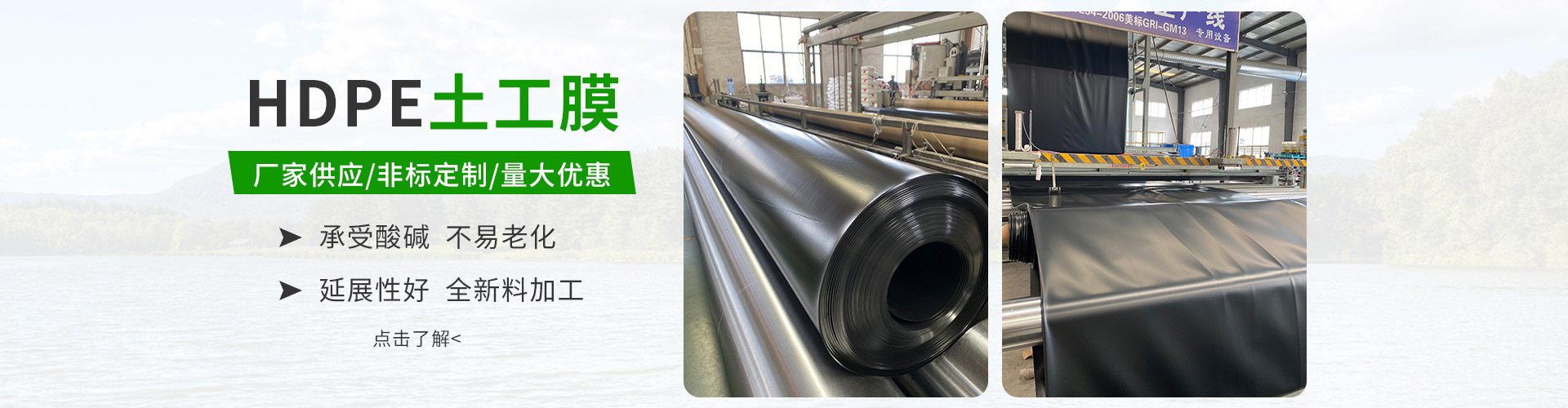
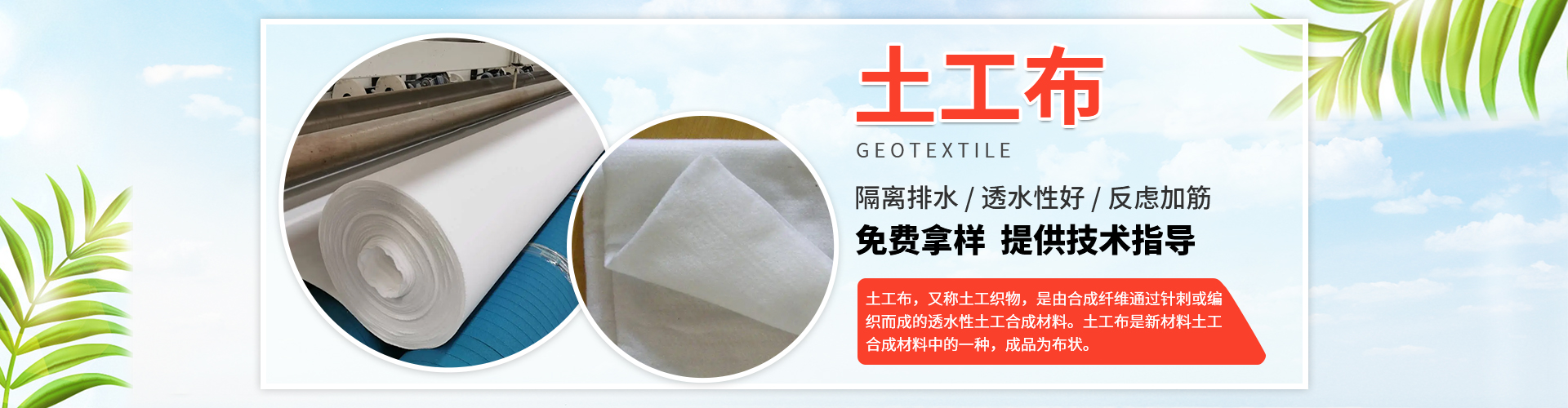

Shallow water lotus ponds and fish ponds can be treated with a waterproofing solution using HDPE geomembrane (also known as: waterproofing film, lotus pond film, aquaculture film, etc.) or by using composite geomembrane (short fiber composite membrane and long fiber composite membrane). Today, I'll introduce you to these two types of geomaterials:
One, Composite Geomembrane: They can be categorized into short-fiber composite geomembrane and long-fiber composite geomembrane based on the composite material. Additionally, they can be divided into two-bag-one-membrane and one-bag-one-membrane based on the composite layers. The production process involves bonding one or two layers of geotextile onto HDPE geomembrane. The primary function of the geotextile is to protect the HDPE geomembrane, enhancing the composite geomembrane's resistance to aging and piercing. Currently, the thickness of composite geomembranes starts at 220 grams per square meter and goes up to 1500 grams per square meter. The width is typically 6 meters, with a roll length of 50 meters. Specific weights, widths, and lengths can be customized according to demand.
HDPE geomembranes are made from high-density polyethylene and feature excellent isolation and waterproofing properties. They are easy to install and can be cut to any size. Standard specifications for waterproofing membranes usually range from 0.5mm. Other common sizes include 0.3mm, 0.4mm, as well as 0.8mm/1.0mm, 1.2mm, and 1.5mm. Specific sizes, widths, and lengths can be customized for production.
