



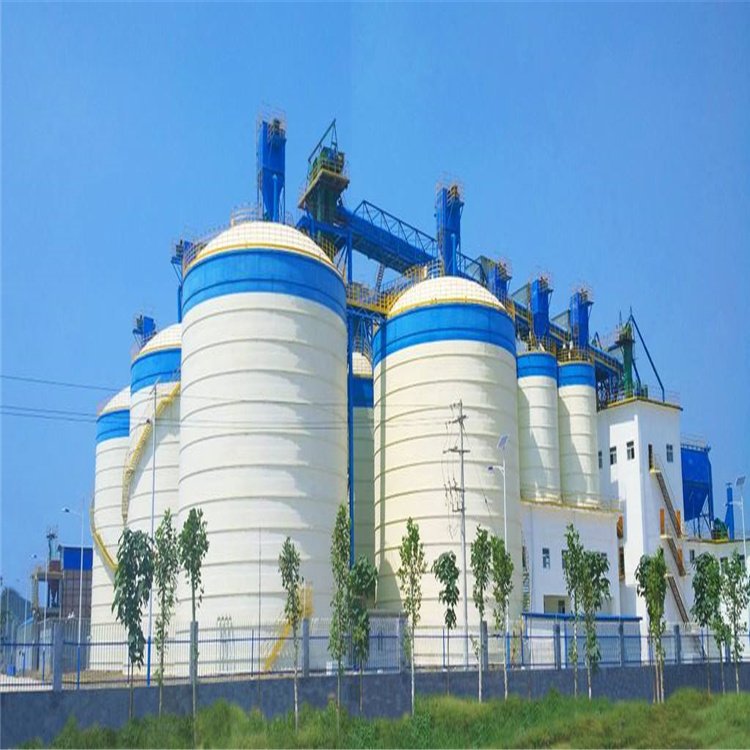
I. Structure Shape and Dimensions
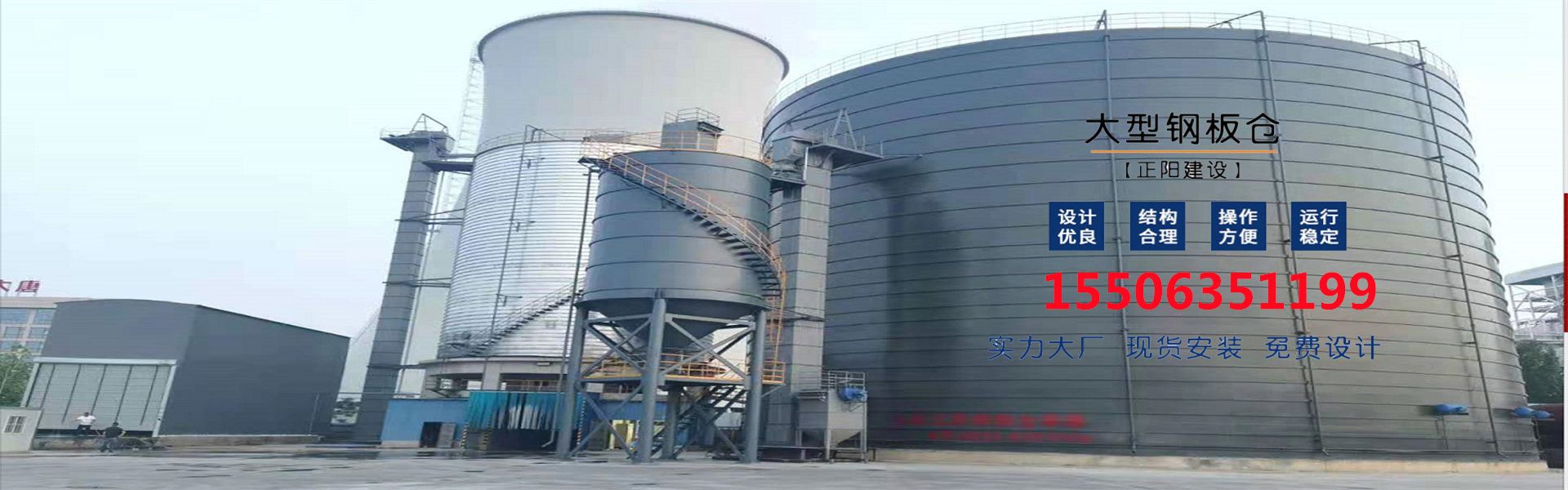
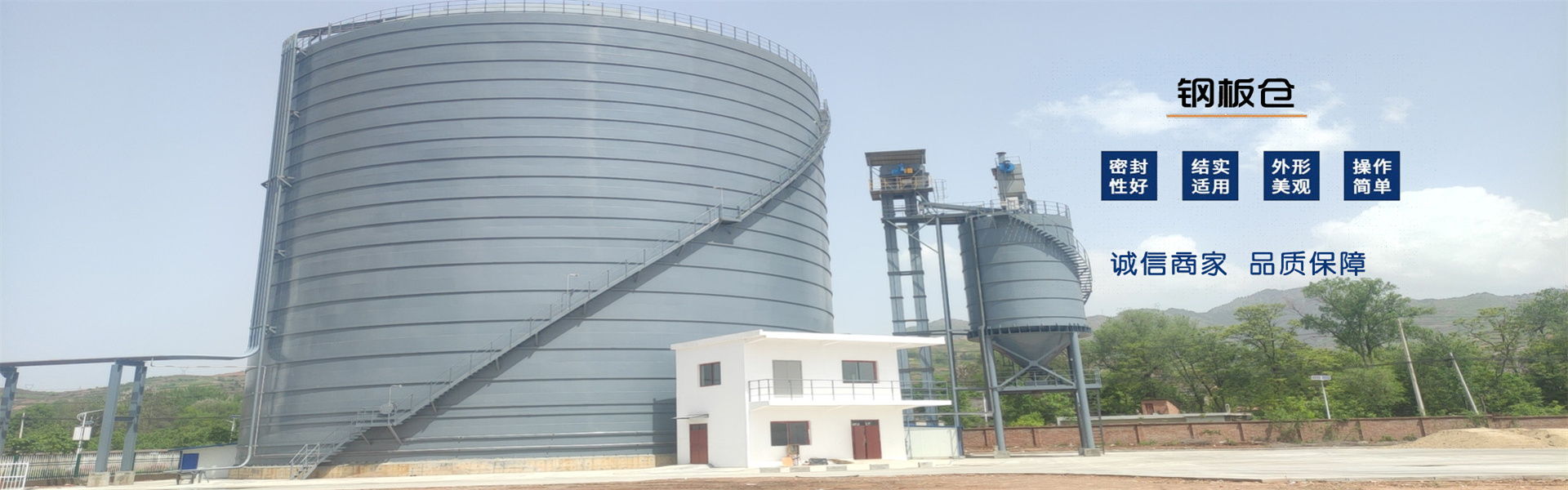
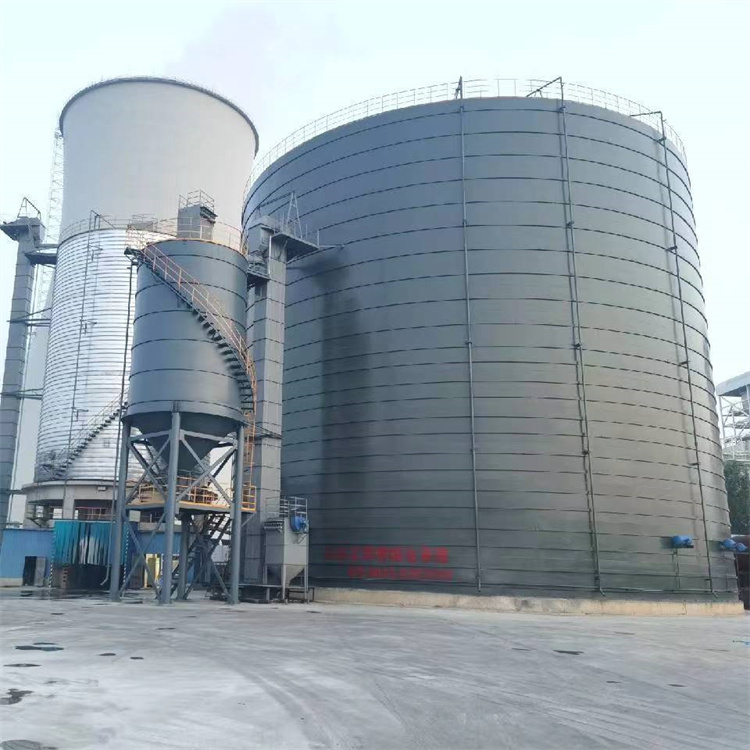
The effective diameter of large steel plate storage facilities can reach several meters to tens of meters, with a height-to-diameter ratio of about 1:1. The storage body is cylindrical, and the roof is a spherical segment, forming a circular warehouse. The walls are constructed by steel plate welding; the spherical segment roof's semi-circular section is formed by a special structural design and a combination of several arched beams, creating a unique architectural structure with a reliable load-bearing capacity. The bottom shape of the storage facility is concave, designed using the楔力增压 principle, with varying design parameters depending on different climatic conditions and geological structures.
Material Storage & Bulk Density: Single warehouse capacity of 100,000 tons.
The single silo capacity for cement can range from 10,000 to 100,000 tons, and can be combined to form a cement storage group with a total capacity of tens of thousands of tons. The cement stockpile is related to its specific gravity; cement with high gas content entering through chutes has a lower specific gravity, generally around 1.2, which can reach 1.4-1.5 after some time, and around 1.7 if stored for a longer period. Typically, the storage specific gravity of cement is calculated at 1.45.
Section 3: Inventory of Materials: Mechanical and pneumatic options available.
The method of material entry can vary depending on the specific conditions of each factory, including hoist entry, chute entry, or air conveying pipeline entry. Between the storage silos and between the silo roofs and the hoist frame, overhead bridges can be constructed to facilitate the installation of material entry conveying equipment.
Four: Inventory Outbound Method and Flow: Gas discharge, up to 200-500 tons per hour.
The traditional round silo's unloading method generally employs gravity discharge, but as cement is stored for a long time, the unloading rate is quite low without external force, usually not exceeding 70%. This large steel plate storage facility, utilizing a special gasification unloading device that combines gas fluidization and pneumatic pipelines, first creates a fluidized state of the cement inside the silo. When the angle of the unloading chute at the bottom is greater than the natural flow angle of the material, the material flows along the chute for unloading. Afterward, it is homogenized through a central homogenization chamber before being dispatched and transported by the sender and conveyor.
The surge pipeline extends outside the warehouse, ensuring an evacuation rate of over 95% even with a large warehouse area. The cement is conveyed into packaging silos or bulk cement tanks via equipment or pneumatic conveyors, designed according to the customer's requirements for outflow volume. The single-pipe outflow capacity reaches 300t/h, and larger flow rates can be achieved with dual-pipe and multi-pipe combinations to meet customer demands.
Five: Low operating energy consumption: 0.3 kWh per ton of cement.
Due to the integrated design concept of gas fluidization, gas homogenization, and gas delivery, which is the principle of using one gas for multiple purposes, a significant amount of gas resources can be saved. Considering the long storage period of cement, which increases its bulk density, medium-pressure air is used as the gas source for unloading, while the central area and conveying pipeline use low-pressure gas from Roots blowers. The comprehensive energy consumption for gas homogenization, unloading, and conveying of cement is approximately 0.3 kWh per ton. If the cement storage time is extended, the energy consumption will increase accordingly.
Six. Excellent quality preservation for cement: Long-term storage without deterioration
As the storage period extends, the specific gravity of cement increases. Cement stored in large steel plate silos is essentially under airtight isolation, akin to vacuum sealing. This sealing effect is far superior to that of brick, stone, and concrete structures, and is even beyond comparison for bagged cement storage. Practice has proven that cement stored in large steel plate silos for over two years maintains its quality essentially unchanged, without any caking.
Section 7: Environmental Compliance: One dust collector achieves dust-free emissions
The top of the storage facility features a load-bearing dome, each equipped with a pulse-jet dust collector. These collectors primarily gather dust generated during the material intake, ensuring dust emissions are below 30mg/m³³. Using traditional storage would require more dust collectors and increased environmental investment. For instance, a large steel plate storage facility for 30,000 tons of cement has only one intake port and one dust collector to ensure dust-free emissions. In contrast, a 5,000-ton traditional dome structure would need six, each with one intake port requiring six dust collectors. Just the additional requirement of multiple exhaust ports significantly raises the difficulty of environmental control.
Section 8: Process Layout: Flexible and Free
Layout options include linear, triangular, double or multi-row formations, depending on the site location, with the discharge corridor direction determined flexibly based on site conditions. Due to the use of pneumatic conveying for discharge, the location of the warehouse hoist can be freely selected.
Section 9: Broad Storage Applications: Diverse and Varied
Our company, while promoting the application of large-scale cement storage steel silos, has also successively developed storage silos for clinker and fly ash. This not only reduces investment and eliminates environmental pollution, but also saves a substantial amount of construction land. Additionally, storage silos for grains, oil products, and more have been developed.
Ten: Short construction period: Approximately 100 days
Based on geological conditions, construction site specifics, and the construction environment, the general construction duration is typically 3-4 months. For cluster construction, cross-construction or simultaneous construction can be employed to shorten the timeline.
Eleven: Long service life: 50 years
Conduct anti-corrosion maintenance according to specifications to ensure a reliable service life of 50 years, even without visible corrosion on the surface.
Twelve: Low maintenance costs: The in-store material handling equipment incurs almost no maintenance fees.
The gasification, unloading, and conveying equipment inside the warehouse have no rotating parts, making them mostly maintenance-free. Even for a 30,000-ton cement storage facility, a maintenance is carried out every three years, involving only the application of anti-rust paint on the exterior, with annual maintenance costs of approximately 3,000 yuan.
