

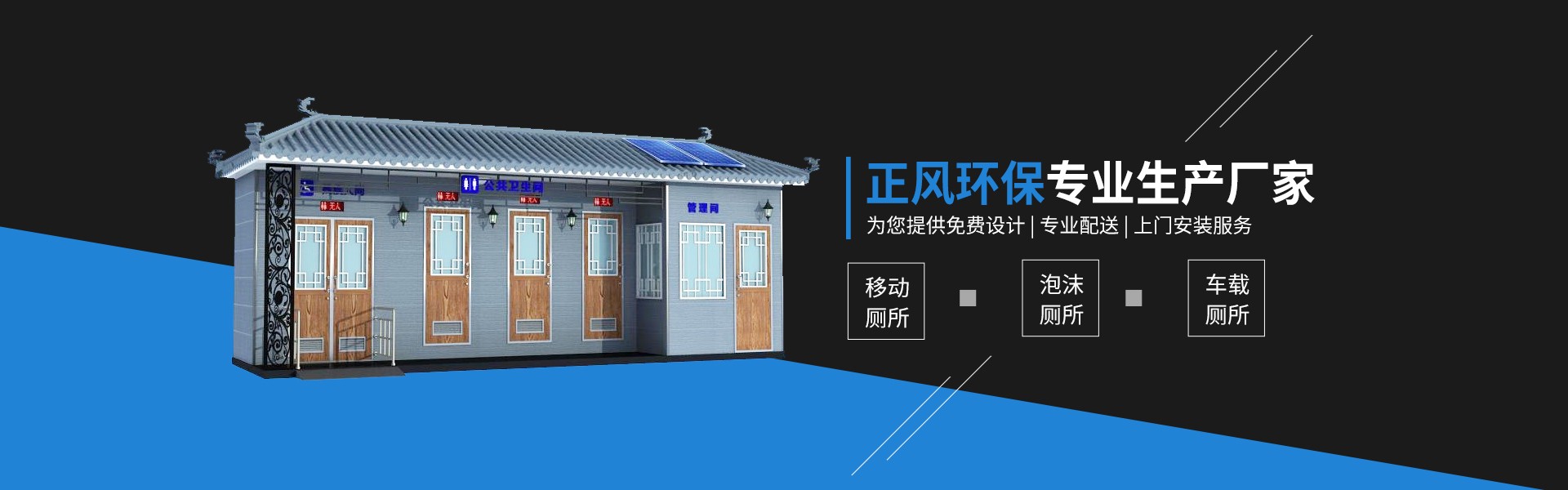
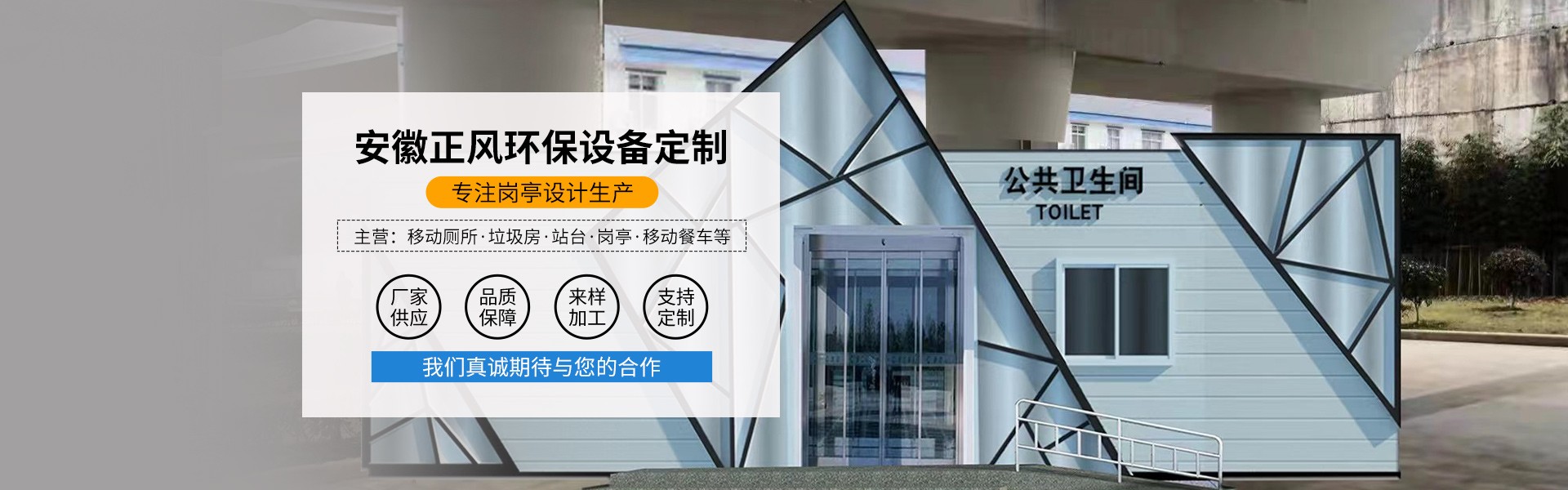


Portable toilet construction is lengthy and challenging. Today installed, tomorrow ready for use. This eco-toilet requires no road excavation or sewage pipeline laying. The aesthetically pleasing portable toilet, an intelligent microbial eco-public toilet, not only promotes environmental protection and low carbon emissions but also features easy installation. It effectively eases the public's difficulty in finding a restroom while also adding a beautiful touch to rural landscapes.
The portable toilet is primarily constructed with steel frames and color steel panels, featuring durability, aesthetic appeal, and resistance to rust and corrosion. The walls are smooth on both sides, easy to clean, meet hygiene standards, are lightweight, and can be easily moved and positioned. Materials include steel, wood, plastic, perforated steel plates, and glass fiber reinforced plastic (GFRP). Some portable toilets now use GFRP, with a black reinforced GFRP structure, offering the same characteristics of durability, aesthetic appeal, rust and corrosion resistance, smooth walls, easy cleaning, hygiene compliance, lightweight, and easy mobility. The working principle of the portable restroom utilizes foam generated by a foaming liquid mixture instead of water for flushing. As the liquid expands nearly 1000 times its original volume, water usage is significantly reduced. All feces are collected in a bio-treatment pool, where it is decomposed into gas and water by enhanced beneficial microorganisms. The main gas component is methane (CH4) and carbon dioxide (CO2), which can be collected and utilized or purified for direct air emission under appropriate conditions. The resulting liquid can also be used as organic fertilizer, with the advantage of complete feces degradation by beneficial microorganisms.
The Mobile Bathroom Production Process: The raw liquid is mixed and then enters the foam generator. It is supplied with foam through a PLC intelligent full automation control system, with fiber optic probes maintaining a fixed foam level. It then flows through the drainage pipes into the biochemical pool, where it is decomposed by microorganisms, separating waste into water and gas. The mixture is then subjected to sedimentation and filtration to remove retained suspended particles. After re-disinfection, the treated water undergoes pipeline flushing and is reused.
