

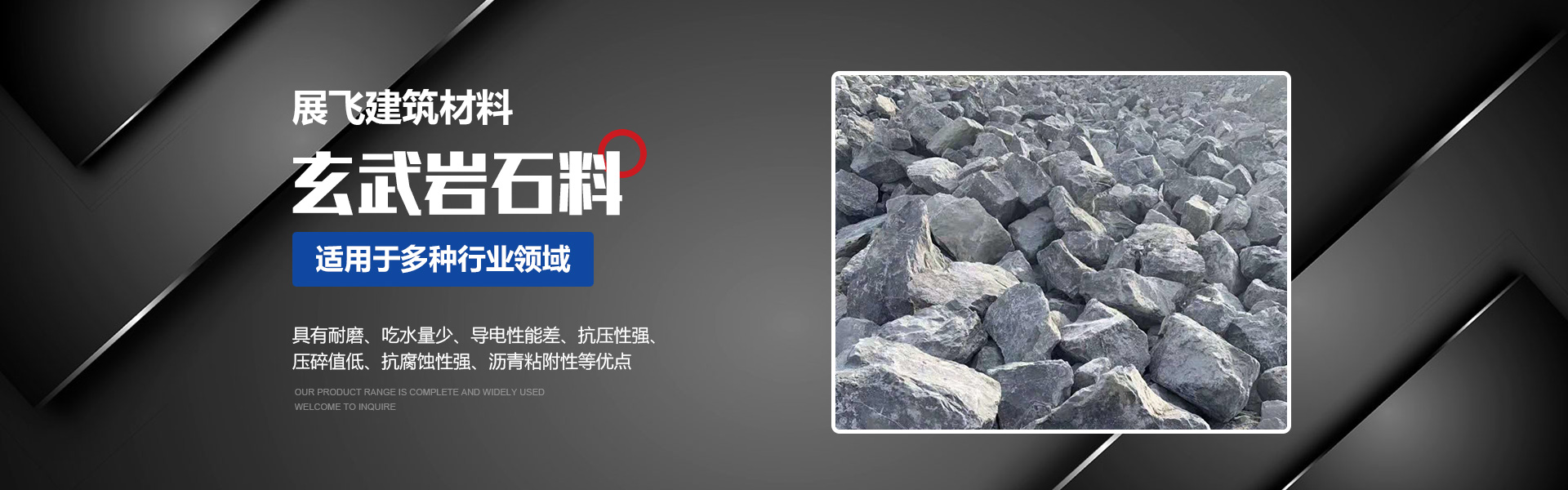

Basalt is a mafic volcanic rock, with a chemical composition similar to gabbro or diorite. After being processed into aggregates, it has been widely used in various applications over the years. Therefore, the following section provides a detailed introduction to its uses.
Porous basalt, also known as pumice, boasts numerous pores and a sturdy texture. It can be mixed into concrete, reducing its weight while maintaining durability. This material is not only robust but also offers soundproofing and insulation properties, making it an excellent aggregate for lightweight concrete in high-rise buildings. Pumice is also an excellent abrasive material, suitable for grinding metals and stones. In industry, it serves as a filter, desiccant, and catalyst, and is widely used in landscaping, primarily for artificial mountains and bonsai displays. Additionally, it finds applications in home decor.
Basalt gravel has a wide range of applications, extending beyond the construction industry. It is an excellent raw material for producing "cast stone," which, after melting, casting, crystallization processing, and annealing, forms a new material that is as hard as alloy steel and highly wear-resistant, offering superior corrosion resistance to lead and rubber. Additionally, basalt can act as a "lubricant" in a casting steel process, extending the lifespan of the casting film. Furthermore, basalt can be drawn into glass fibers, and the resulting basalt glass fiber fabric has superior alkali resistance and excellent high-temperature performance compared to regular glass fiber fabric.
Here is an introduction to the uses of basalt aggregates. The description clearly outlines their application scope, facilitating the expansion of their usage.
