




- AllProduct Category
-
Pressure Vessel
Tube Centrifuge
Extractant
Extraction Tower
Extraction Tank
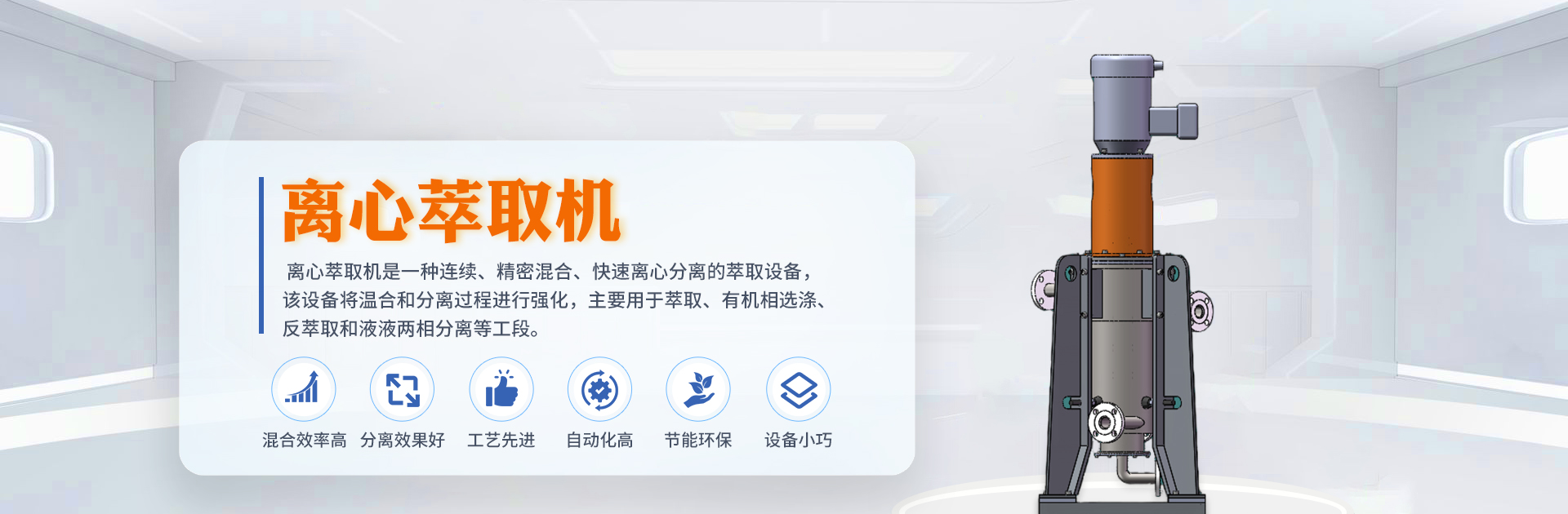
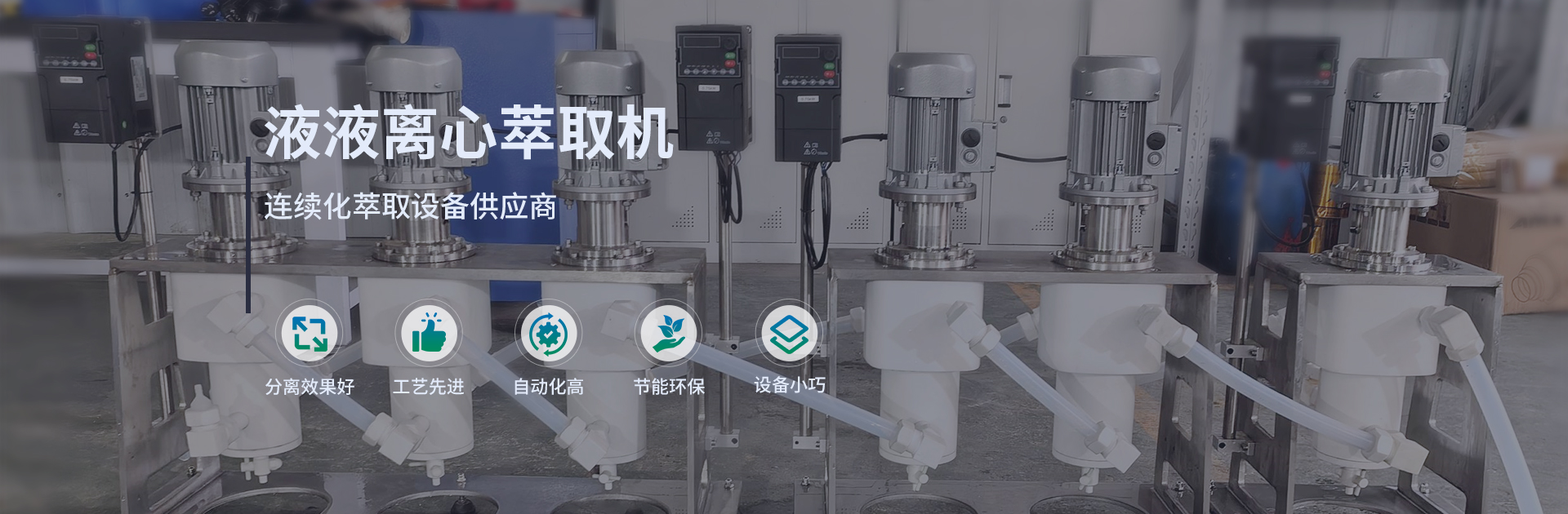
Centrifugal Extractor


详情描述
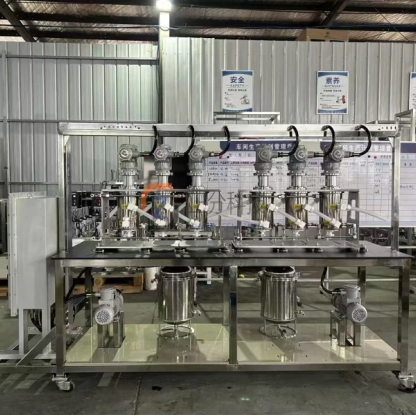
Salt Lake Lithium Extraction Columns (extractor box, extractor, and mixing clarifier) are a stepwise contact extraction equipment, consisting of a mixing system, mixing zone, clarification zone, and phase separation zone. In each stage, the two immiscible liquid phases will undergo mixing, clarification, and phase separation processes, thereby achieving mass transfer and separation of the target solute between different liquid phases.
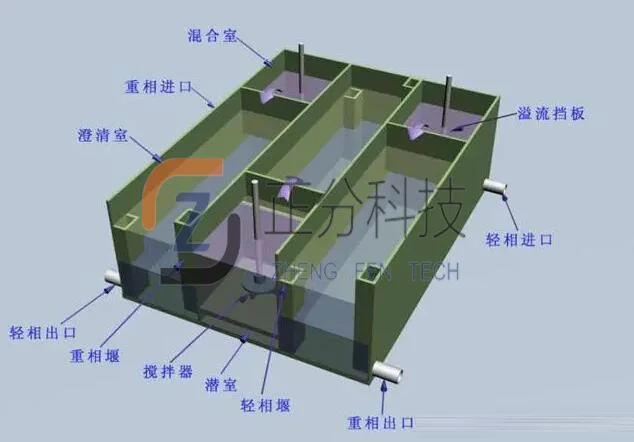
Process of salt lake lithium extraction and the operation of the extraction tank
A typical salt lake lithium extraction system consists of four core stages:
- Pre-treatment stage(Halting acidification + impurity removal)
- Adjust pH to 2.5-3.0**Dosage: 15-20 L/m³
- Two-stage plate and frame filter for calcium and magnesium impurities removal (suspended solids content ≤ 50 mg/L)
- Extraction Section(Trinity countercurrent extraction + centrifugal separation)
- Extraction Agent Ratio:**Triphenylphosphine (TBP): FeCl₃**1:0.3:3 (volume ratio)
- Centrifuge speed: 8000 rpm, two-phase separation time < 30 seconds
- Re-extraction section(Lithium-ion Dismantling + Concentration)
- **Recovery concentration 4mol/L, temperature controlled at 45±2℃
- Electromagnetic purification devices remove iron ions (Fe³+ < 10ppm)
- Post-processing stage(Evaporation Crystallization + Drying)
- MVR Evaporator Steam Consumption Reduced to 0.25t/t Li₂CO₃
- Flash Dry Tower outlet humidity ≤ 0.5%
5. The "Golden Triangle" of Extraction System Construction
- Extractor selectionCompared to the five systems including TBP and Cyanex 923, Tibet Mining adopts the TBP-FeCl₃ system, achieving a lithium distribution ratio of 12.5 (at 25°C).
- Compared to (O/A) optimizationWhen the oil-water ratio is adjusted from 1:3 to 1:2, the single-stage extraction rate increases from 68% to 74% (actual test data from Qinghai Dongtai Jinnai'er Salt Lake).
- Interface Contamination Prevention and ControlAdd 0.05% sodium dodecylbenzenesulfonate, reduce the emulsifying layer thickness by 40%.
The specific operating process of the extraction tank (mixed clarification tank) involves the liquid material and extractant being pumped into the mixing chamber through their respective feed ports by a feed pump. A high-speed stirrer then mixes the liquid material and extractant for mass transfer. Subsequently, they pass through overflow baffles into the clarification chamber, where they are separated into light and heavy phases under gravity. The light and heavy phases are then directed into different outlets, completing the extraction process. In actual production, the extraction tank is typically a multi-stage series arrangement, including sections for extraction, back-extraction, washing, and regeneration, among others. The configuration is determined by the specific production process.
To meet customer needs, Zhengfen Extraction offers extraction equipment consultation and services: from initial communication, planning, and design of process objectives or operational conditions, to customized production and manufacturing, we assist in building your ideal extraction equipment, providing you with greater peace of mind and convenience. Welcome to inquire!
Hotline for Inquiry: 15380766707!
Mixed Mass Transfer Process
Raw Material IntroductionThe raw material liquid and extracting agent are separately introduced into the mixing chamber of the extraction tank through their respective feed ports. For instance, in hydrometallurgy, a water solution containing metal ions serves as the raw material liquid, while an organic extracting agent is introduced as another liquid phase into the mixing chamber.
Agitate and MixThe mixing chamber is equipped with a blender, which rotates at high speed, allowing the raw material liquid and the extractant to fully contact and mix. Under the action of the blender, the solute is transferred from the raw material liquid to the extractant, forming a two-phase solution. The intensity and duration of the blending have a significant impact on the mass transfer efficiency. Inadequate blending can result in insufficient contact between the two phases, reducing the mass transfer efficiency; whereas excessive blending may lead to emulsification, increasing the difficulty of subsequent separation.
Separation process
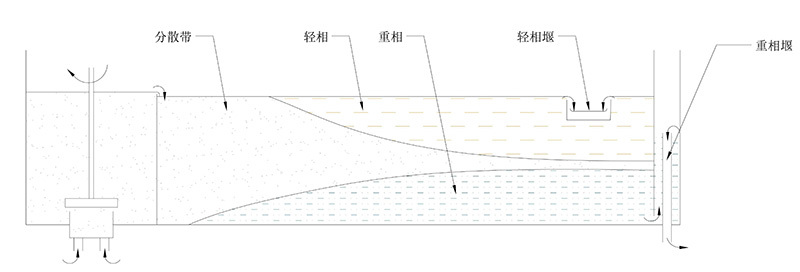
Overflow enters clarification chamberThe mixed liquid enters the clarification chamber through overflow baffles. The clarification chamber is an empty room with a large cavity volume, providing sufficient space for the liquid to settle and separate layers.
Gravity Natural SeparationIn the clarification chamber, due to the differing densities of the raw liquid and the extracting agent, under the influence of gravity, the two phases gradually separate. The denser phase (usually the heavy phase) sinks to the bottom, while the less dense phase (usually the light phase) floats to the top, forming a clear phase interface.
Partial contact reduces mass transfer efficiency; excessive stirring can lead to emulsification, increasing the difficulty of subsequent separation.
Key Features
● High efficiency level
●Simple Structure: The extraction tank typically consists of a tank body, interface adjustment pipe, motor reducer, stirrer shaft, impeller, speed controller, and a movable platform, etc., with a relatively simple structure.
●Stable Operation, High Adaptability: Due to the larger volume of the extraction tank and the higher liquid storage capacity, it can accommodate a certain range of fluctuations in the feedstock liquid. After balancing, the operation is relatively stable and highly adaptable.
● Scalable Reliability: Single-stage extraction rates and other design parameters remain relatively reliable after scaling up.
Application Fields
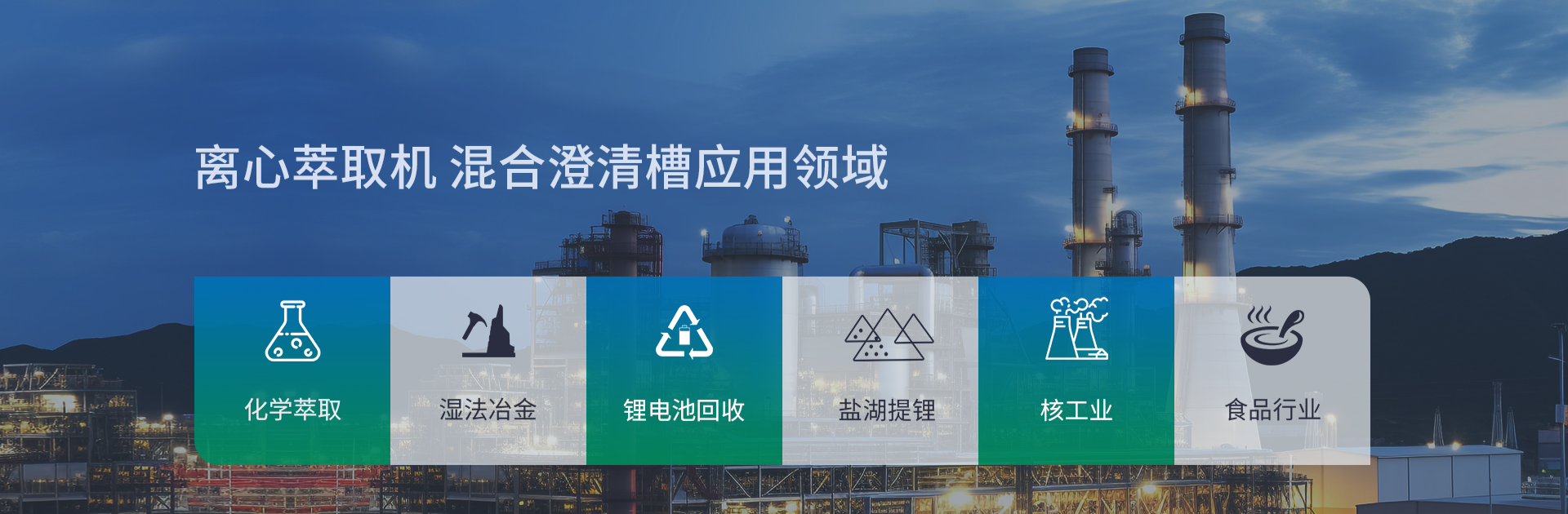
● Copper Extraction
Rare Earth Extraction and Separation
Nickel Cobalt Extraction
Rare Metal Extraction
Nuclear Industry
Salt Lake Lithium Extraction
Technical Specifications
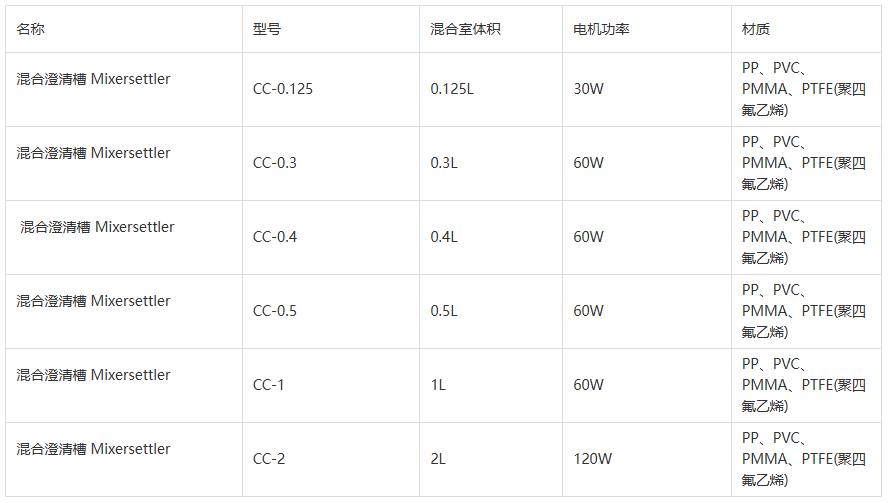
Larger sizes available for customization according to customer's process requirements. Welcome to inquire.15380766707 !
Complete extraction tank equipment and engineering project applications
Process Design: Design a reasonable extraction process according to customer requirements.
● Equipment Selection: Choose the appropriate extraction tank model and configuration for different material series.
● Engineering Design: Includes equipment layout, piping design, instrument control, and PLC integration.
●Equipment Manufacturing: Offer customized non-standard production and processing of extraction tanks as per requirements.
● Installation and Commissioning: Perform equipment installation, debugging, and联动试车 on-site.
● Staff Training: Provide systematic training for customer operators.
● After-sales Service We offer comprehensive after-sales support to ensure the long-term stable operation of the equipment.
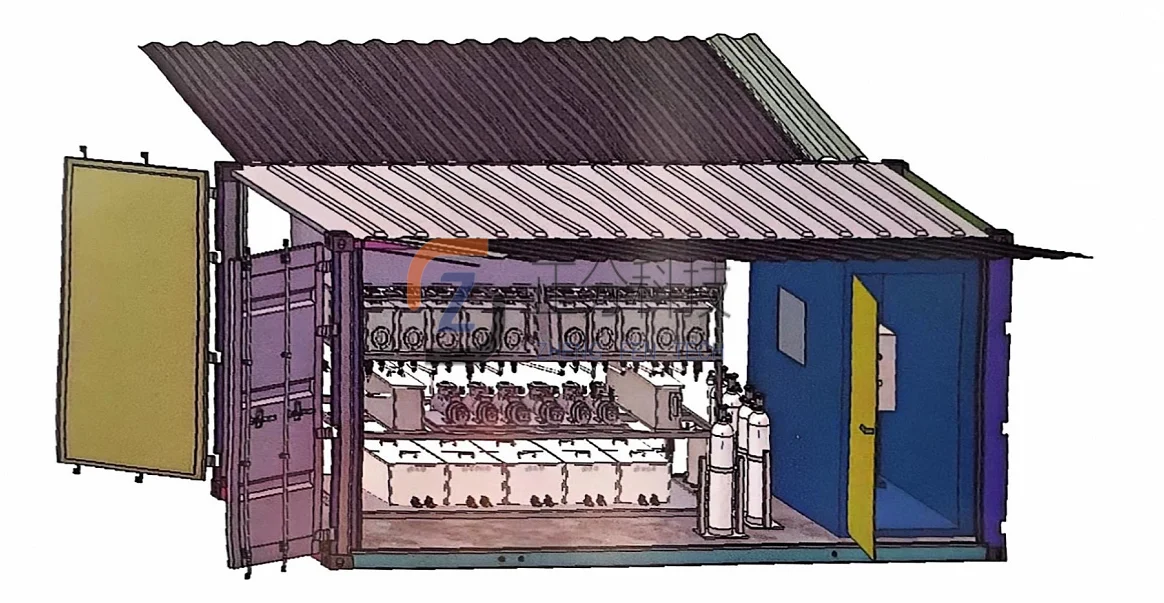
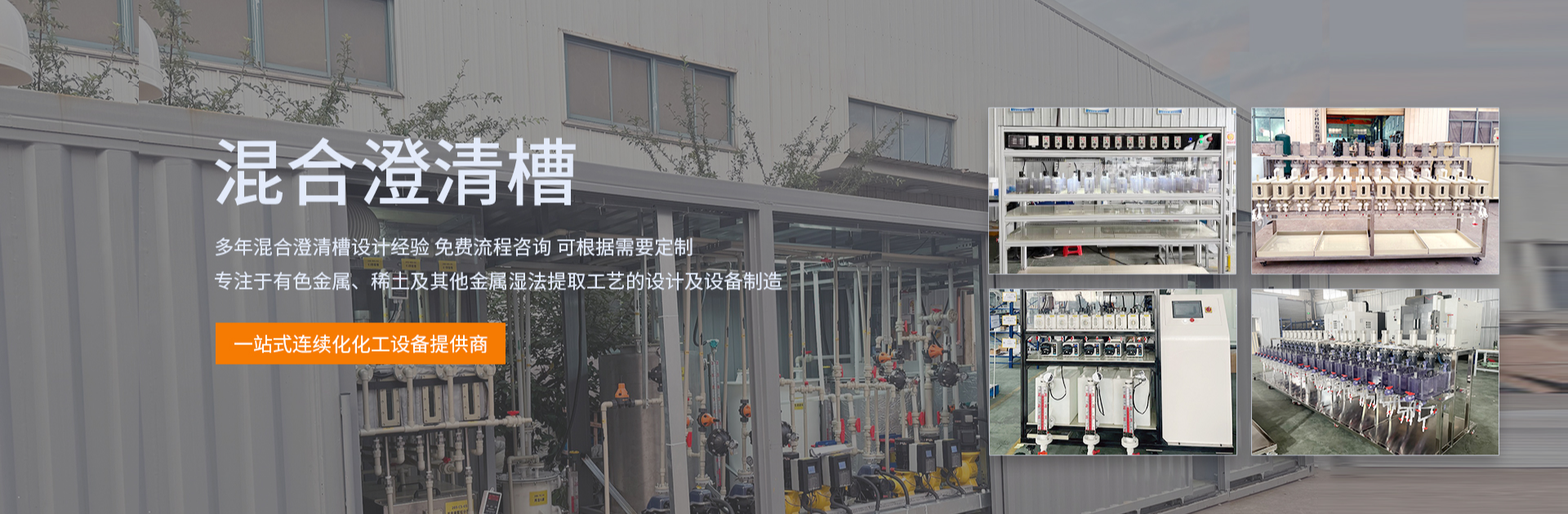
Complete set of trial extraction tank for containers


