

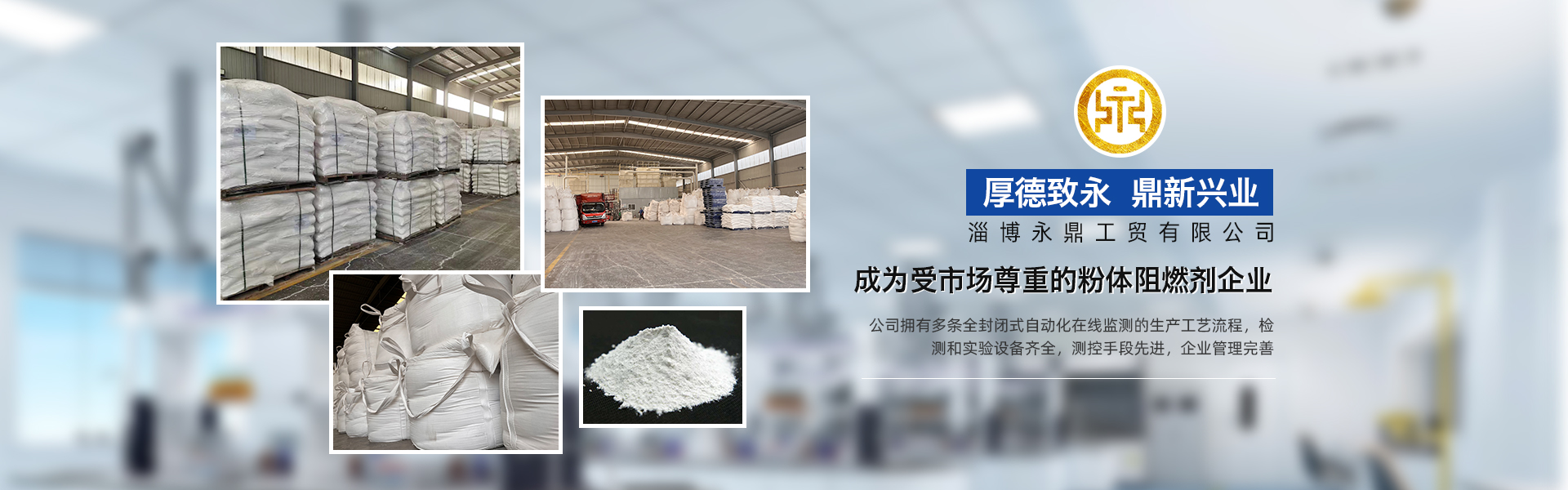
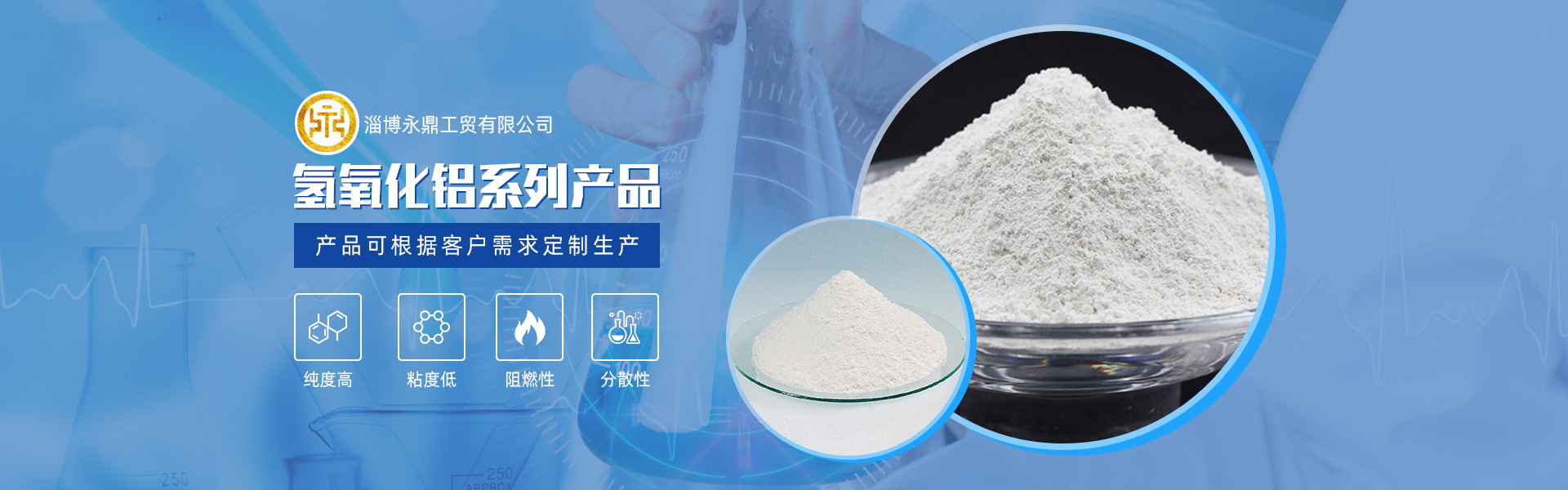


Yongding's α-alumina hydrate flame retardant features non-toxicity, odorlessness, low viscosity, good dispersibility, high addition amount, high brightness, high purity, excellent flame retardant properties, low iron content, and low sodium content. The company has 8 production lines for the production, research, and compound of alumina flame retardants, boasting unique manufacturing advantages in the production of high-brightness, medium-brightness, and ultra-fine alumina hydrate, including oil absorption rate, viscosity, particle size distribution, brightness, dispersibility, thixotropy, and modification.
Aluminium hydroxide, also known as tri-hydrated alumina (α-Al2O3·3H2O), is chemically represented as Al(OH)3, abbreviated as ATH. It is a white, powdery alkali that also exhibits a certain acidity, hence its alternate name, alumic acid (H3AlO3). However, when reacting with alkalis, it forms meta-aluminate, so it is generally regarded as monohydrated meta-aluminate (HAlO2·H2O). Its molecular weight is 78, with a relative density of 2.42 and a Mohs hardness of 3.0. Above 200°C, aluminium hydroxide absorbs heat (absorption rate of 1967.2 J/KJ), releasing a large amount of steam to dilute flammable gases, suppress the spread of combustion, and at the same time, the produced high-temperature Al2O3 forms a dense protective layer on the polymer surface, blocking air and preventing further flame propagation.
Yongding Flame Retardant Alpha-Hydroxide Classification:
Average Denier Classification: 200 denier, 325 denier, 400 denier, 500 denier, 625 denier, 800 denier, 1000 denier, 1250 denier, 1350 denier, 3000 denier, 5000 denier, 10000 denier, 12500 denier.
Average Particle Size Classification: 90um, 74um, 45um, 37um, 25um, 20um, 15um, 14um, 10um, 8um, 7um, 5um, 4um, 3um, 2um, 1um.
Alumina Production Method:
The basic production principle involves the reaction of alumina in the ore with alkali under certain conditions to form sodium aluminate, which then dissolves and separates from impurities such as silicon dioxide and iron oxide. Subsequently, the pure sodium aluminate solution is then analyzed to extract aluminum hydroxide.
The production methods can be categorized into the Bayer process, sintering method, and combined process.
The Bayer process involves treating bauxite with caustic soda solution, converting the aluminum oxide in the ore into sodium aluminate, while the silicon dioxide becomes an insoluble residue known as red mud, which is separated from the sodium aluminate solution. The purified sodium aluminate solution is then agitated and decomposed, filtered to obtain aluminum hydroxide, which is washed and calcined into aluminum oxide. The large amount of caustic soda solution obtained is called the mother liquor, which is evaporated and reused for processing the next batch of ore. Generally, the Bayer process is characterized by its simple process, lower investment, high product quality, and low production costs. However, its advantages are less pronounced when processing low-grade ore, and it also consumes expensive caustic soda.
The sintering process involves mixing ore, alkali powder, and limestone, then subjecting the mixture to high-temperature sintering. This converts alumina in the ore into solid sodium aluminate, ferric oxide into sodium ferrinate that can be hydrolyzed, and silicon dioxide with calcium oxide into insoluble calcium silicate, 2CaO.SiO2. The sintered mass, or clinker, is then dissolved in dilute alkali solution to separate sodium aluminate from the red mud. The solution containing some silicon dioxide is purified by desilication, then treated with carbon dioxide gas to decompose it into aluminum hydroxide and the mother liquor. The mother liquor is evaporated to replenish with the appropriate amount of alkali powder and the next batch of ore and limestone for sintering. The washed aluminum hydroxide is calcined to obtain alumina.
To maximize the utilization of mineral resources, combining the advantages of two methods has been implemented to enhance the overall recovery rate of alumina, improve product quality, and reduce production costs, thus giving rise to the Joint Method.
The combined method is further divided into series, parallel, and mixed methods. The parallel method involves processing high-grade ore with the Bayer process and low-grade ore with the sintering process; in the series method, the sintering process is only used for Bayer process tailings; mixing Bayer process tailings with some low-grade ore can improve the operation of large furnaces. This method, which combines series and parallel methods, is referred to as the mixed method.
Section 3: Yongding Flame Retardant Alpha-Hydroxide Application
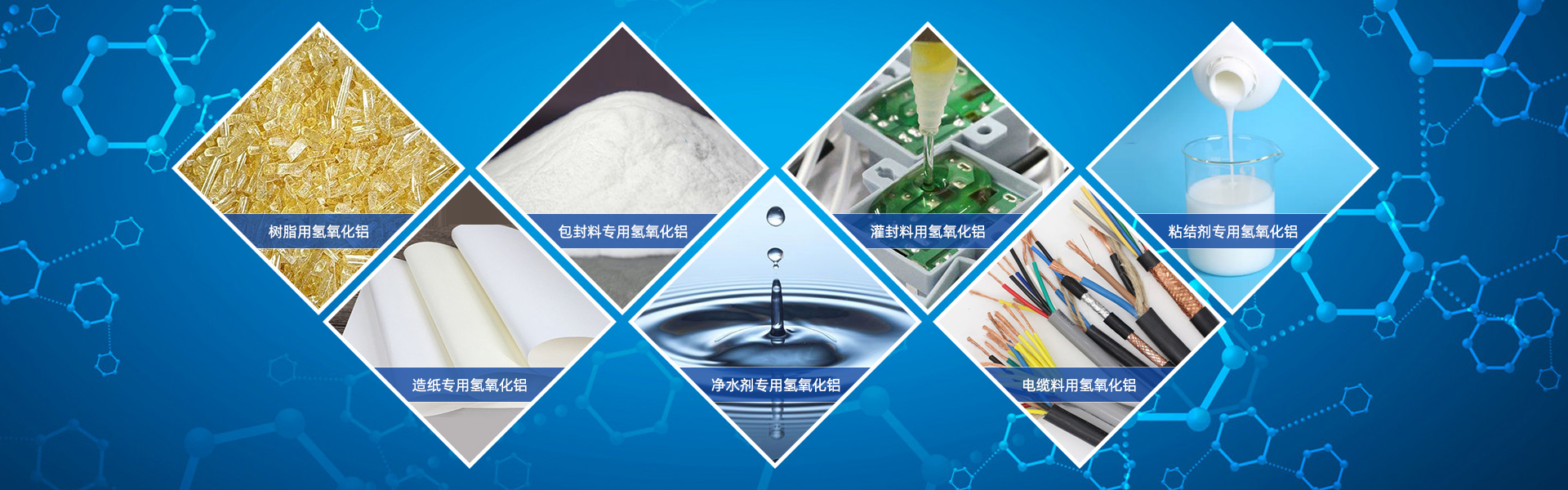
Alumina hydrate is one of the most widely used inorganic flame retardants in the world, boasting three main functions: flame retardancy, smoke suppression, and filling. As a filling-type flame retardant, it is typically used at a rate of 40% to 60% when applied alone. It disperses well in polyolefins and is easy to synergize with other additives for flame retardancy. Additionally, due to the presence of结晶水(crystalline water), it imparts antistatic properties to polymer products while enhancing the strength and toughness of high molecular weight polymers. The product is extensively used in industries such as composite materials (BMC/SMC), electronic copper clad laminates, electrical switches, cables, integrated circuits, insulators, papermaking, epoxy resins, unsaturated polyester resins, synthetic rubbers, and various flame-retardant high-performance polymer materials. Yongding Flame Retardant can customize production according to customer needs, including controlling particle size distribution, coating, and blending flame retardants.
Four: Features of Yongding Flame Retardant Alpha-Hydroxide Alumina:
High Purity — Products with purity above 99.7%
(1) Outstanding flame-retardant and smoke-suppressing properties—Upon heating and dehydration, it decomposes, forming a dense and firm protective film on the surface of combustible materials, which isolates oxygen and effectively suppresses the rise in temperature and thermal degradation of polymers. It also absorbs and dissipates heat to reduce smoke generation, causing carbonization without producing combustible materials. Suitable for composite materials with processing temperatures below 220°C and plastics with processing temperatures around 300°C.
(2) Excellent Insulation Properties — The fluidized bed purification process significantly reduces the content of impurity ions such as iron, sodium, and potassium.
High brightness - does not interfere with product dyeing and enhances product color saturation and appearance.
Low in silicon, iron, and sodium—contents are respectively below 0.01%, 0.006%, and less than 0.2%.
4. The particle size distribution is uniformly concentrated and controllable.
5. Lower Oil Absorption Rate - Modern automated control systems produce products with an oil absorption rate 20% lower than traditional mechanical crushing systems.
Five: Yongding Flame Retardant Alpha-Hydroxide Aluminum Surface Modification Method
There are numerous methods for surface modification, which can alter the physical and chemical properties of non-metallic mineral powders at their surface or interface, such as surface physical coating, chemical coating, microencapsulation, mechanical force chemistry, etc., all of which can be termed surface modification techniques. Currently, the most commonly used methods for surface modification of non-metallic mineral powders in the industry include surface chemical coating modification, microencapsulation coating modification, mechanical chemical modification, and in-situ polymerization modification.
1. Surface chemical coating modification method: This is a commonly used surface modification method for non-metallic mineral powder, which utilizes functional groups in organic surface modifier molecules to adsorb or react on the particle surface for modification. The main surface modifiers include coupling agents (silanes, titanates, aluminates, zirconium aluminate, organic chelates, phosphates, etc.), surfactants (fatty acids and their salts, amine salts, non-ionic surfactants, organic silicon oils or resins, etc.), high molecular weight dispersants for modification, and graft modification.
1.1 Coupling Agents: Compounds with amphoteric structures, which can be categorized into several types based on their structure, such as silanes, titanates, titanate salts, and complexes. A portion of their molecules can react with various functional groups on the surface of inorganic powders to form strong chemical bonds: another portion can undergo certain chemical reactions or physical entanglements with organic polymers, thereby firmly bonding two materials with significantly different properties. This creates a "molecular bridge" with special functions between inorganic powder and organic polymer molecules.
1.2 Surfactants: These are chemicals capable of significantly reducing the surface tension or interfacial tension between liquids, altering the surface state of a system to produce wetting and dewetting, emulsification and demulsification, dispersion and coalescence, foaming and defoaming, as well as solubilization, among a series of other effects.
1.3 Organic Silicon: A special type of surfactant characterized by silicone-oxygen as hydrophobic base, polyoxyethylene chain, carboxyl, ketone, or other polar groups as hydrophilic base, commonly known as silicone oil or silicone resin. Its main varieties include polydimethylsiloxane, organically modified polysiloxanes, and copolymers of organic compounds.
1.4 Soluble High Polymers: It is a hydrophilic high polymer material that can dissolve into a solution or dispersant in water.
2. Mechanical and chemical modification method
By intentionally activating the particle surface through ultra-fine crushing processes and other intense mechanical forces, we can make the structure complex or amorphous, enhancing its reactivity with organic matter or other inorganic materials. Mechanical chemical action can strengthen the active points and groups on the particle surface, improving its interaction with organic matrices or organic surface modifiers. Mechanical fusion technology, developed based on the principles of mechanical chemistry, is a method for composite treatment or surface modification of inorganic particles, such as surface complexation, coating, and dispersion.粉碎 equipment capable of activating particles primarily include various types of ball mills, air mills, and mechanical impact mills.
3. In-situ Aggregation Modification Method
Utilizing the even dispersion of powder in monomer emulsions, the polymerization is then initiated with an initiator to form nanoparticles with a core-shell structure featuring an elastic coating layer. Due to the organic polymer outer layer, the affinity between the powder and organic substances is enhanced. Moreover, being a core-shell nanoparticle with a hard inner core and soft outer shell, it can be filled into plastics or rubbers to alter their mechanical properties. The in-situ polymer modification methods include soap-free emulsion polymerization, pretreatment emulsion polymerization, and microemulsion polymerization, among others.
Surface Modification Process
Surface modification processes vary depending on the methods, equipment for surface modification, and powder preparation methods. Currently, there are three major types of surface modification processes used in industry: dry processes, wet processes, and composite processes. The dry processes can be further divided into batch and continuous methods based on the operation mode; the wet processes can be categorized into organic and inorganic modification processes; and the composite processes can include mechanical-chemical and surface-chemical coating modification, drying and surface-chemical coating modification, precipitation reaction and surface-chemical coating modification, and more.
1. Dry Process Technology: A widely used surface modification process for non-metallic mineral powders. The intermittent dry process is characterized by the flexibility to adjust the surface modification time over a wide range, but it is challenging to uniformly coat the particle surface modifiers, resulting in lower production efficiency, high labor intensity, dust pollution, and is not suitable for large-scale industrial production, typically used for small-scale production. The continuous modification process features better dispersion of powders with surface modifiers, more uniform particle surface coating, lower consumption of modifiers per unit product, lower labor intensity, and higher production efficiency, making it suitable for large-scale industrial production. The continuous dry surface modification process is often placed after the dry powder preparation process, enabling the mass production of various non-metallic mineral active powders, particularly as inorganic fillers and pigments for high polymer-based composite materials such as plastics, rubbers, adhesives, etc.
2. Wet Process Technology: Compared to dry process technology, it features better dispersion of surface modifiers and uniform surface coating, but requires subsequent dehydration (filtration and drying) operations. Generally used for water-soluble or hydrolysable organic surface modifiers, or in cases where the front-end is a wet process for powder production (including wet mechanical ultra-fine grinding and chemical powder production) and the back-end requires drying. This is because even if wet surface modification is not performed on the slurry produced after the chemical reaction, filtration and drying are necessary. Performing surface modification before filtration and drying can prevent the formation of hard agglomerates during drying, thus improving the dispersibility of the material. Inorganic precipitation coating modification is also a type of wet modification process. It includes processes such as pulping, hydrolysis, precipitation reaction, and subsequent washing, dehydration, calcination, or roasting.
3. Composite Process:
3.1 Mechanical Force Chemical and Surface Chemical Coating Composite Modification Process: This process involves adding surface modifiers during the mechanical force action or fine and ultra-fine grinding process, which improves the surface chemical coating modification of particles while reducing particle size. The characteristics of this composite surface modification process include simplification of the process, certain surface modifiers also having a certain degree of grinding assistance, which can improve the crushing efficiency to some extent. The drawbacks are the difficulty in controlling the temperature; in addition, due to the continuous particle crushing during modification, new surfaces are generated, making it challenging to achieve uniform particle coating. It is essential to design the addition method of the surface modifier to ensure uniform coating and a high coating rate. Furthermore, if the heat dissipation of the crushing equipment is poor, the localized overheating under strong mechanical force may cause some surface modifiers to decompose or their molecular structures to be damaged.
3.2 Composite Process of Drying and Surface Coating Modification: This is a composite process that involves adding surface modifiers during the drying of wet powders, where surface chemical coating modification of the particle surface is conducted simultaneously with the dehydration of the powder.
3.3 Sedimentation Reaction Surface Chemical Coating Composite Modification Technology: This involves surface chemical coating modification after sedimentation reaction modification, essentially an inorganic/organic composite modification process. This composite modification technology has been widely used in the surface modification of composite titanium, where, based on the sedimentation coating of SiO2 or Al2O3 films, titanium acetate, silane, and other organic surface modifiers are then used to carry out surface organic coating modification on TiO2/SiO2 or Al2O3 composite particles.
Section 7: Testing and Characterization of Powder Surface Modification Products
Current characterization methods can generally be divided into direct and indirect methods.
Direct Method: The effectiveness of surface modification is characterized by measuring the surface physical and chemical properties of the modified or treated powder, such as surface wetting energy, surface energy, surface electrical properties, optical performance, coating amount, surface structure, morphology, and surface chemical composition.
The indirect method: Characterizes the effectiveness of surface modification by measuring the application performance of the modified powder in specific application fields, such as the mechanical, electrical properties of filled polymer-based composites, and the optical, electrical, thermal, and chemical properties of coatings and coating materials.
Section 8:永鼎阻燃α-Hydroxide Aluminum Usage Guide:
When used alone, the selection should be based on the performance requirements of the product. Particle size is closely related to the properties of the composite material; the smaller the particle size, the finer the surface texture, and the more pronounced the reinforcing effect. However, during blending, the viscosity also increases. Please carefully adjust the formula to balance all properties.
2. Utilizing a blend of different particle sizes, a dense filling can be formed within the polymer system at appropriate ratios, enhancing flame retardancy. A well-matched compounding system prevents the settling or floating of the filler, while also reducing the viscosity of the resin blend under equal filling volume, facilitating shear dispersion.
3. After ultra-fine processing, aluminum hydroxide has an increased specific surface area, which makes it prone to agglomeration and poor compatibility with polymers, leading to uneven dispersion and affecting the processing properties of composites. Hydrophobic aluminum hydroxide exhibits good interfacial compatibility with high polymers, as the surface coating can form bond reactions with the resin groups of the base material, reducing the viscosity of the blend, minimizing interface stress concentration, and improving the mechanical properties of the composites. Therefore, it is recommended to use hydrophobic products.
Note:
Storage: This product should be stored in a cool, dry, and well-ventilated area, away from ground moisture and high heat sources.
Transportation: This product is non-hazardous and requires waterproofing and moisture protection during transportation. Handle with care to prevent damage to packaging. Do not mix with other acidic or alkaline substances. Avoid exposure to air when the relative humidity exceeds 80%. If necessary, bake after heating to 110℃ before use. After use, ensure proper sealing and moisture protection measures are taken. It is recommended to use the contents within the same session after opening the packaging.
Ten: Product Packaging Format:
Inner plastic, outer woven bags, each bag weighing net 1000kg, 50kg, 40kg, or 25kg, or as required.
