




In our everyday lives, within the items we commonly use, they are ever-present, though minute in size. Without them, the products we use would not be as we see them now. They are aluminum hydroxide fillers, a substance we may not be familiar with, yet it is incredibly important.
Alumina hydrate filler is a typical polar inorganic material, which results in a decrease in processing and physical-mechanical properties of composites using it as a flame retardant. Ultrafine ATH, due to enhanced interfacial interactions, can be treated with amphoteric coupling agents such as silanes or titanates to organicize its surface. With proper methods, this can improve the affinity between flame-retardant filler ATH and the matrix polymer, enhancing the material's processing and mechanical properties. Its poor affinity with organic polymers, especially non-polar polyolefins, and small interfacial bonding strength allow for more uniform dispersion in the matrix resin. The alumina filler transforms it from an inefficient flame-retardant type to a flame-retardant type, from ordinary products to high-functional, high-added-value product series, significantly improving the quality of alumina and expanding its application range, with great prospects for development.
Introduction to the Performance and Applications of Aluminum Hydroxide Filler
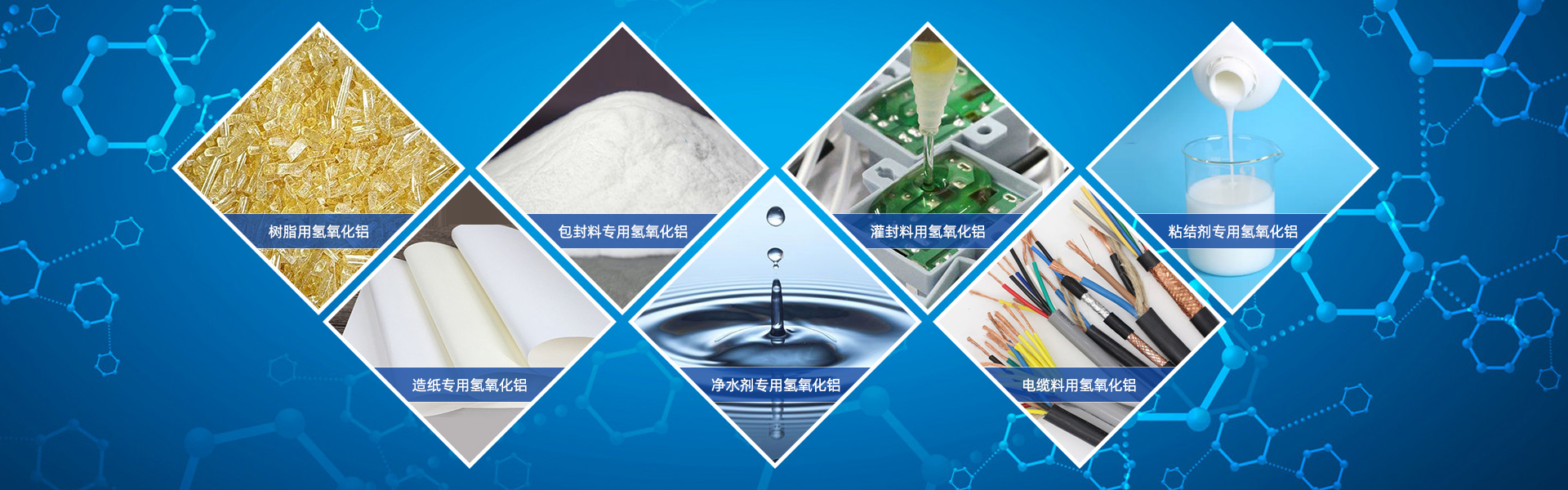
High-purity aluminum hydroxide filler is a white crystalline powder, odorless, tasteless, and has good fluidity with low oil absorption value, low alkali and iron content, and regular particle morphology with good particle size distribution. Depending on the particle size, it is widely used as a filler in artificial marble and artificial agate, toothpaste abrasive, and as filling material in low-voltage insulating devices. It also serves as a flame-retardant filler in products such as plastics, rubber, and fiberglass.
