
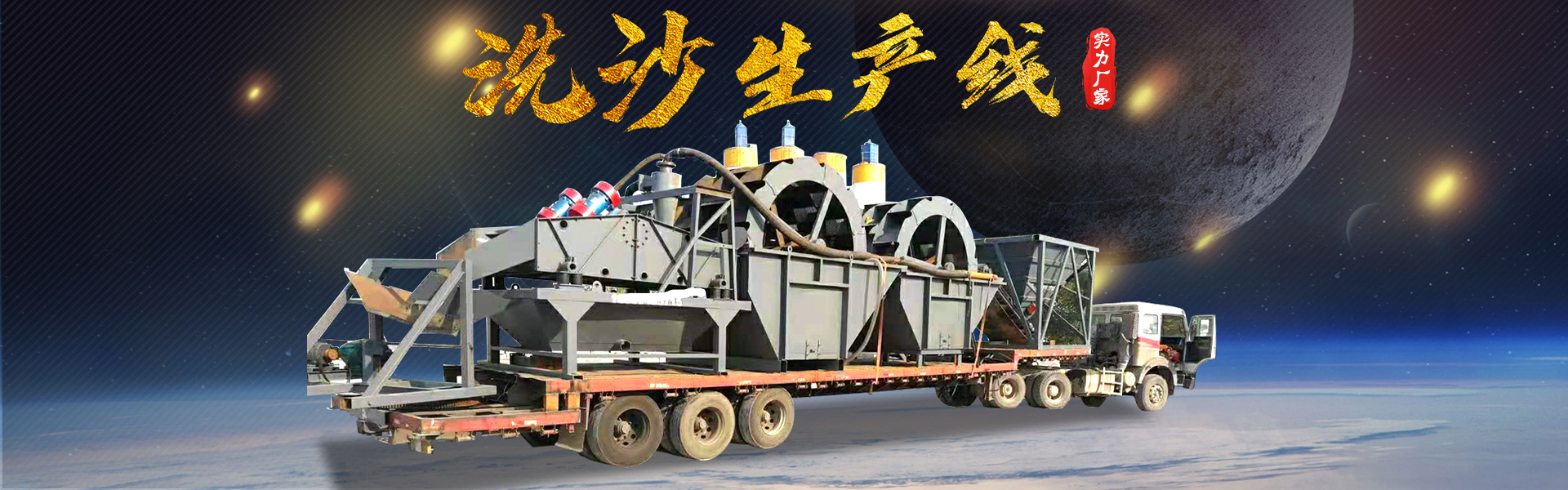


The spiral sand washer is a commonly used sand washing equipment. Its structure determines its scope of application and working principle. When cleaning stones, our sand washer is in operation due to its equipment being biased to one side. During the operation of the spiral blades, one side injects water resources, while the other side discharges stones. The equipment boasts a series of advantages, including a reasonable structure, easy maintenance, high processing capacity, and low energy consumption.
The spiral sand washing machine is particularly suitable for the fine crushing of hard and brittle materials such as abrasives, refractory materials, cement, quartz sand, steel sand, slag powder, spiral sand washing equipment, copper ore, iron ore, gold ore, concrete aggregates, and asphalt aggregates. It is an energy-saving gravel sand-making equipment, which is 50% more energy-efficient than traditional sand-making machines.
The installation, adjustment, and operation of the machine are assembled by the manufacturer and supplied as a complete set after passing the empty vehicle test. Upon receiving the goods, users should conduct a thorough inspection. To identify and resolve any issues that may have arisen during transportation, attention should be paid to the installation, adjustment, and operation of the machine.
1. Due to the high torsional force of the machine, it is recommended to install the machine on a concrete foundation, and to weld embedded welding parts to the foundation during installation. Calculate the foundation depth and area based on the soil conditions. It is suggested that the foundation weight be approximately three times the weight of the machine.
After installation, check if the reducer's large and small gears have shifted, and if the gap between the water tank and the large drum is even. Adjust as needed, then secure and weld the machine to the foundation.
3. Apply lubricant and adjust the oil level height. Generally, 50mm below the center of the shaft is ideal.
4. After the spiral sand washing machine is installed and debugged, it undergoes a trial run. The no-load trial run should achieve:
1) Continuous Operation for 2 Hours:
Solid components should be stable and free from loose fittings.
The reducer and transmission gears operate without any unusual noise.
5. In addition to the requirements for no-load trial operation, load trial operation should also meet the following requirements:
During the feeding process, it is strictly prohibited to cause a strong impact on the water tank with the material, and it is also forbidden to fill the tank to a certain level under partial load to prevent damage to the bucket wheel and the body.
2) Larger raw material dimensions meet design requirements.
