

Detailed Introduction
Ultrasonic High-Temperature Melt Mixing Machine Principle
Ultrasonic high-temperature melt agitators, as a physical method and tool, can create a series of conditions close to those in chemical reactions. This energy not only stimulates or accelerates numerous chemical reactions and speeds up the reaction rate but can also alter the direction of certain reactions, producing unexpected effects and miracles. That is, ultrasonic extraction equipment. It can be applied to all types of chemical reactions, such as extraction and separation, synthesis and degradation, biodiesel production, microbial treatment, degradation of toxic organic pollutants, biological degradation processing, cell disruption, dispersion, and coagulation, etc.
Key Components Function
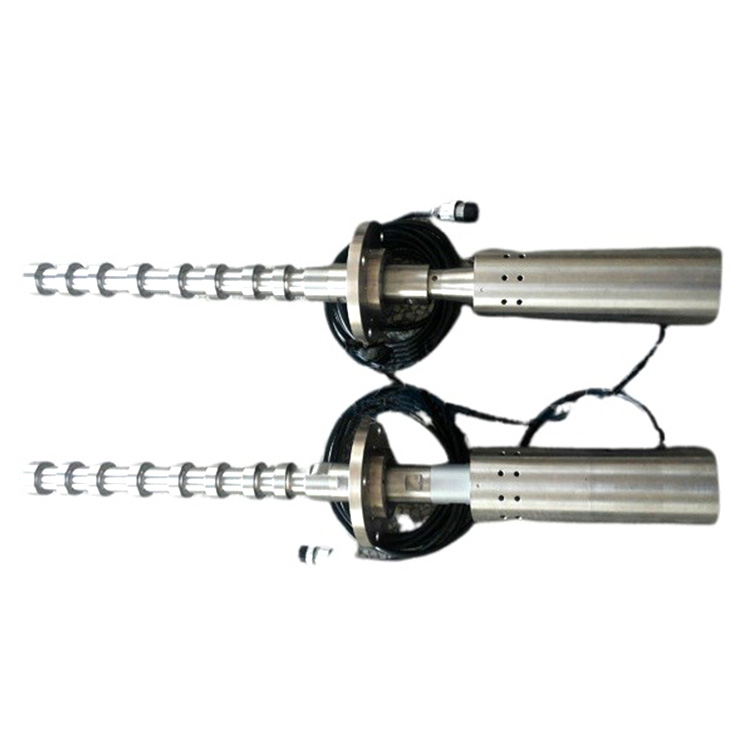
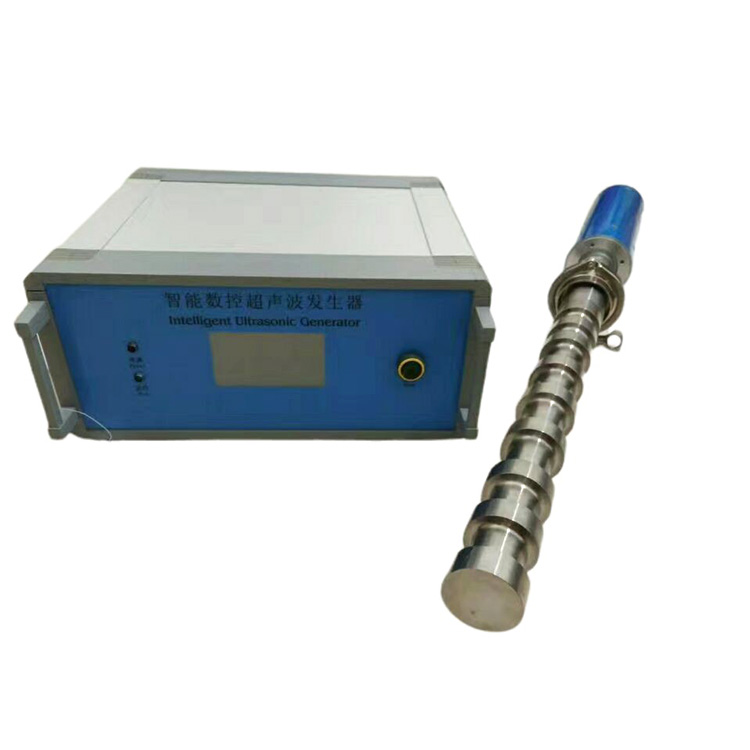
Ultrasonic Generator: Converts 50-60Hz household power into high-power high-frequency (15kHz-100kHz) power supply for the transducer.
· Transducer: Converts high-frequency electrical energy into mechanical vibration energy.
· Amplification Rod: Connects and secures the transducer to the tool head, amplifying the transducer's amplitude and transmitting it to the tool head.
Tool Head: Transmits mechanical energy and pressure to the workpiece, while also amplifying the amplitude.
· Connect bolts: Securely connect all the above components.
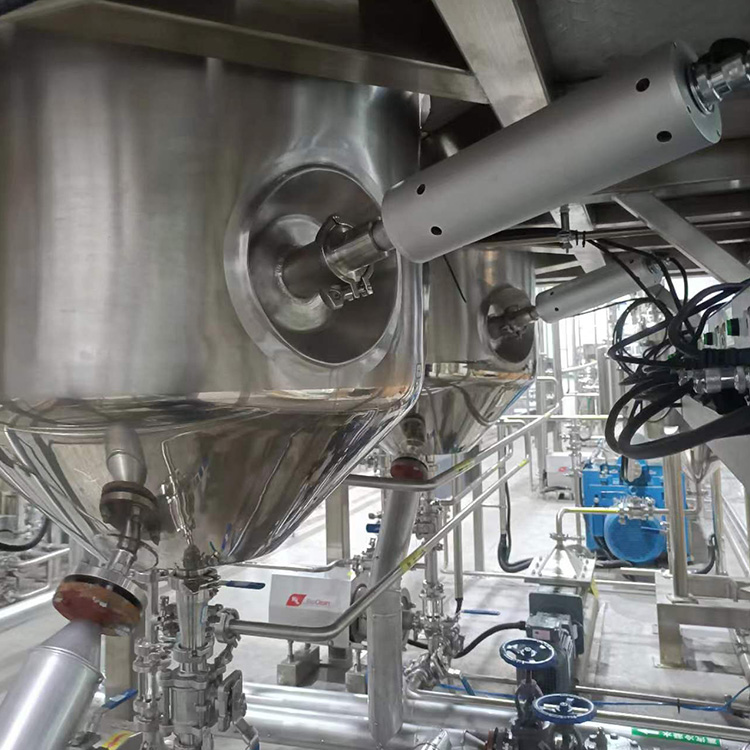
Primarily used for large-scale industrial production. Our industrial-grade ultrasonic extraction equipment boasts high power, efficiency, and large radiation area, making it suitable for large-scale industrial production. It features real-time frequency and power monitoring, adjustable power, overload alarm function, and a length of 930mm. The industrial-grade ultrasonic extraction equipment has an energy conversion efficiency of up to 80%-90%.
How to Use
There are two methods of use, suitable for both reactors and large-volume volumetric containers.
The reactor method is primarily used for the sonochemical reaction of flowing liquids. The reactor is equipped with an inlet and outlet port. The ultrasonic emitter is inserted into the liquid, emitting ultrasonic waves. The treated liquid flows through the reactor while being subjected to intense ultrasonic action. The size or temperature of the reaction vessel can vary. Generally, for containers of the same size, the smaller the liquid flow rate or the longer the liquid stays in the container, the stronger the ultrasonic action, although the yield will be lower. Conversely, the shorter the ultrasonic action time is controlled, the lower the intensity of the ultrasonic action, and the higher the flow rate (i.e., yield). This method is also suitable for anti-scaling and descaling applications. The large-volume fixed-volume container method is used for the sonochemical reaction of a specific volume of solution, where the reaction liquid does not flow. Ultrasonic waves are applied to the reaction liquid through the tool head, resulting in uniform action, fast speed, and easy control over reaction time and yield.