

Detailed Description
Introduction to High-Power Ultrasonic Disperser
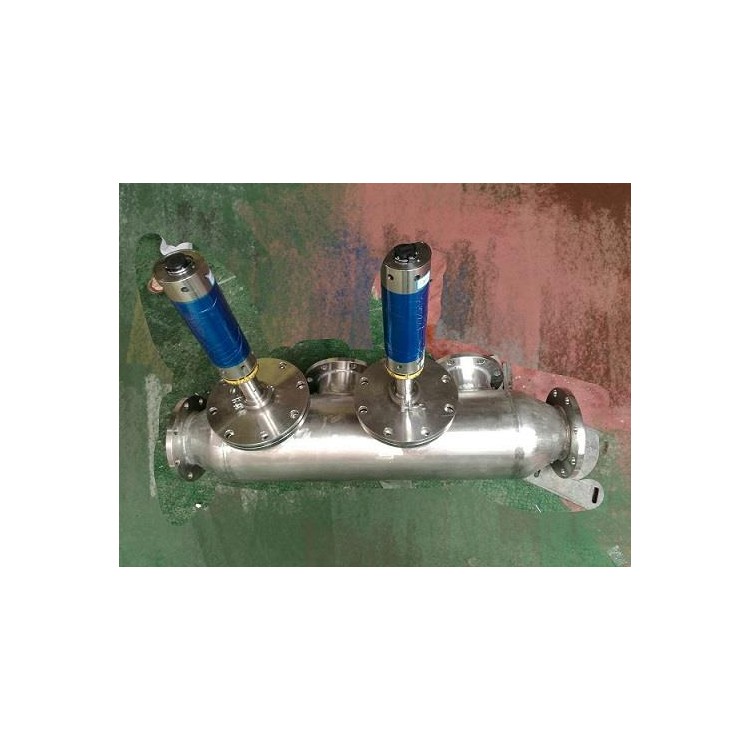
Ultrasonic dispersion refers to the process of dispersing and detaching aggregates in a liquid medium through the "cavitation" effect of ultrasound. As a physical method and tool, ultrasonic technology can create various conditions in liquids, a phenomenon known as sonochemical action. The related ultrasonic equipment is called ultrasonic sonochemical equipment (abbreviated as "sonochemical equipment"). Ultrasonic dispersion equipment is an application of sonochemical equipment, which can be used for water treatment, solid-liquid system dispersion, detaching aggregates in liquids, and promoting solid-liquid reactions.
High-power ultrasonic disperser
This process utilizes physical technology to create a series of conditions that are nearly identical within the medium of a chemical reaction. This energy can not only excite or promote numerous chemical reactions, accelerate their pace, but also alter the direction of chemical reactions, yielding certain effects. Acoustochemistry can be applied to almost all types of chemical reactions, such as extraction and separation, synthesis and degradation, biodiesel production, microbial control, degradation of toxic organic pollutants, biological degradation treatment, cell disruption, dispersion, and coagulation, and more.
Principle of High-Power Ultrasonic Disperser
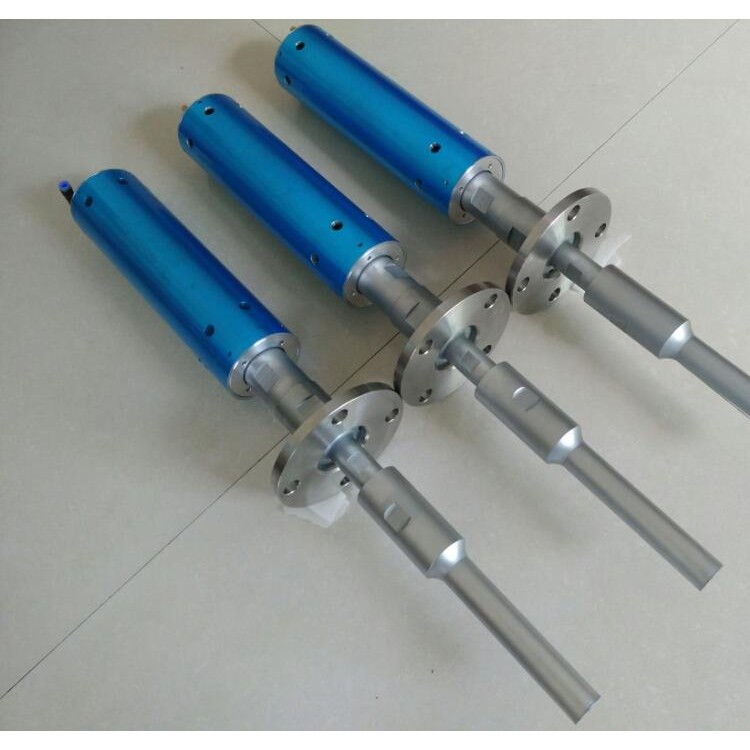
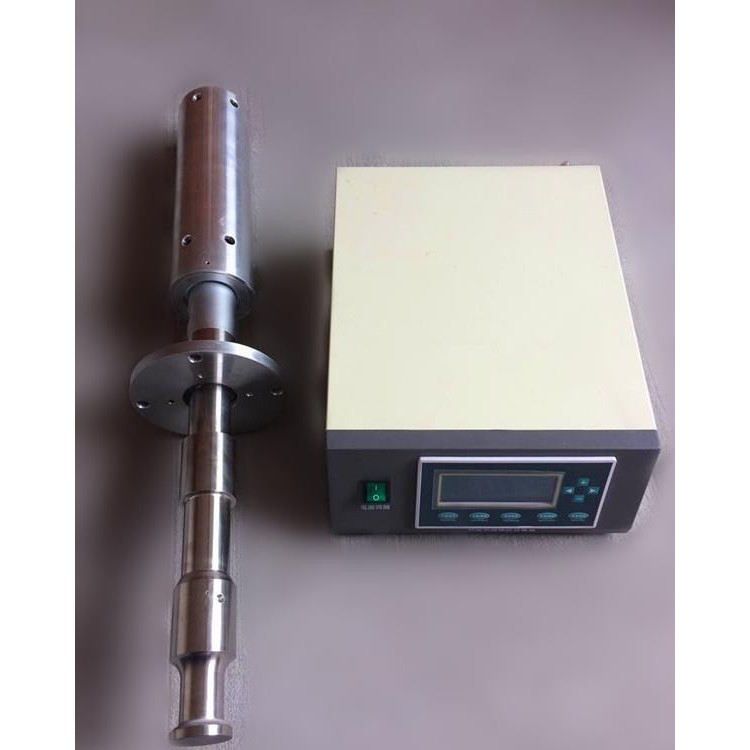
The ultrasonic system is composed of three main parts: the ultrasonic vibration components, the ultrasonic power supply, and the reactor. The ultrasonic vibration components primarily include high-power ultrasonic transducers, variable amplitude rods, and tool heads (emitters), which are used to generate ultrasonic vibrations and emit this vibrational energy into the liquid. The transducer converts electrical energy into mechanical energy, i.e., ultrasound. It manifests as the transducer performing longitudinal reciprocating motion, with an amplitude typically in the micrometer range. This amplitude power density is insufficient for direct use. The variable amplitude rod, as designed, amplifies the amplitude, isolates the reaction solution from the transducer, and also serves to stabilize the entire ultrasonic vibration system. The tool head is connected to the variable amplitude rod, which transmits the ultrasonic energy vibrations to the tool head, which then emits the ultrasonic energy into the reaction liquid.
High-power ultrasonic disperser function
Ultrasound vibration source (power supply): Converts 50-60Hz household power to high-power high-frequency (15kHz—100kHz) power supply for the transducer.
2. Transducer (controller, transducer): Converts high-frequency electrical energy into mechanical vibration energy.
3. Amplifier Arm: Connects and secures the transducer to the tool head, amplifying the transducer's amplitude and transmitting it to the tool head.
4. Tool Head (Import Rod): Transmits mechanical energy and pressure to the workpiece, while also amplifying the amplitude.
5. Connecting Bolts: Securely connect all the above components.
Features of High-Power Ultrasonic Disperser
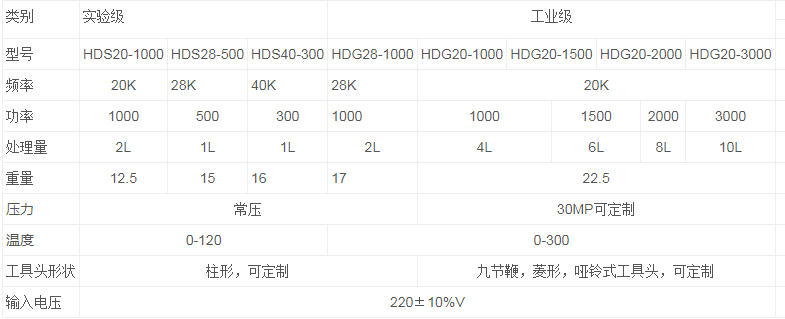
Industrial-grade ultrasonic破碎dispersion machines are primarily used for large-scale industrial production. Our company's industrial-grade high-power ultrasonic acoustic processing equipment features high power, high efficiency, large radiation area, and is suitable for large-scale industrial production. It comes with real-time frequency power monitoring, adjustable power, overload alarm function, and has a length of 930mm. The industrial-grade ultrasonic破碎dispersion machine boasts an energy conversion efficiency of 80%-90%.