
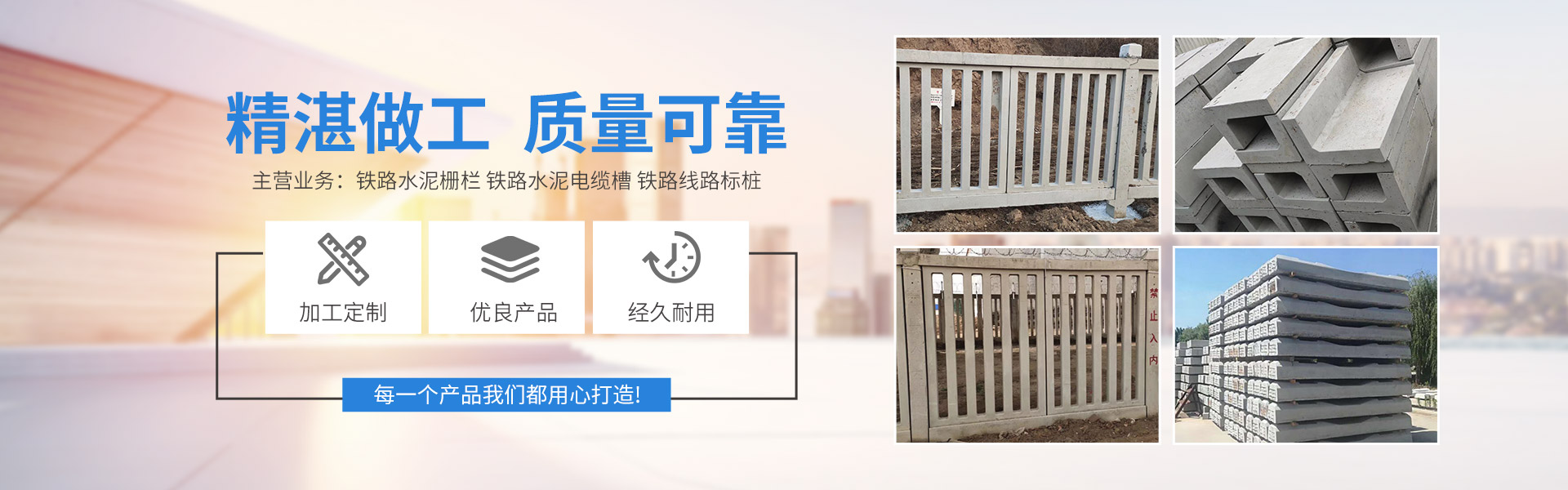
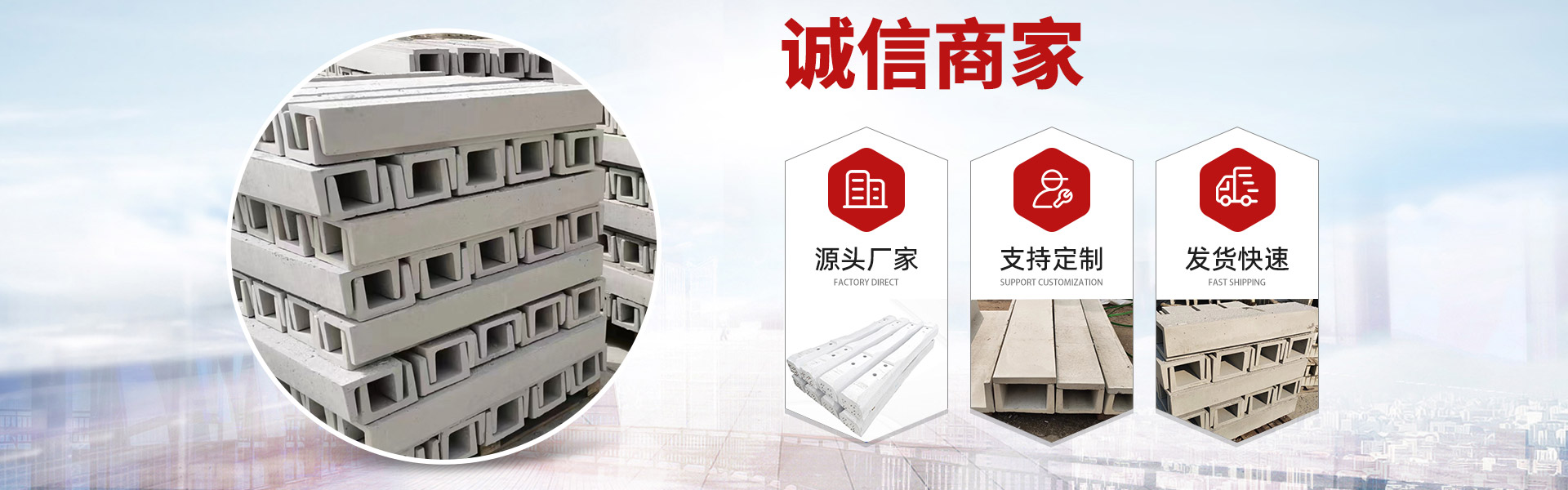
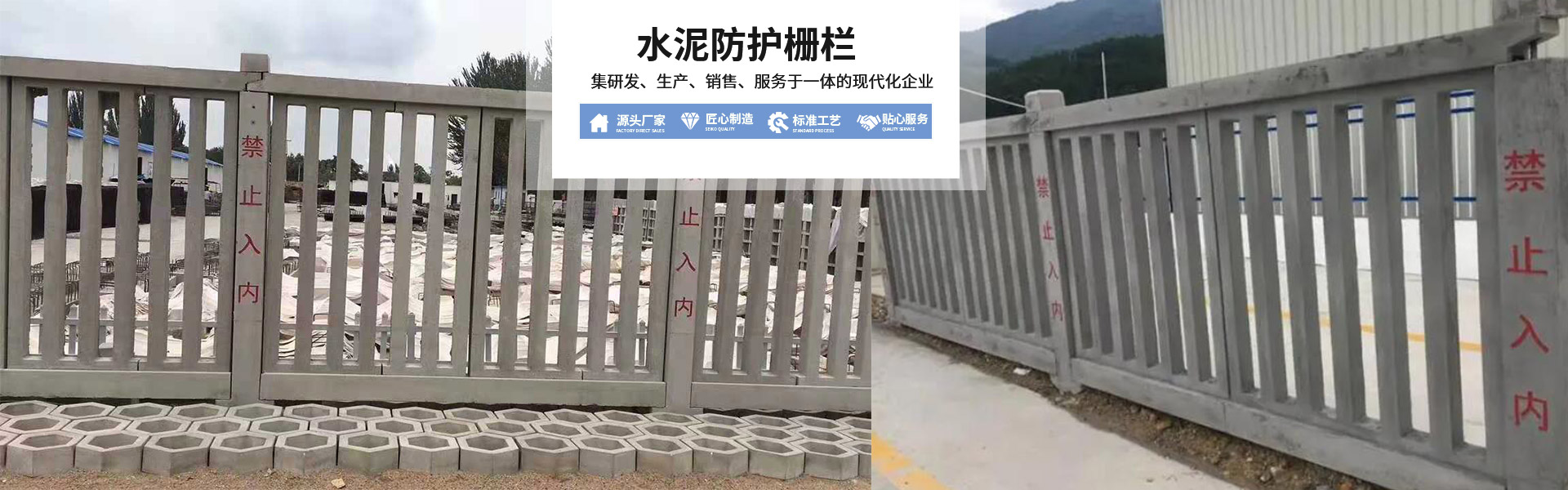

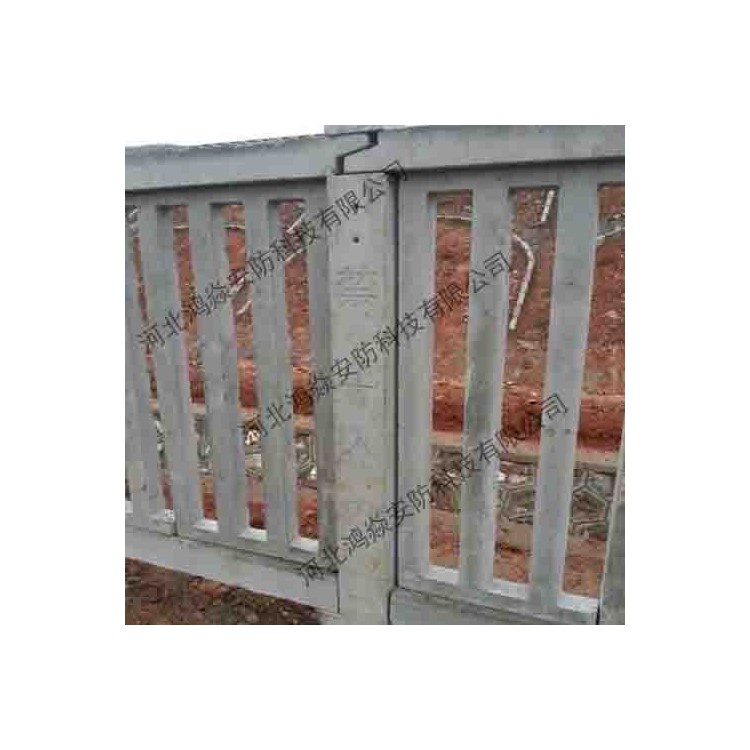


Manufacturer [153*7341*4170] Weifang Railway Concrete Guard Rails (Low Price) High-Speed Rail Concrete Cable Trough Manufacturer
One kilometer of railway cement guardrails is composed of 333 units. Each unit consists of 1 post, 1 top rail, 1 bottom rail, 1 cap, 2 panels, and a roll of barbed wire. The price per kilometer is approximately $250,000 to $300,000, subject to changes due to factors such as season and raw material prices. Please call our customer service for the price of railway cement guardrails. Our company offers fair prices and reliable product quality.
2012 "Railway Line Protection Fence" [General Reference Drawing (2012) 8001]!
(1) New Railway
High-speed railway with design speed of 200 km/h and above, equipped with 2.2m-high reinforced concrete protective fences with 0.5m barbed wire roll; for railway with design speed below 200 km/h, generally 1.8m-high reinforced concrete protective fences are used.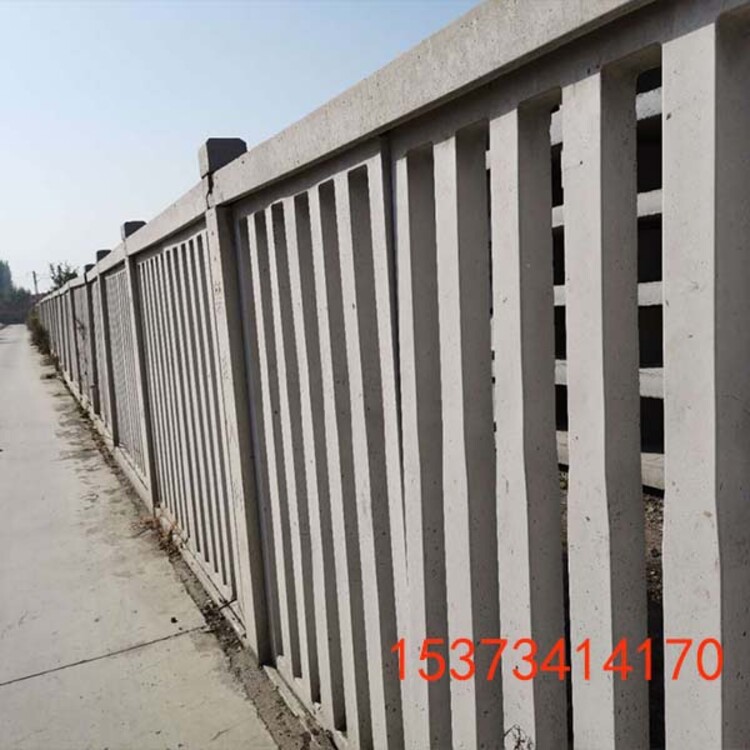
(2) Construction of Railway Projects
Design for railway sections with a design speed of 200 km/h or more, where metal protection fences are installed, additional barbed wire rolls are mounted on the outer side; for sections without installed railway isolation fence metal mesh, they should be set according to the standards of new railway engineering projects, with the protective fence to be placed within 0.5 meters of the land boundary.
(3) Existing Railway Reconstruction Projects
Section 3: This section mainly introduces reinforced concrete pillar metal mesh security fence
Reinforced concrete pillars with metal mesh fence panels consist of pillars, mesh panels, and connecting components, offering a protective height of 1.8 meters.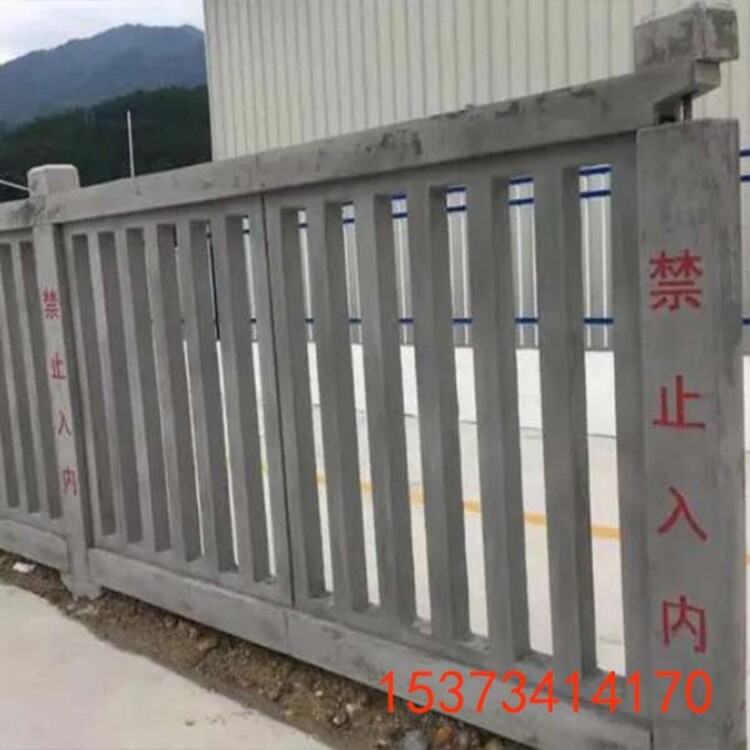
Pole
The columns are prefabricated with C30 reinforced concrete, with a cross-sectional size of 120mm×120mm and a height of 2.2m. During the prefabrication, a 42mm×42mm square hole is left at the center of the top, with a depth of 150mm. For installation, a Q235 square tube with a connecting plate and a sealed end is inserted, and the gap is filled with water-sealing material. The square tube specifications are 40mm×40mm with a thickness of 2.5mm. The short tube insertion end is 150mm long, with the exposed part bent outward at a 30° angle, and a vertical height of 300mm. Three 12mm round holes are pre-drilled at corresponding positions on the column, and the connecting plates are fixed with bolts during installation.
(2) Metal Mesh Sheets
Metal mesh sheets feature Q235 short tube frames, with dimensions of 30mm x 50mm and a wall thickness of 2.0mm. The internal mesh wires are made of HPB300 6.5mm high-line steel wire cold drawn, with a specification of 75mm x 150mm. The top is folded outward at a 30° angle, with a vertical height of 300mm.
(3) Connector plate and bolts
Pole connection plate, mesh connection plate uses 90° bend Q235 steel plate, thickness 4.0mm, available in three types (A, B, C) depending on the installation position.
The connecting plate and bolts are made of Q235 steel and zinc-plated, with a zinc coating of 270g/㎡.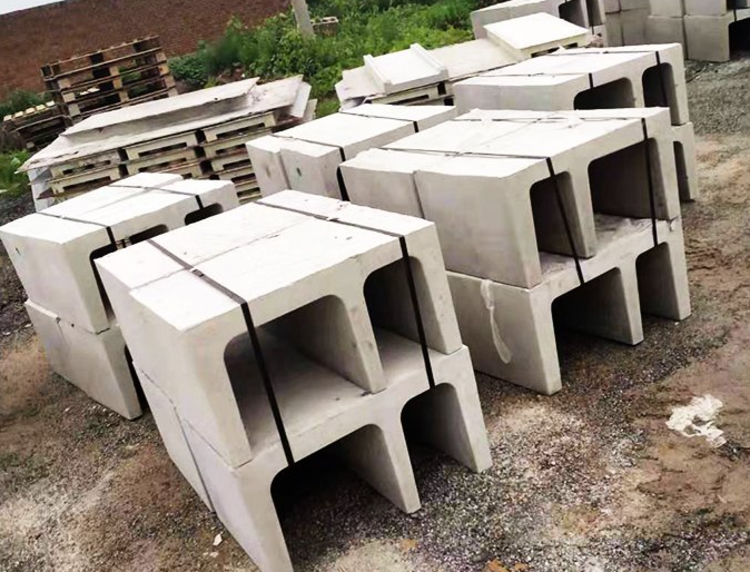
(4) Basic
The foundation for protective fences should be designed based on factors such as regional wind pressure, soil (rock) conditions, freezing depth, and impact resistance requirements, adjusting the dimensions reasonably while ensuring the stability of the fence.
When embedding the pillars, the position should be strictly controlled. After positioning, use C25 concrete for casting and ensure that the pillars do not shift in either the longitudinal or transverse directions, remaining vertically upright. The support for the pillars can be removed only when the concrete foundation has reached 70% of its designed strength.
(5) Gate fence
Gates are set up according to the needs of construction and electrical equipment inspection and maintenance work.
Reinforced concrete pillars with metal mesh protective fences are available in two door configurations: single door and double door. The single door width is 1.5m, while the double door width is 3m. The mesh design of the fence matches the protective fence, and it is connected to the pillars through pins and pin sleeves.
Set "No Entry" warning signs during the prefabrication of the pillars. Locks should be installed on the doors, and they should be waterproof.
(6) Transportation and Installation
Pillars, top and bottom headers, and column caps should be protected during transportation. Materials such as straw mats, rice straw, sawdust, or other shock-absorbing materials can be added. The vertical stacking should not exceed five layers, and the height should not exceed 600mm. Metal mesh panels and connecting components should be effectively packaged to prevent dents. Reinforced concrete panels should be arranged vertically with shock-absorbing materials in between to prevent damage.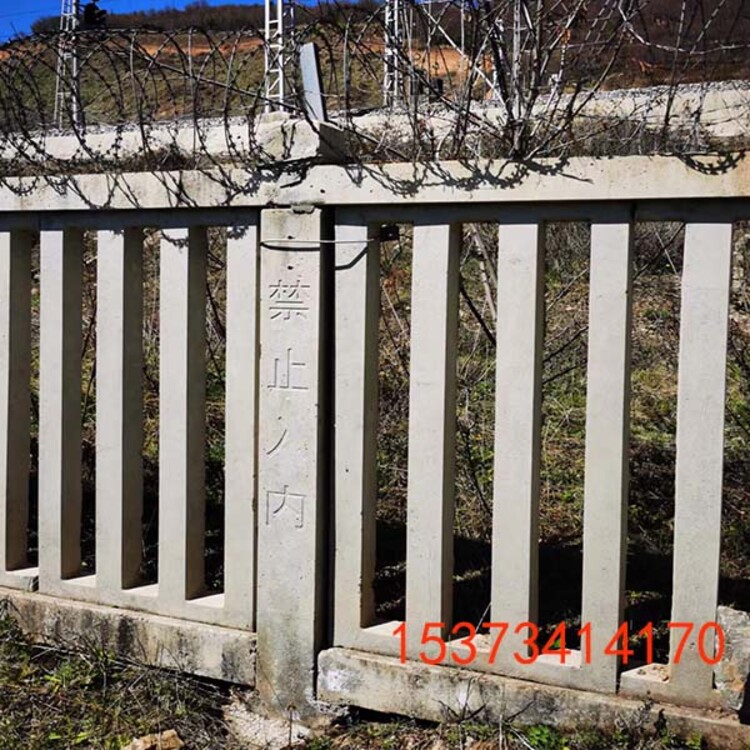
Protective fences must be installed with the principles of "strict, straight, even, and beautiful." The wiring should be sealed tightly without any gaps, and the line should be smooth and straight, avoiding sudden changes in distance. The top and bottom of the protective fence should have a smooth and even transition vertically, without abrupt changes in height. The overall effect should be aesthetically pleasing, avoiding a sense of disorder. The site should be cleared before installation, with the ground under the lower rail levelled and compacted to ensure drainage on both sides is not affected. The bottom of the fence should not be more than 5cm above the ground.
When installing protective fences, the ground on both sides of the fence should be leveled and compacted. If the fence is set on a slope or if there is a height difference between the ground on both sides of the fence, the elevated portions within a 2m range on both sides should be leveled. The ground on both sides should be of equal height and not higher than the bottom of the fence's lower rail to ensure the fence reaches the protective height on both sides.
The protective fence should be set at least 2 meters beyond the entrance and exit of the tunnel building: it may not be required if the terrain is steep and access by people or animals is difficult.
