
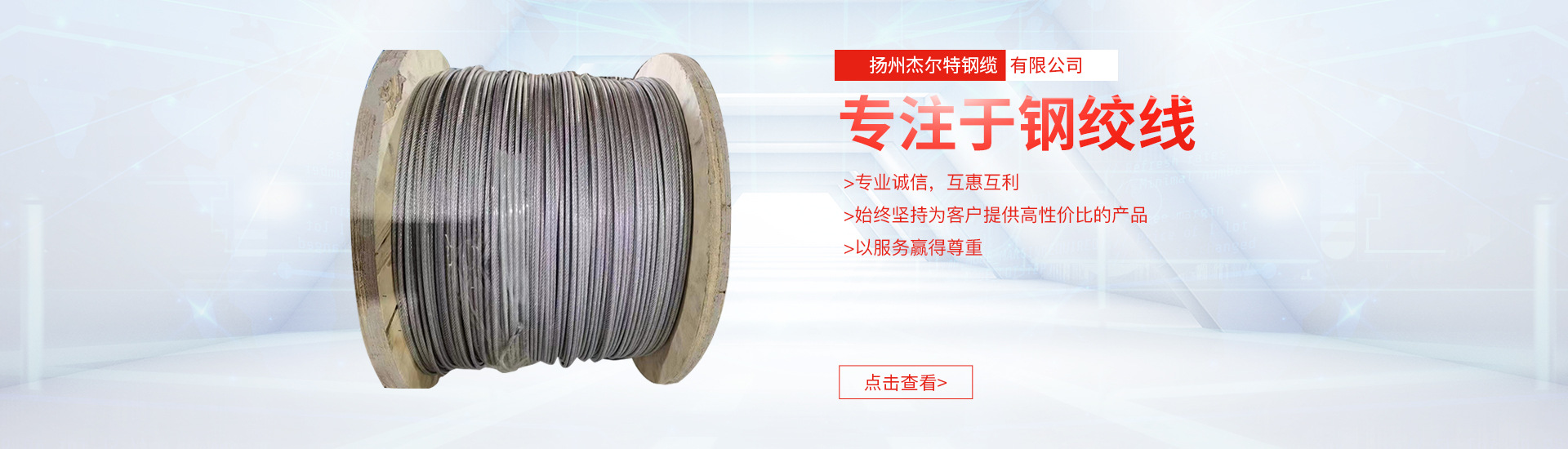

Wire RopeDeeply processed products made primarily from high-carbon steel hot-rolled wire rods play a crucial role in the national economy, especially in industries such as mining, metallurgy, oil, coal, maritime transportation, forestry, ports, and construction. In addition to being used for binding, dragging, and hoisting, they are primarily employed in various forms of transmission and propulsion equipment to carry people and goods. Their wide range of applications directly impacts industrial production and personal industrial safety.
1. Categorically divided by application, our wire ropes include those used for aerial ropeways, mine crossings, lifting equipment, drilling rigging, fishing, offshore facilities, elevators, aviation, and aircraft operation.
2. Structured into: Single-strand Rope, Multi-strand Rope, and Multi-process Twisted Steel Wire Rope.
3. The wire ropes are categorized based on surface condition: smooth, galvanized (with zinc alloy or other metal coatings), and coated (with plastic). 4. They are divided according to their twisting characteristics (contact between wires within the strand): point contact, line contact, and surface contact wire ropes. 5. They are classified by the shape of the strand cross-section: round strand and special-shaped strand wire ropes (such as triangular, elliptical, and fan-shaped strands, etc.).
6. The wire ropes are categorized by twisting methods: Right Hand Lay (ZS), Left Hand Lay (SZ), Right Lay (ZZ), and Left Lay (SS) wire ropes. Overseas, there are also hybrid twisted (aZ or aS) wire ropes.
7. Divided by rope core type: Wire Strand Core (IWSC), Wire Rope Core (IWRC), Natural Fiber Core (NFC), and Synthetic Fiber Core (SFC) Wire Ropes.
