
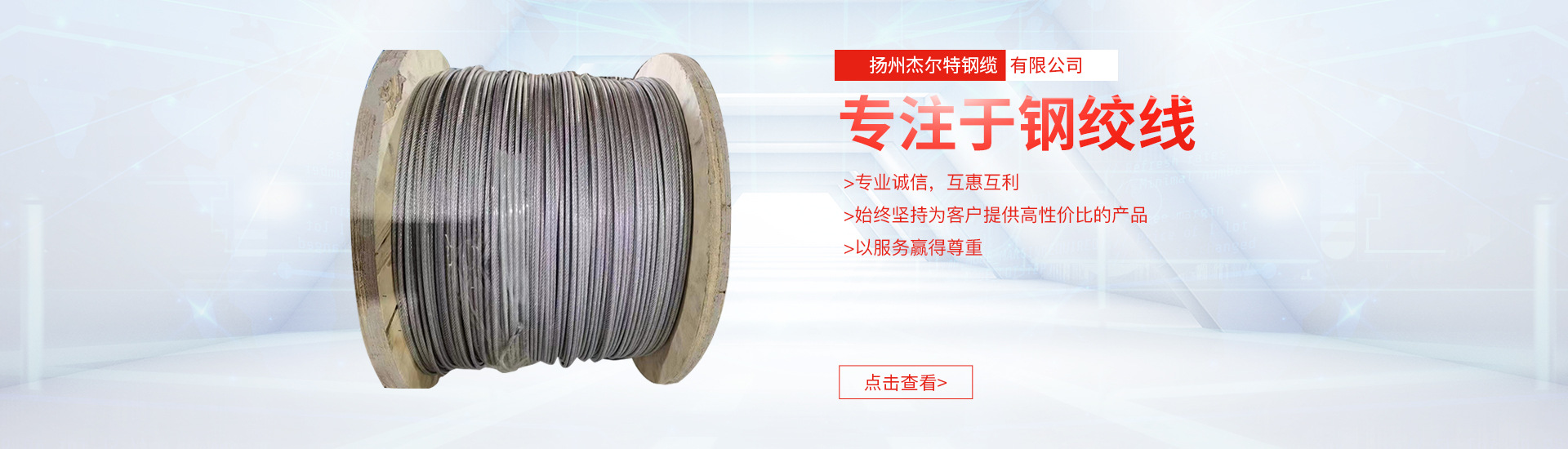

Steel Wire RopeStandard product in industrial nations, primarily used in transportation requiring high-tensile rope, such as hoisting and towing. Available in various diameters, strand counts, wire counts per strand, tensile strength, and sufficient safety factors to suit specific application needs.
Wire is typically selected as carbon steel grade 65, which, after multiple cold drawing and heat treatments, can achieve high strength. In ordinary applications, smooth wire can be used for twisting, that is,Rope WiresAfter cold drawing, steel wire ropes twisted from galvanized steel wire, without any surface treatment, can be used in wet or outdoor environments such as workshops, to enhance their anti-rust properties.
Galvanized Steel Wire RopeIncluding hot-dip galvanizing and electro-galvanizing methods, the thicker the galvanized layer, the better the anti-corrosion effect. Alternatively, using stainless steel material is preferable, but it will be significantly more expensive than galvanized options. Wire ropes, apart from wear on the outer wires, mainly break down gradually due to metal fatigue caused by repeated bending when passing over pulleys and drums. Therefore, the ratio of the diameter of the pulley or drum to the wire rope is a critical factor in determining wire rope lifespan. A larger ratio results in less bending stress on the wire, extending its life. It is essential to determine an appropriate ratio based on the application. Wire ropes should be discarded when the surface wear, corrosion, or the number of broken wires within each twist exceeds the specified limit.
