



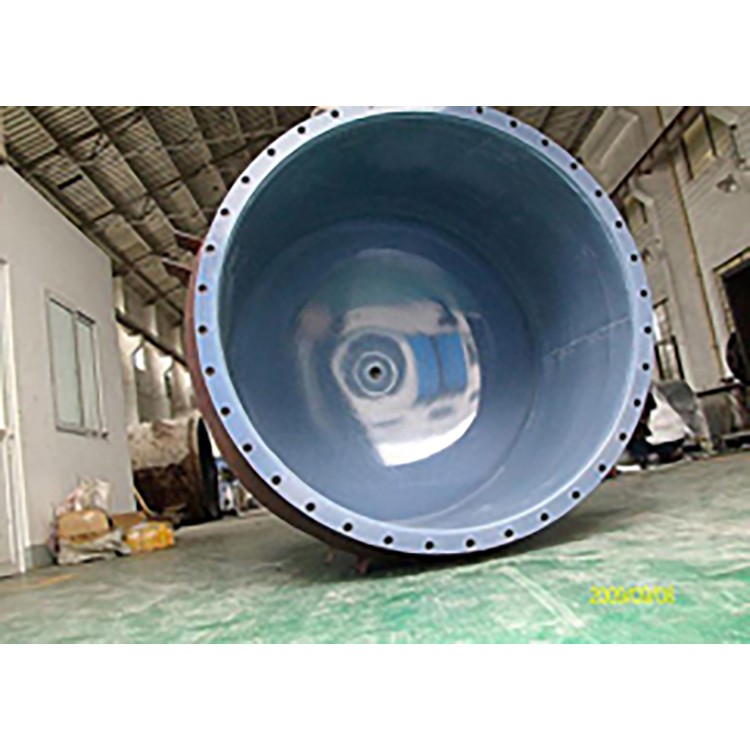

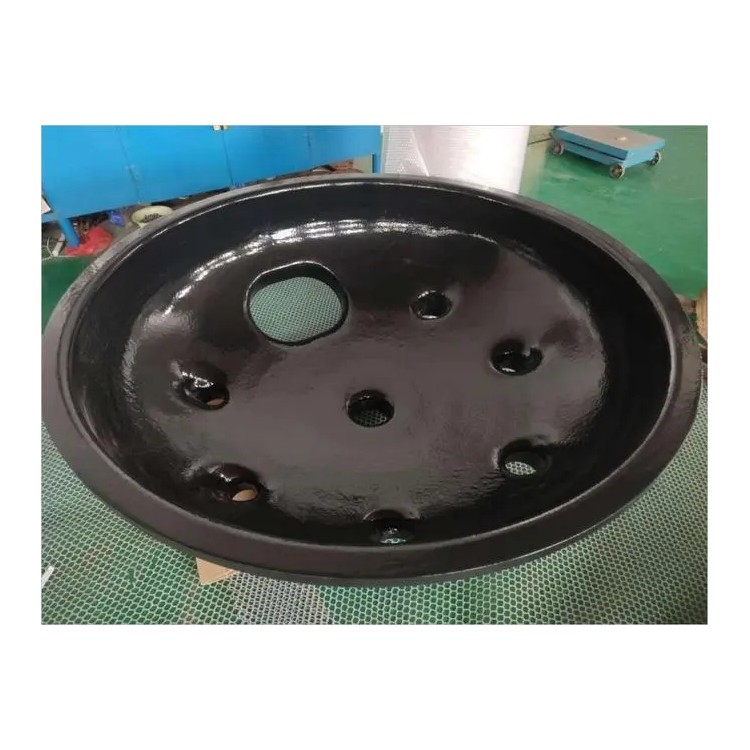
Spray coating technology involves applying a PTFE (FEP, PFA, ETFE, ECTFE, etc.) coating with a thickness of 0.01-3mm to products, which offers functionalities such as anti-stick, wear-resistant, lubricating, antimicrobial, clean, heat-resistant, and corrosion-resistant. It is widely used in various industrial fields: Chemical Industry – reaction tanks, storage tanks, heat exchangers, stirrers, environmental engineering wastewater and air treatment equipment, pipe fittings, valves, pumps. Textile Industry – sizing rollers, dyeing and finishing rollers, non-woven fabric rollers. Electronics Industry – acid-resistant and fire-retardant exhaust ducts in semiconductor factories, printed circuit boards, electroplating racks. Food Industry – baking utensils, baking sheets, molds, various food processing machinery and parts. Electronics Electroplating Industry – corrosion resistance (used for printed circuit boards, brackets, etc.). Semiconductor Industry – corrosion resistance, flame retardancy (including acidic exhaust ducts and their components).
Teflon PTFE: PTFE (Polytetrafluoroethylene) non-stick coating can be used continuously at temperatures up to 260°C, with a service temperature range of 290-300°C, featuring a very low coefficient of friction, excellent wear resistance, and superior chemical stability.
Teflon FEP: FEP, also known as F46 (polymer of fluorinated ethylene propylene), is a non-stick coating that melts and flows during baking to form a poreless film. It boasts excellent chemical stability and non-stick properties, with a usage temperature of up to 200°C.
Teflon PFA: PFA (perfluoroalkylated compound) non-stick coating, like FEP, melts and flows during baking to form a non-porous film. The advantages of PFA include a higher continuous service temperature of 260°C and greater toughness, making it particularly suitable for high-temperature environments where non-stick and chemical resistance are required.
Teflon ETFE: ETFE is a copolymer of ethylene and tetrafluoroethylene, a resilient fluoropolymer that forms a highly durable coating with excellent chemical resistance and can operate continuously at temperatures up to 150°C.
After being coated with Teflon, it possesses the following characteristics:
1. Non-stickiness: Virtually all materials do not adhere to the Teflon coating. Even a thin film demonstrates excellent non-stick properties.
2. Heat Resistance: The Teflon coating boasts excellent heat and cold resistance. It can withstand high temperatures up to 300℃ for short periods, and is typically used continuously between 240℃ to 260℃. It exhibits remarkable thermal stability, functioning at freezing temperatures without becoming brittle and remaining solid at high temperatures.
3. Sliding Coefficient: The Teflon coating has a low coefficient of friction. The coefficient of friction changes during load sliding, but the value remains between 0.05-0.15.
4. Moisture Resistance: The Teflon coated surface is non-stick to water and oil, and also resists solutions during production operations. In case of minor dirt, a simple wipe can clear it. Short downtime saves labor hours and enhances work efficiency.
5. Abrasion Resistance: Under high load, it exhibits excellent wear resistance. Under certain loads, it offers dual benefits of abrasion resistance and non-stickiness.
6. Corrosion Resistance: Teflon is almost unaffected by chemical erosion, protecting parts from any kind of chemical corrosion. Polytetrafluoroethylene is a polymer of tetrafluoroethylene. Abbreviated as PTFE, it is commercially known as "Teflon" and is famously called the "King of Plastics." The basic structure of PTFE is - CF2 - CF2 - CF2 - CF2 - CF2 - CF2 - CF2 - CF2 - CF2 - CF2 -. It is widely used in applications requiring resistance to acids, bases, and organic solvents. While PTFE itself is non-toxic, the raw material perfluorooctanoic acid amine (PFOA) used in its production is considered potentially carcinogenic. PTFE has a high molecular weight, ranging from tens of thousands to over ten million, usually in the millions (with a polymerization degree in the 10^4 order, whereas polyethylene is only in the 10^3 order). The crystallinity is typically 90-95%, and the melting point ranges from 327 to 342°C. The CF2 units in the PTFE molecule are arranged in a zigzag pattern, forming a helical twisted chain due to the slightly larger radius of the fluorine atom. The fluorine atoms almost cover the entire surface of the polymer chain. This molecular structure explains the various properties of PTFE. Below 19°C, it forms a 13/6 helix; at 19°C, a phase change occurs, slightly unraveling to form a 15/7 helix. It does not melt at 250°C and does not脆 at -260°C. PTFE is exceptionally smooth, smoother than ice; it has excellent insulating properties, with a thin film as thick as a newspaper capable of withstanding 1500V of high voltage. PTFE is synthesized by free radical polymerization of tetrafluoroethylene. Industrial polymerization is stirred in the presence of large amounts of water to disperse the reaction heat and control the temperature. It is generally polymerized at 40-80°C and 3-26 kg/cm² pressure, using inorganic persulfates or organic peroxides as initiators, or a redox initiation system. Each mole of tetrafluoroethylene polymerization releases 171.38 kJ of heat. Dispersed polymerization requires the addition of perfluorinated surfactants, such as perfluorooctanoic acid or its salts. Applications: PTFE can be formed into shapes through compression or extrusion molding; it can also be made into aqueous dispersions for coatings, impregnations, or fiber production. PTFE is widely used in industries such as nuclear energy, aerospace, electronics, electrical, chemical, mechanical, instruments, meters, construction, textiles, and food, as a material for high and low temperature resistance, corrosion resistance, insulating materials, and non-stick coatings.

