


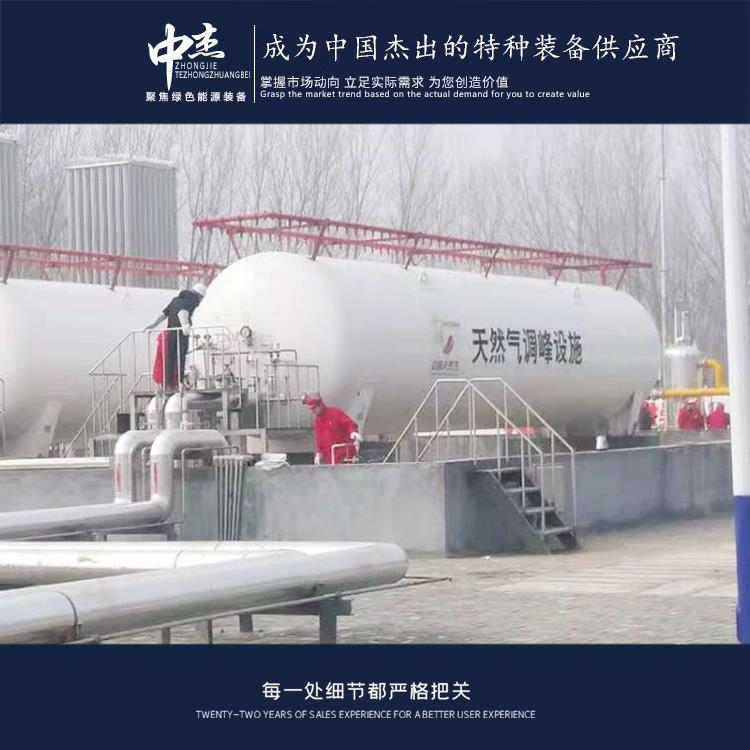
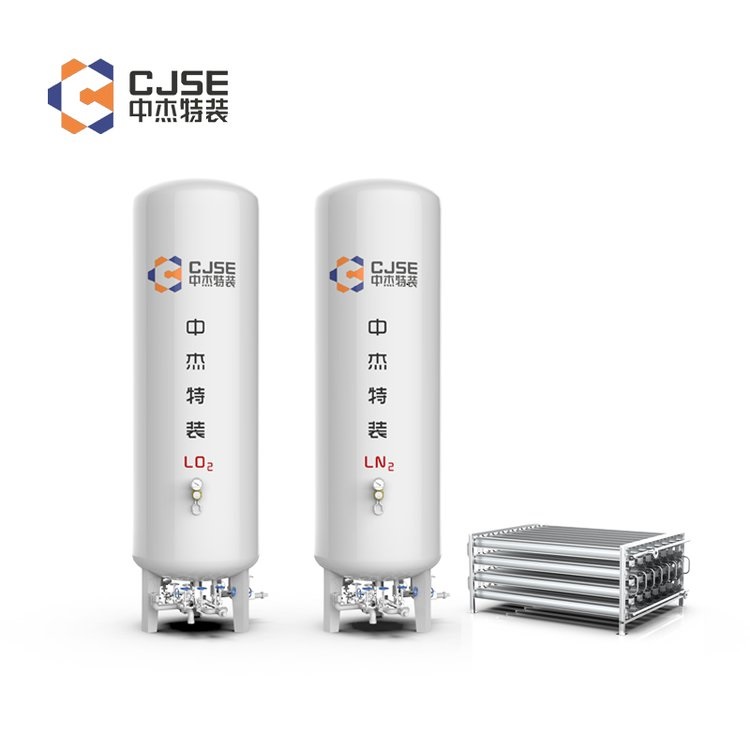
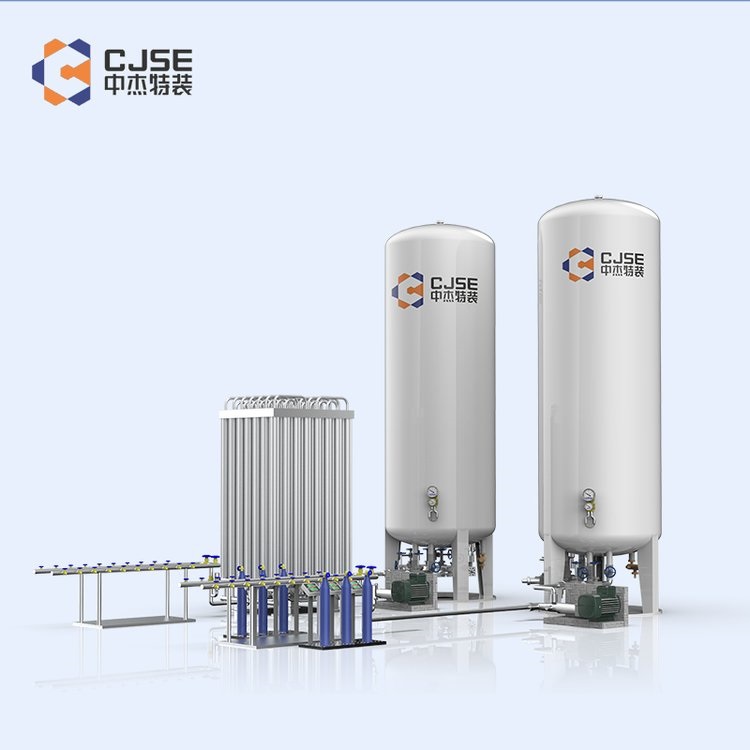
Shandong Zhongjie Special Equipment (formerly Heze Boiler Factory Co., Ltd.) holds an A-grade boiler manufacturing license, A2-grade pressure vessel manufacturing license, A2-grade pressure vessel design license, B-grade boiler installation, and GB2/Class, GC2/Class pressure pipeline installation licenses, as well as equipment and mechanical installation contracting qualifications. It is a member of the China Boiler and Water Treatment Association, the China Chemical Equipment Association, and the理事 unit of the Shandong Equipment Manufacturing Association. The company has also passed the ISO9001 Quality Management System, ISO14001 Environmental Management System, OHSAS18001 Occupational Health and Safety Management System certifications, and the American ASME/U2 certification.
Carbon Dioxide Storage Tank Commissioning typically involves the following steps and contents:
- Tank Installation Inspection: Check if the tank's installation location, foundation, and support structure meet design requirements, ensuring stability and safety.
- Connection Pipeline Inspection: Verify the tank's connection to inlet and outlet pipelines is secure, and that valves and pipelines open and close properly, ensuring the integrity and normal operation of the pipeline system.
- Tank Cleaning and Emptying: Prior to commissioning, clean and empty the tank to ensure no impurities or residues are inside, and that no other gases or liquids are present.
- Tank Pressure Test: Conduct pressure tests on the tank, including static pressure tests and leak tests. Static pressure tests involve increasing pressure to check the tank's sealing and pressure resistance. Leak tests are to detect any leaks in the tank and pipeline system.
- Control System Commissioning: Calibrate and adjust the tank's control system, including pressure, temperature, and level sensors, to ensure accuracy and reliability.
- Safety System Testing: Test the tank's safety system, including safety valves, pressure gauges, and level indicators, to ensure normal operation and responsiveness.
- Operating Parameters Adjustment: Adjust the tank's operating parameters, such as pressure, temperature, and level, according to actual needs and process requirements, to meet process specifications and safe operation.
- Documentation and Reporting: Record and organize data, test results, and operational logs during commissioning, and generate a commissioning report for future reference and management.
- The above are general steps and contents of carbon dioxide storage tank commissioning. Specific commissioning procedures may vary based on tank design requirements and application scenarios. During commissioning, strictly adhere to relevant safety operating procedures and standards to ensure safety and effectiveness of the process.
Under China's "Regulations for Safety Supervision of Pressure Vessel Technologies," carbon dioxide storage tanks are classified as Category II pressure vessels. According to these regulations, pressure vessels are categorized as follows:
- Category I pressure vessels: Pressure vessels with working pressures of 10 MPa (megapascals) or higher, such as steam boilers and pressure vessels.
- Category II pressure vessels: Pressure vessels with working pressures between 0.1 MPa and 10 MPa, such as air compressors and liquefied gas storage tanks.
- Category III pressure vessels: Pressure vessels with working pressures between 0.05 MPa and 0.1 MPa, such as storage tanks.
- Category IV pressure vessels: Pressure vessels with working pressures below 0.05 MPa, such as gas cylinders.
Based on this classification, carbon dioxide storage tanks typically have working pressures above 0.1 MPa, thus falling under Category II pressure vessels. It is important to note that specific classification criteria may vary due to different regional regulations and standards. When using and managing carbon dioxide storage tanks, it is essential to comply with the corresponding regulations and standards.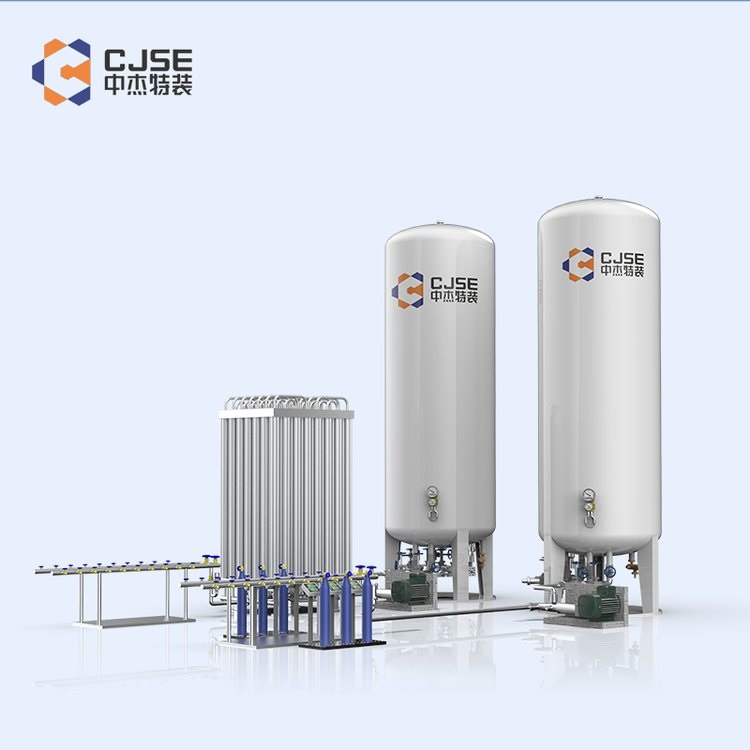
The testing and maintenance of liquid oxygen storage tanks are crucial for ensuring safe operation and extending their service life. Below is a general outline of the testing and maintenance procedures for liquid oxygen storage tanks:
- Visual Inspection: Regularly inspect the liquid oxygen storage tank for signs of corrosion, wear, and cracks on the surface. Promptly repair or replace any abnormalities found.
- Internal Cleaning: Regularly clean the interior of the liquid oxygen storage tank to remove accumulated impurities and dirt. Use appropriate cleaning agents and tools to prevent damage to the tank.
- Level Measurement: Regularly measure the liquid level to ensure it remains within a safe range within the tank. Use a level gauge or other measuring equipment, and record the results.
- Pressure Testing: Regularly conduct pressure tests to verify the tank's pressure resistance. Pay attention to controlling pressure and time during testing to ensure safety and accuracy.
- Leak Detection: Regularly perform leak detection to ensure the tank's sealing integrity. Use leak detection instruments such as gas detectors or foam leak detection agents.
- Valve and Pipeline Inspection: Regularly check the valves and pipeline connections of the liquid oxygen storage tank to ensure proper sealing and no leakage. Promptly repair or replace any issues found.
- Maintenance Records: Keep records of the testing and maintenance activities, including inspection dates, contents, and results. These records help track the tank's maintenance history and issue resolution.
- Scheduled Maintenance: Develop a regular maintenance plan based on the tank's usage and requirements. Maintenance includes lubrication, bolt tightening, and replacing seals to ensure normal operation.
When conducting routine inspections of carbon dioxide storage tanks, follow these steps:
- Visual Inspection: Check for any obvious damage, corrosion, or oil leakage signs on the tank's exterior. Pay attention to any abnormalities in the tank shell, valves, and pipe connections.
- Valve and Pipe Inspection: Verify that the tank's inlet and outlet valves and pipe connections are functioning normally and for any leaks or loose fittings. Ensure valves operate smoothly and reliably.
- Pressure Relief Device Inspection: Check if the tank's pressure relief devices (such as safety valves) are working properly. Confirm that the set pressure of the relief devices meets requirements.
- Level Measurement System Inspection: Assess the accuracy and reliability of the level measurement system. Calibrate the level sensors to ensure accurate level readings.
- Pressure and Temperature Inspection: Check if the tank's pressure and temperature sensors are functioning correctly. Verify the accuracy of pressure and temperature measurements.
- Safety Equipment Inspection: Examine the tank's safety equipment, such as safety valves, pressure sensors, and temperature sensors, to ensure they are working properly. Confirm that their set parameters meet requirements.
- Fire Protection Equipment Inspection: Ensure that fire protection equipment around the tank is intact and check if fire extinguishers, sprinkler systems, etc., are functioning correctly.
- Liquid and Gas Quality Inspection: Confirm that the carbon dioxide liquid and gas in the tank meet quality standards, with no impurities or contaminants.
- Documentation and Reporting: Record the date of inspection, inspection items, identified issues, and measures taken. Submit inspection reports to relevant departments or management as needed.
These are general steps for routine inspections of carbon dioxide storage tanks. Specific operations should be tailored to the tank's characteristics and requirements. When conducting inspections, follow relevant safety operating procedures and have trained personnel perform the operations.
Our company highly values technological innovation and R&D design. We possess 1 municipal-level enterprise technology center in Heze City, equipped with testing facilities for non-destructive testing, physical and chemical testing, welding testing, hydrostatic testing, and more. We have over 600 various instruments and equipment, including CNC machine tools, X-ray flaw detectors, digital ultrasonic flaw detectors, mechanical property testing machines, chemical analyzers, spectrometers, tensile testing machines, plasma welding machines, and others. The key products and technologies we have developed, such as welding for temperature and pressure vessels, biomass boiler emissions reduction, and waste heat utilization, have successively been included in multiple Shandong Provincial Department of Industry and Information Technology science and technology innovation projects, Shandong Provincial key projects, and Heze City innovation and excellence projects. We have accumulated a total of 27 authorized utility models, 16 authorized inventions, participated in drafting 2 standards, 2 industry standards, and registered 15 trademarks. The technical team of our company, in collaboration with Professor Yajiang Li from Shandong University, has developed deep cryogenic vessel processing technology, utilizing the internationally recognized plasma arc + filler wire tungsten inert gas arc welding (PAW-GTAW) technique. After provincial-level scientific and technological achievement evaluation, the technology level has reached an international standard in the field of deep cryogenic vessel manufacturing. Choose Zhongjie Special Equipment, and let's create brilliance together!
Xing'an League custom CO2 storage tank, in stock supply
