


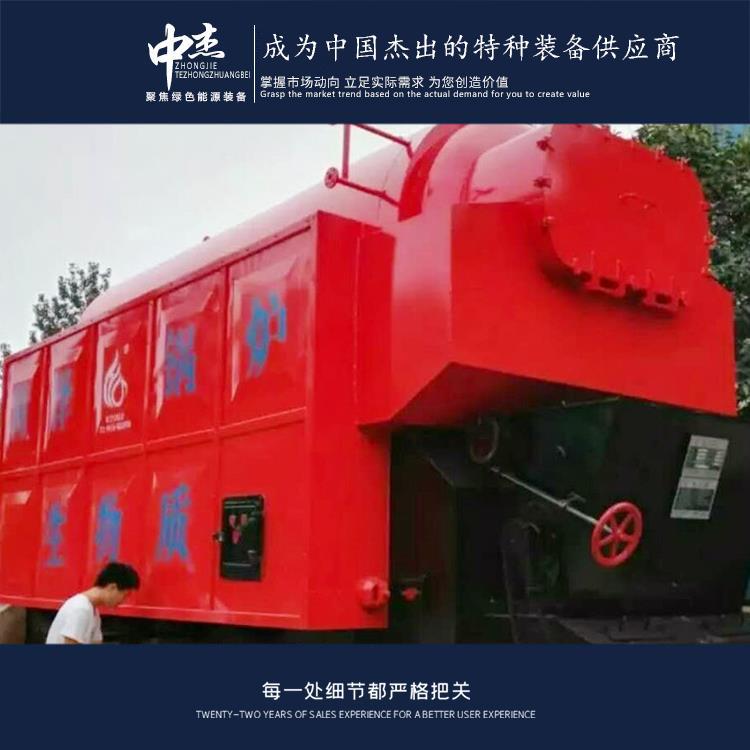
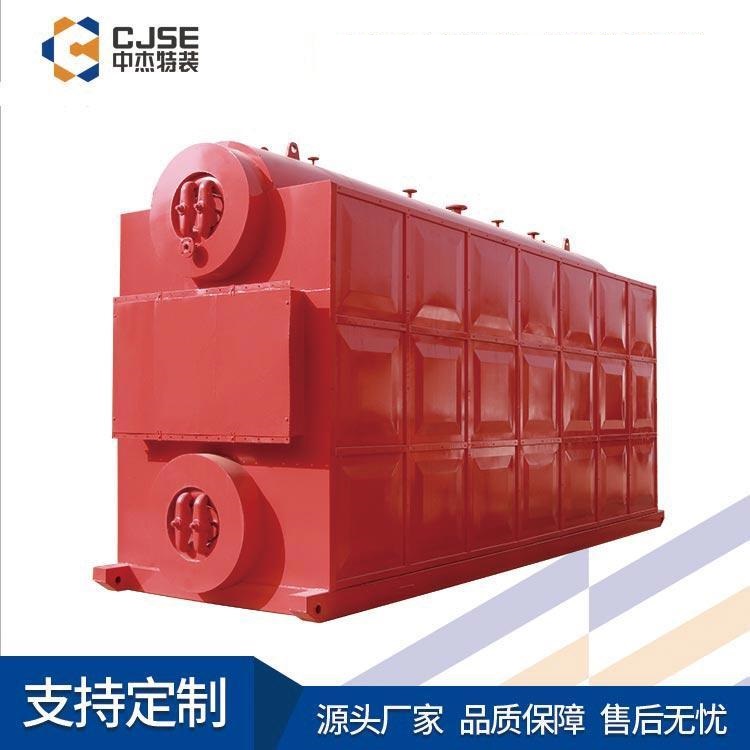
Shandong Zhongjie Special Equipment (formerly Heze Boiler Factory Co., Ltd.) was established in 2001, located at No. 2218 Jinnan Road, Economic and Technological Development Zone, Heze City. With a registered capital of 50 million yuan and total assets of 500 million yuan, the company has seven business centers: boilers, deep-freeze containers, pressure vessels, central air conditioning, engineering installation, international trade, and Internet of Things. It has three factory sites on Jinnan Road, East Changjiang Road, and Bohai Road, covering a total area of 200,000 square meters, with the main workshop spanning 83,000 square meters. It currently employs 710 staff, including 247 engineers and technicians, and 82 intermediate-level technical personnel. In December 2016, it was recognized as a "High-tech Enterprise" by the Science and Technology Department. In June 2021, it was identified as a "Specialized and New Enterprise in Shandong Province" by the Ministry of Industry and Information Technology. In June 2022, it was recognized as a "Gazelle Enterprise in Shandong Province," and in August 2022, it was identified as a "Specialized and New Small Giant Enterprise" by the Ministry of Industry and Information Technology.
Current biomass boilers encounter the following issues in practical application:
Fuel supply is unstable: The supply of biomass fuel is subject to seasonal and regional limitations, resulting in an unstable fuel supply for biomass boilers. This may lead to biomass boilers being unable to operate continuously or requiring frequent fuel changes, which increases operational costs and management challenges.
Low combustion efficiency: Due to the characteristics of biomass fuel and the complexity of the combustion process, the combustion efficiency of biomass boilers is relatively low. Some fuels have high volatile content and ash content, which may produce excessive ash and particulate matter during combustion, reducing combustion efficiency and thermal energy utilization.
NOx emissions issue: Biomass boilers produce a high amount of nitrogen oxides (NOx) during the combustion process, which has a certain impact on the environment. Controlling and reducing NOx emissions is an important issue facing biomass boilers.
Combustion equipment wear: The higher ash content in biomass fuel causes wear and clogging in the combustion process, which can shorten the lifespan of the equipment and necessitate frequent maintenance and cleaning.
Ash and slag disposal from combustion: Ash and slag produced by biomass boiler combustion must be treated and disposed of properly. Improper handling may lead to environmental pollution and harm.
Lack of unified technical standards and specifications: Currently, there is a lack of unified technical standards and specifications for biomass boilers.
A biomass organic heat carrier boiler is a boiler equipment that uses biomass as fuel to transfer heat energy through an organic heat carrier. Compared to traditional steam boilers, biomass organic heat carrier boilers have the following performance advantages:
High thermal efficiency: The biomass organic heat carrier boiler uses organic heat carriers as the heat transfer medium, offering high heat transfer efficiency. Organic heat carriers can achieve liquid phase heat transfer at low temperatures, resulting in minimal heat loss and allowing for more effective utilization of fuel's thermal energy, thereby enhancing thermal efficiency.
Flexibility: The biomass organic heat carrier boiler is suitable for various biomass fuels such as wood chips, straw, etc. Due to the abundance of biomass resources, different biomass fuels can be selected according to actual conditions, enhancing the substitutability and flexibility of the fuel.
Environmental friendliness: The biomass organic heat carrier furnace produces relatively little waste gas and slag during the combustion process, with low emissions of pollutants. The biomass fuel itself has low sulfur and low nitrogen characteristics, and the slag after combustion can be reused as organic fertilizer or biomass fuel, reducing environmental pollution.
Safety: The biomass organic thermal carrier boiler uses organic thermal carriers as heat transfer mediums, featuring lower working pressure, thereby reducing safety risks during the boiler's operation. Additionally, compared to fossil fuels, biomass fuel has a lower risk of explosion and fire during combustion.
Renewability: Biomass organic thermal carrier boilers use biomass as fuel, which is a renewable resource that can be continuously replenished through planting and cultivation. Compared to fossil fuels, the use of biomass fuel has a smaller environmental impact and is conducive to sustainable development.
Biomass refers to renewable energy derived from organic matter such as plants, animals, and microorganisms. It includes wood, straw, waste crops, food scraps, and municipal solid waste, among others. Biomass has a wide range of sources and types and is a renewable energy that can substitute for fossil fuels.
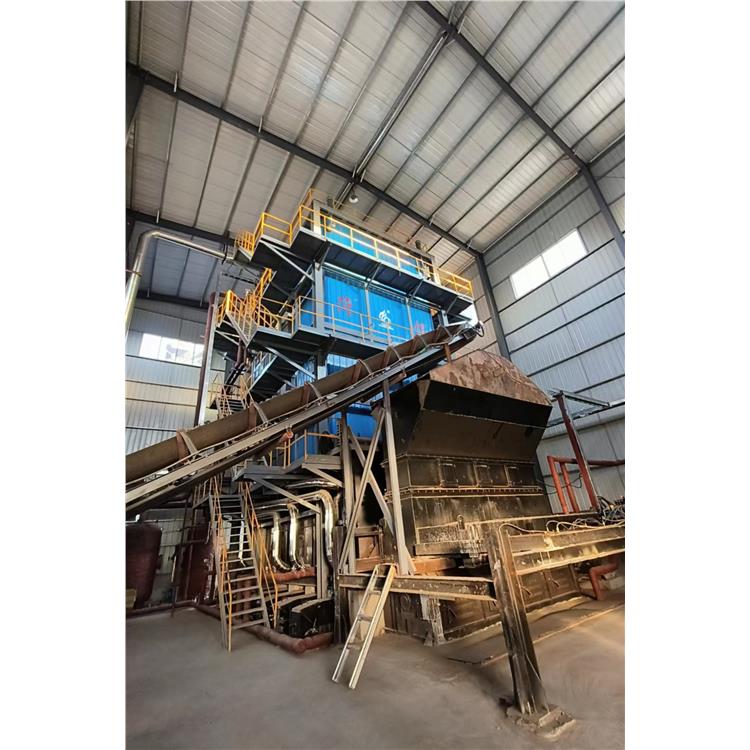
A biomass boiler is a specialized equipment designed for burning biomass fuels. It combusts biomass fuels to generate high-pressure, high-temperature thermal energy, which is used for heating, power generation, or other industrial processes. Biomass boilers typically use granular, pelletized, or shredded biomass fuels, releasing thermal energy through the combustion process.
The advantages of biomass boilers include:
Renewable Energy: Biomass is a renewable energy source with lower carbon emissions and environmental impact compared to fossil fuels.
Diversity: A wide range of biomass fuels are available, utilizing plant and animal waste and by-products to enhance resource utilization efficiency.
Environmental Protection: The carbon dioxide produced during biomass combustion can be absorbed by plants, forming a cycle and reducing air pollution.
Economic: Biomass fuel is relatively cost-effective, can
Biomass boilers can achieve energy conservation and emission reduction in the following ways:
Combustion Technology: The biomass boiler utilizes combustion technologies such as fluidized bed combustion and pellet combustion, which enhance combustion efficiency and ensure more complete fuel utilization, thereby reducing energy waste.
Energy Recovery Utilization: Biomass boilers produce flue gas during combustion that contains a significant amount of heat energy. This can be recovered and utilized through a flue gas waste heat recovery system. For instance, by using flue gas waste heat boilers or flue gas heat exchangers, the heat energy in the flue gas is converted into hot water, steam, or other forms of heat energy, thereby enhancing energy utilization efficiency.
Control combustion parameters: Biomass boilers can achieve optimal combustion performance by controlling parameters such as combustion temperature and oxygen supply. Reasonable combustion parameters can enhance combustion efficiency and reduce fuel consumption and emissions.
Fuel Quality Control: Selecting biomass fuel in bulk with high moisture content and low ash, can enhance combustion efficiency and reduce the generation of ash and pollutants.
Regular Maintenance and Cleaning: Perform regular maintenance and cleaning on biomass boilers to remove ash and soot from the combustion chamber and flue, ensuring the boiler operates and burns normally.
Our control system: Utilizes an automatic control system that can monitor and adjust the operating status of biomass boilers in real-time, ensuring the stability and efficiency of the combustion process.
Through these measures, biomass boilers can achieve energy conservation and emission reduction, improve energy utilization efficiency, decrease carbon emissions and the generation of pollutants, and be more environmentally friendly.
Our company attaches great importance to technological innovation and R&D design. We have 1 municipal-level enterprise technology center in Heze City, equipped with testing facilities for non-destructive testing, physical and chemical tests, welding tests, hydrostatic tests, and more. We have over 600 types of equipment, including CNC machine tools, X-ray flaw detectors, digital ultrasonic flaw detectors, mechanical property testing machines, chemical analyzers, spectrometers, tensile testing machines, plasma welding machines, and others. The key products we have developed, such as welding for temperature and pressure vessels, biomass boiler emission reduction, and waste heat recovery, have successively been selected for multiple Shandong Provincial Department of Industry and Information Technology science and technology projects, key provincial projects, and Heze City innovative and excellent projects. We have accumulated a total of 27 authorized utility models, 16 authorized inventions, participated in drafting 2 standards, 2 industry standards, and registered 15 trademarks. The technical team of our company, in collaboration with Professor Li Yajiang of Shandong University, has developed deep cryogenic container processing technology using the international plasma arc + wire feeding argon arc welding (PAW-GTAW) technology. After provincial-level scientific and technological achievement appraisal, the technology level has reached an international standard in the field of deep cryogenic container manufacturing. Choose Zhongjie Special Equipment, let's create brilliance together!
Yichang biomass boiler prices, on-site installation
