


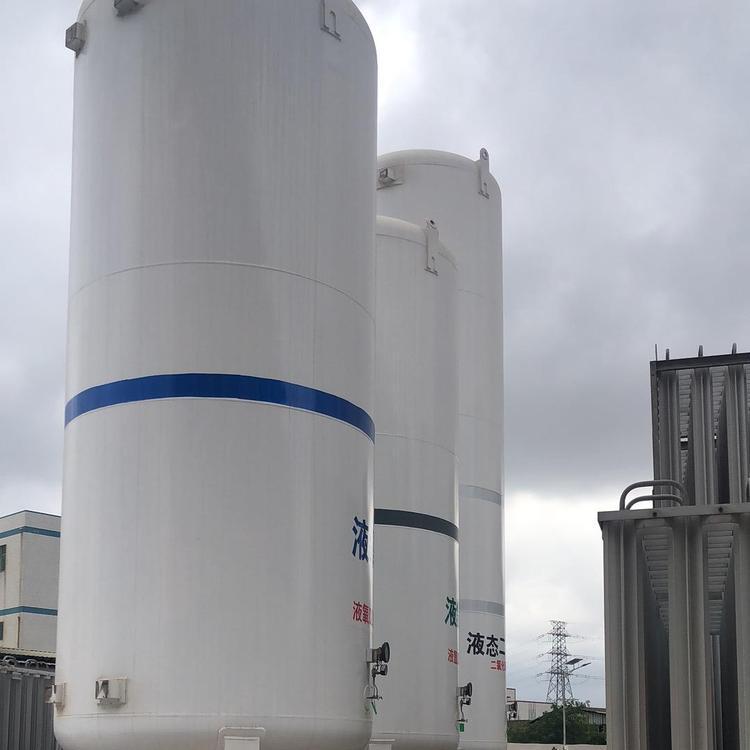
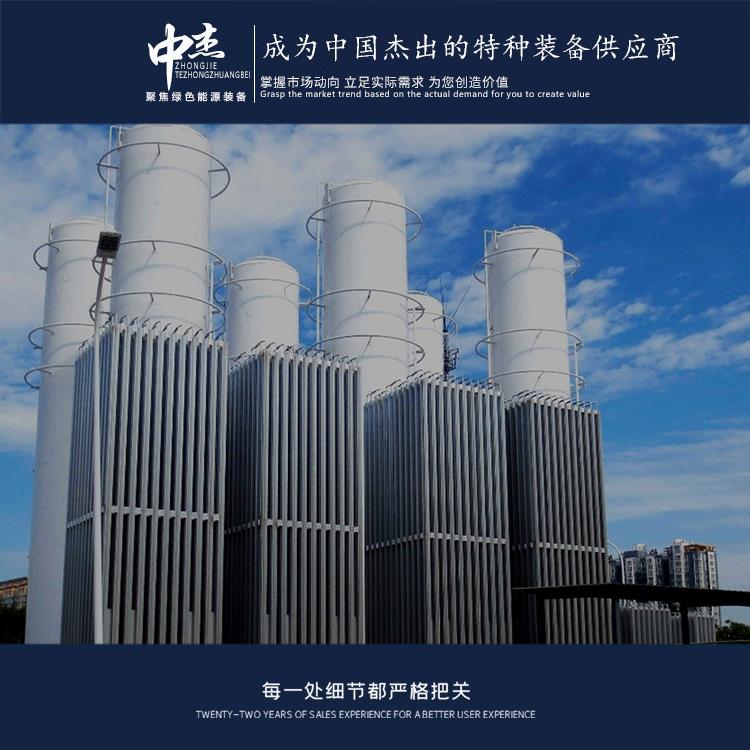
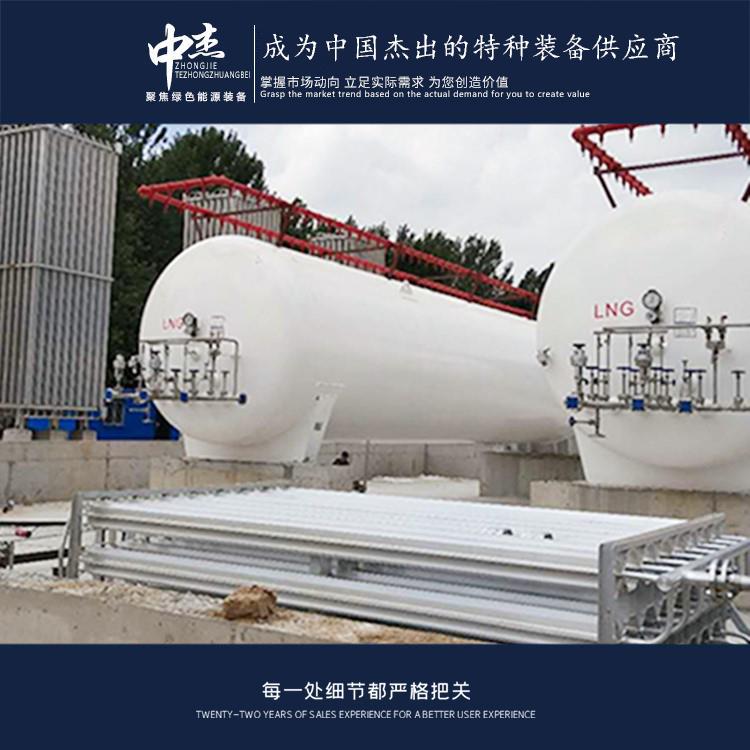
Shandong Zhongjie Special Equipment (formerly Heze Boiler Factory Co., Ltd.) was established in 2001, located at No. 2218 Jinnan Road, Economic and Technological Development Zone, Heze City. With a registered capital of 50 million yuan and total assets of 500 million yuan, the company has 7 business centers: boilers, deep-freezing containers, pressure vessels, central air conditioning, engineering installation, international trade, and the Internet of Things. It has three factory sites on Jinnan Road, East Changjiang Road, and Bohai Road, covering a total area of 200,000 square meters, with the main workshop spanning 83,000 square meters. The company currently employs 710 staff, including 247 engineers and technicians, and 82 intermediate-level technicians. In December 2016, it was recognized as a "High-tech Enterprise" by the Science and Technology Department. In June 2021, it was identified as a "Specialized and New Enterprise in Shandong Province" by the Ministry of Industry and Information Technology. In June 2022, it was recognized as a "Gazelle Enterprise in Shandong Province" and in August 2022, as a "Specialized and New Small Giant Enterprise" by the Ministry of Industry and Information Technology.
Technical specifications for carbon dioxide storage tanks can be formulated based on different application fields and/or regional standards. Below are some common technical specifications and standards for reference:
ASME Standards: The American Society of Mechanical Engineers (ASME) has issued a series of standards for pressure vessels, including specifications for carbon dioxide storage tanks, such as ASME BPVC Section VIII Division 1 and ASME BPVC Section VIII Division 2.
ISO Standards: The International Organization for Standardization (ISO) has published some standards related to pressure vessels, such as ISO 9809-1 and ISO 9809-2, covering design, manufacturing, and inspection requirements for steel gas cylinders.
GB Standards: The China National Bureau of Standards has issued a series of standards related to pressure vessels, such as GB 150 "Pressure Vessels" and GB 5099 "Steel Gas Cylinders," including design, manufacturing, and inspection requirements for carbon dioxide storage tanks.
DOT Standards: The United States Department of Transportation (DOT) has issued some standards related to pressure vessels and cylinders, such as DOT-3AA and DOT-4BA, covering design, manufacturing, and transportation requirements for liquefied gas storage tanks.
EN Standards: The European Committee for Standardization (CEN) has published some standards related to pressure vessels, such as EN 13445 and EN 14382, covering design, manufacturing, and inspection requirements for liquefied gas storage tanks.
Additionally, other industry standards and specifications may apply to carbon dioxide storage tanks based on specific application needs, such as standards related to the food and beverage industry, and industry-specific standards.
When using carbon dioxide storage tanks, it is essential to select applicable technical specifications according to specific application requirements and local regulations, and ensure that the design, manufacturing, and use of the tanks comply with the corresponding standards and specifications.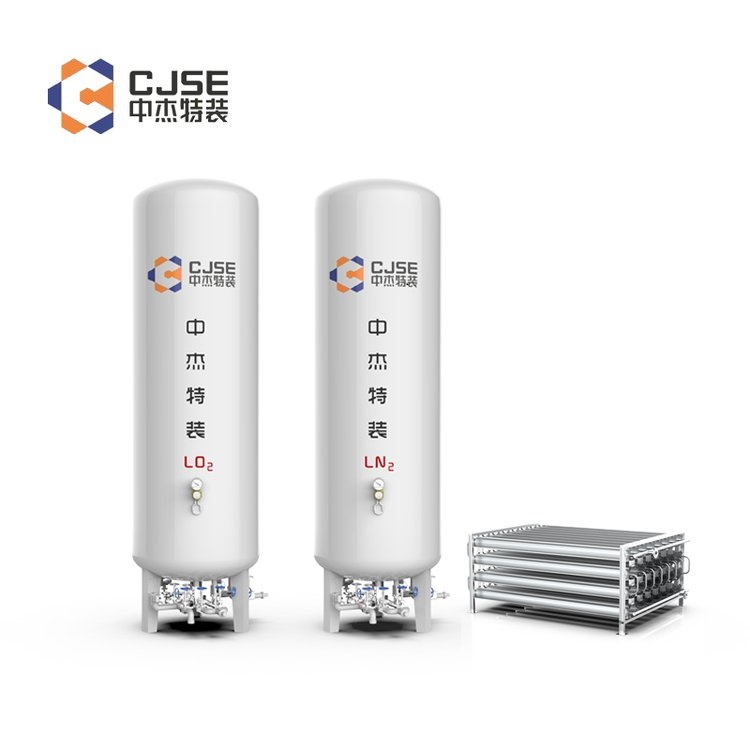
In recent years, the expansion of low-temperature liquid storage tanks has reached its peak for the following reasons:
- Increasing energy demand: As the economy grows and the population expands, there's a rising need for energy. Low-temperature liquid storage tanks are primarily used for storing liquefied natural gas (LNG), liquid oxygen (LOX), and liquid nitrogen (LIN) to meet the growing energy demand.
- Reduction of greenhouse gas emissions: These tanks can store and transport liquid carbon dioxide (CO2) for carbon capture and storage (CCS) technology, thereby reducing greenhouse gas emissions. With heightened concern for environmental protection and climate change, the demand for low-temperature liquid storage tanks in the CCS field has also increased.
- Industrial development needs: The application of low-temperature liquid storage tanks in the industrial sector is also on the rise. For instance, in industries like chemicals, pharmaceuticals, food and beverage, there is a need for storage and transportation of low-temperature liquid raw materials or products, such as liquid nitrogen, liquid oxygen, and liquid ethylene. As these industries develop, so does the demand for low-temperature liquid storage tanks.
- Technological progress and innovation: In recent years, the design, manufacturing, and transportation technology of low-temperature liquid storage tanks has continually advanced and innovated. The application of new materials, optimization of tank structures, and improvements in safety control systems have made these tanks safer and more reliable, further propelling their expansion.
In summary, factors such as increasing energy demand, the reduction of greenhouse gas emissions, industrial development needs, and technological progress and innovation have collectively driven the peak expansion of low-temperature liquid storage tanks in recent years. As the development of related industries and technology continues, these trends are expected to persist.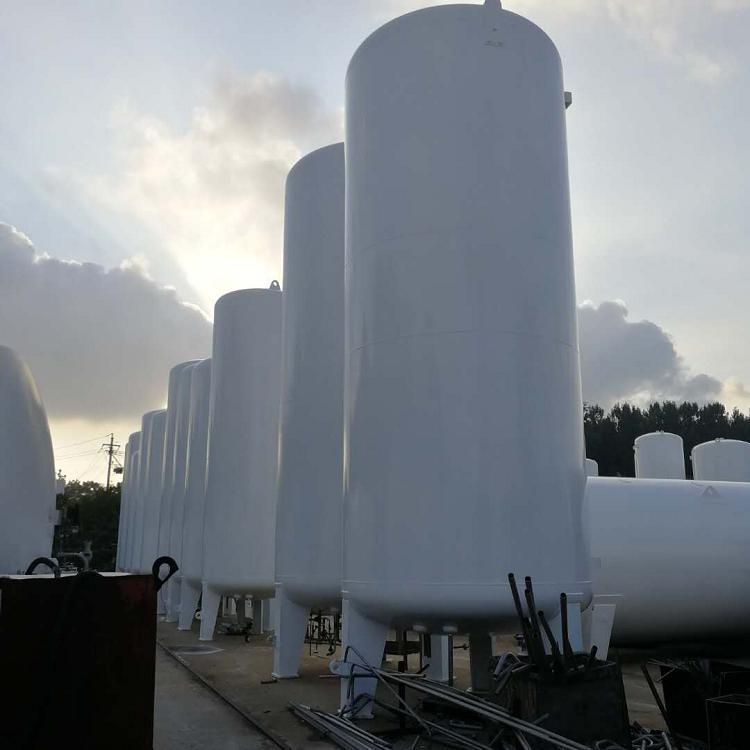
Carbon dioxide synthesis is a chemical reaction that utilizes carbon dioxide to create various compounds. This process has several applications:
- Fertilizer production: It is an essential raw material for making fertilizers, and carbon dioxide synthesis represents a sustainable production method. By reacting with carbon dioxide, it can synthesize compounds used in nitrogen fertilizers, such as urea. This approach reduces dependence on fossil fuels used in traditional production methods and lowers greenhouse gas emissions.
- Energy storage: Carbon dioxide synthesis can also serve as a form of energy storage. By reacting with carbon dioxide, energy can be stored in the form of chemical bonds. When energy is needed, it can be released by reversing the reaction into carbon dioxide and the original compound.
- Fuel cells: It can act as a clean fuel for fuel cells. By synthesizing carbon dioxide into compounds suitable for fuel cells, electricity can be generated, producing only water and nitrogen as byproducts, thereby reducing environmental pollution.
- Chemical synthesis: It is an important raw material for the synthesis of many chemicals. Carbon dioxide synthesis can provide a sustainable supply for the chemical industry, used to synthesize other chemicals, such as etc.
The development of carbon dioxide synthesis technology aims to reduce dependence on fossil fuels used in traditional production methods, lower greenhouse gas emissions, and promote the development of sustainable energy and the chemical industry. However, this technology is still in continuous development and research, requiring further technological breakthroughs and practical verification to achieve large-scale application.
Carbon dioxide storage tanks offer several advantages:
- High storage density: These tanks can compress carbon dioxide gas into a liquid, significantly increasing storage density. Compared to gas storage, liquid CO2 can hold more carbon dioxide in a smaller tank, saving space and costs.
- Multiple applications: CO2 storage tanks are widely used in various fields, including food and beverage industry, manufacturing, fire suppression, and gas supply. CO2 serves as a preservative, effervescent agent for beverages, gas, and extinguishing agent, with extensive applications and market demand.
- Environmental friendly and renewable: Carbon dioxide is an environmentally friendly gas, and its increased concentration in the atmosphere contributes to global warming and climate change. By storing and utilizing CO2, we can reduce its emissions into the atmosphere, promoting environmental protection and sustainable development.
- Safe and reliable: During design and manufacturing, these tanks typically use high-strength materials (such as carbon steel or stainless steel) with excellent pressure resistance and safety. They are often equipped with safety valves, pressure gauges, and level indicators to ensure safe operation. Additionally, CO2 is non-flammable and non-explosive, making it relatively safe.
- Supply: CO2 storage tanks provide a stable supply of carbon dioxide. Through tank design and control systems, precise measurement and supply of CO2 can be achieved, meeting the needs of different industries and applications.
These advantages make carbon dioxide storage tanks an essential storage and supply equipment, widely used in various industries. However, it is still necessary to follow relevant safety operation procedures and standards when using CO2 storage tanks to ensure their safe operation and use.
Shandong Zhongjie Special Equipment, welcome customers to our factory for business discussions.
Shaanxi Custom Carbon Dioxide Tanks Manufacturing Factory
