


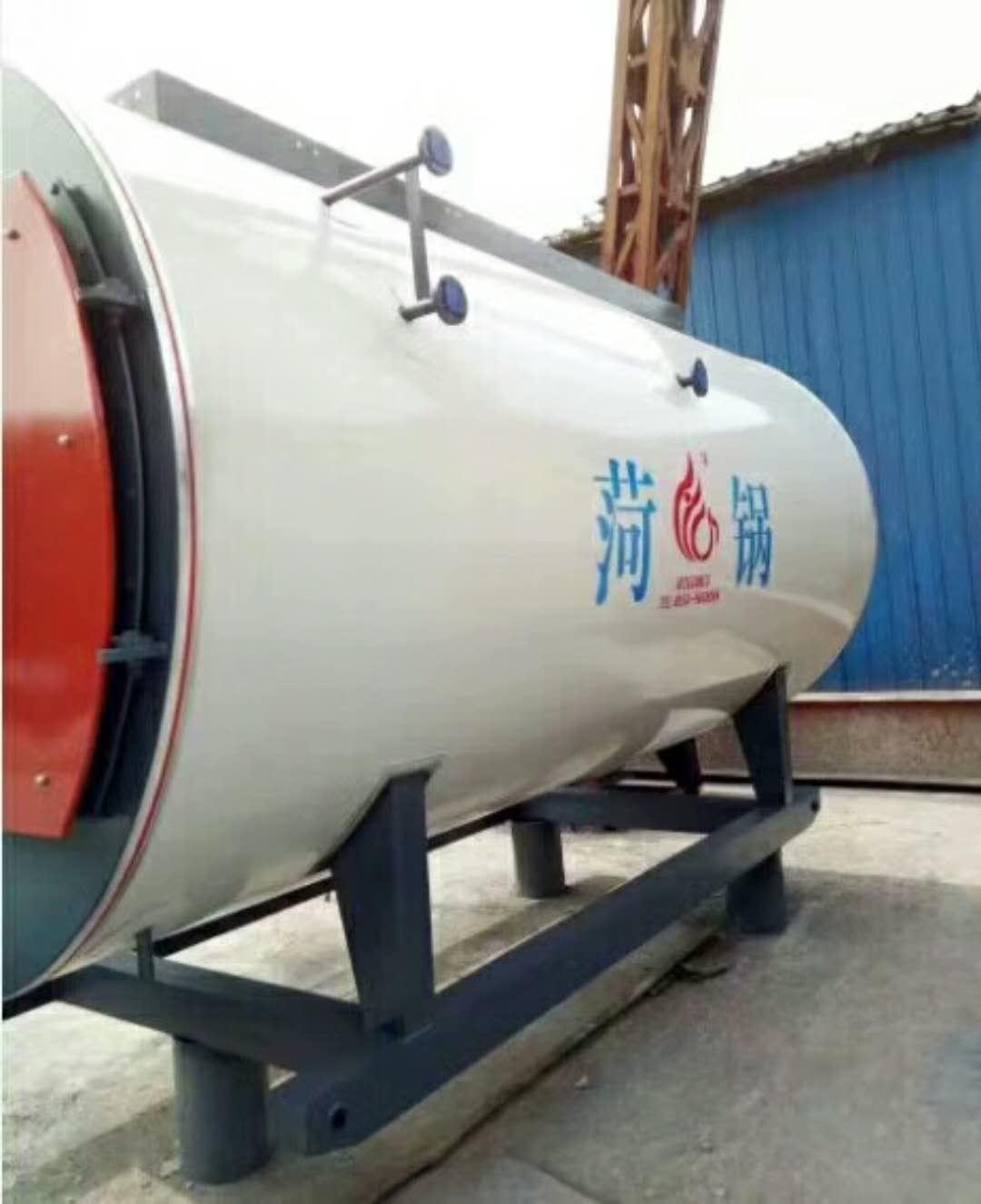
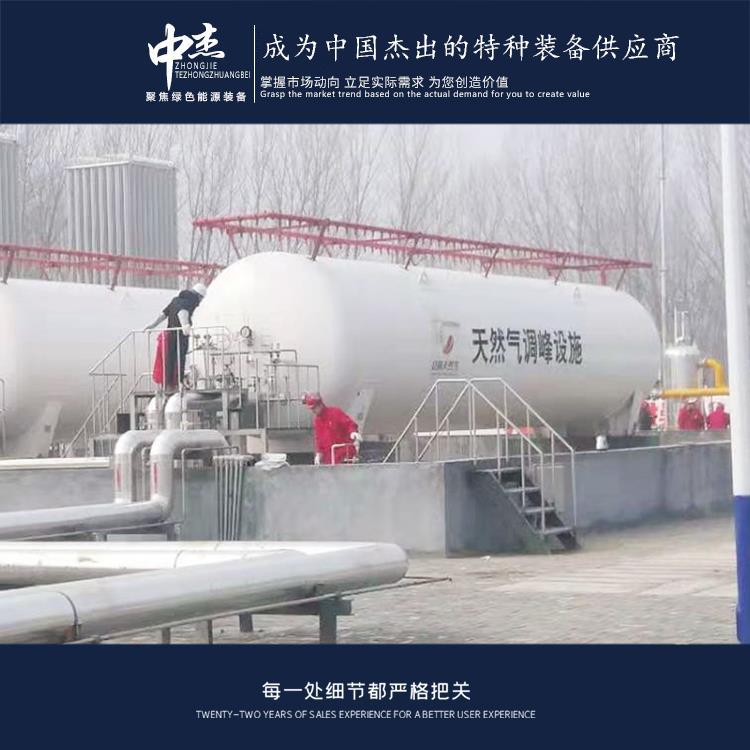
Shandong Zhongjie Special Equipment (formerly Heze Boiler Factory Co., Ltd.) was established in 2001, located at No. 2218 Jinnan Road, Economic and Technological Development Zone, Heze City, with a registered capital of 50 million yuan and total assets of 500 million yuan. The company has 7 business centers: boiler, deep-freezing vessel, pressure vessel, central air conditioning, engineering installation, international trade, and Internet of Things. It has three factory sites on Jinnan Road, East Changjiang Road, and Bohai Road, covering a total area of 200,000 square meters, with the main workshop spanning 83,000 square meters. It currently employs 710 people, including 247 engineering and technical personnel and 82 middle-level technical personnel. In December 2016, it was recognized as a "High-Tech Enterprise" by the Science and Technology Department. In June 2021, it was identified as a "Specialized and New Enterprise in Shandong Province" by the Ministry of Industry and Information Technology. In June 2022, it was recognized as a "Gazelle Enterprise in Shandong Province" and in August 2022, it was identified as a "Specialized and New Small Giant Enterprise" by the Ministry of Industry and Information Technology.
The reasons for regular inspections of low-temperature liquid carbon dioxide storage tanks are to ensure their safety performance and normal operation. Due to the tanks' exposure to low temperatures and high pressures, there are inherent safety risks such as leaks and structural failures. Regular inspections can help identify potential issues early, allowing for appropriate repairs or maintenance to ensure safe operation. The specific inspection frequency should be determined according to relevant regulations and standards, and it is generally recommended to conduct routine inspections and maintenance. Typically, the time interval for regular inspections of low-temperature liquid carbon dioxide storage tanks is between 1 to 3 years, with the exact interval potentially varying based on factors like usage, age, and design standards. The inspection content usually includes visual checks of the tank, inspections of valves and fittings, leak detection, and pressure tests. Additionally, regular checks and maintenance of the tank's insulation should be performed to ensure its insulating performance. It is important to note that the specific inspection frequency and content should be determined based on local laws, standards, and the manufacturer's recommendations. Inspections should be carried out by qualified personnel, and maintenance records should be documented to track and manage the tank's safety performance.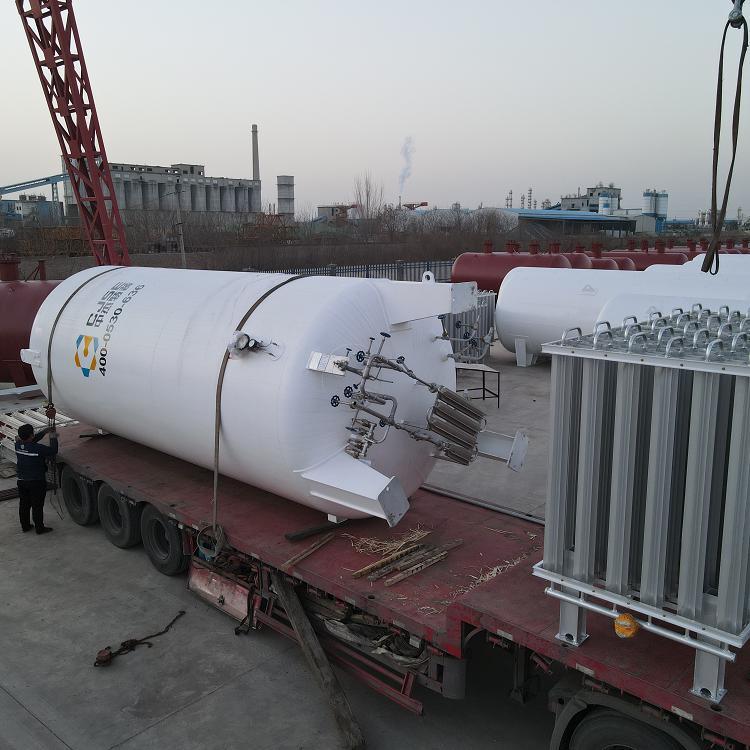
CO2 flooding is a commonly used enhanced oil recovery technique, designed to increase the recovery rate of oil fields. It works by injecting CO2 gas into the reservoir to alter its physical and chemical properties, thereby promoting fluid flow and enhancing recovery. The working principle of CO2 flooding is as follows:
- Solubility Principle: CO2 has a high solubility in oil. When CO2 gas is injected into the reservoir, it dissolves within the oil, reducing its viscosity and surface tension, making it easier to flow.
- Expansion Displacement Principle: After CO2 gas is injected into the reservoir, it expands to form a gas phase, increasing the internal pressure of the reservoir, which in turn drives the oil towards the wellbore. Additionally, CO2's high permeability can improve the reservoir's permeability, enhancing fluid flow.
- Chemical Reaction Principle: CO2 reacts with certain components in the oil, producing soluble substances that further reduce viscosity and improve fluidity.
CO2 flooding technology offers certain advantages in oilfield development, such as:
- Environmental Friendliness: CO2 is a clean, non-toxic, and renewable gas. Using CO2 for flooding can reduce environmental pollution.
- Economic Viability: CO2 flooding can increase the recovery rate of oil fields, boost production, and thus enhance economic benefits.
- Sustainability: CO2 can be separated from air or captured and stored from industrial flue gases, enabling the recycling of CO2 and ensuring sustainability.
It is important to note that the application of CO2 flooding technology requires consideration of reservoir characteristics, geological conditions, and economic feasibility factors. Before implementing CO2 flooding, a thorough reservoir evaluation and engineering design are necessary to ensure the effectiveness and safety of the technology.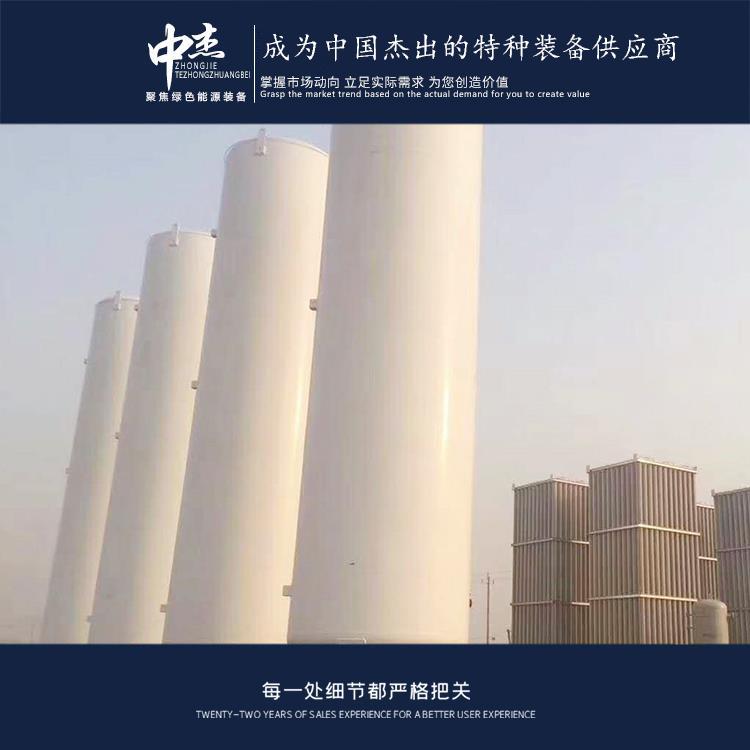
Carbon dioxide storage tanks offer the following features and advantages: High storage density: These tanks can compress carbon dioxide gas into a liquid state, significantly increasing storage density. Compared to storing it in a gaseous state, liquid carbon dioxide can be stored in a smaller tank, saving space and costs. Various application fields: Carbon dioxide storage tanks are widely used in multiple industries, including food and beverage, manufacturing, fire suppression, and gas supply. Carbon dioxide can serve as a preservative, effervescent agent for beverages, gas, and fire extinguisher, with extensive applications and market demand. Environmental friendly and renewable: Carbon dioxide is an eco-friendly gas, and its increased concentration in the atmosphere can lead to warming and climate change. By storing and utilizing carbon dioxide, we can reduce its emissions into the atmosphere, achieving environmental protection and sustainable development. Safe and reliable: During design and manufacturing, carbon dioxide tanks typically use high-strength materials (such as carbon steel or stainless steel) with good pressure resistance and safety. The tanks are usually equipped with safety valves, pressure gauges, level indicators, and other accessories to ensure safe operation. Additionally, carbon dioxide is a non-flammable and non-explosive gas, making it relatively safe. Supply: Carbon dioxide storage tanks provide a stable supply of carbon dioxide. Through tank design and control systems, accurate measurement and supply of carbon dioxide can be achieved, meeting the needs of various businesses and applications. In summary, carbon dioxide storage tanks offer high storage density, diverse application fields, environmental friendliness, renewable energy, safety, reliability, and supply. This makes them an important storage and supply equipment widely used in various industries. However, safety operation procedures must still be followed when using carbon dioxide storage tanks.
Pressure Vessel Standards: Liquid carbon dioxide storage tanks are generally considered pressure vessels, and their design, manufacturing, and use must comply with relevant pressure vessel standards. In China, common pressure vessel standards include GB150 "Steel Pressure Vessels" and GB18435 "Storage Tanks." Safety Standards: The use of liquid carbon dioxide storage tanks must adhere to relevant safety standards and regulations. For instance, in China, the safe operation of liquid carbon dioxide storage tanks should follow standards such as GB50028 "Design Code for Petroleum and Chemical Enterprises" and GB50016 "Design Code for Fire Prevention in Buildings." Inspection and Testing Standards: The inspection and testing of liquid carbon dioxide storage tanks must comply with applicable standards and regulations. For example, regular inspections of liquid carbon dioxide storage tanks can refer to standards like GB/T 19638 "Code for Periodic Inspection of Pressure Vessels." Environmental Protection Standards: The use of liquid carbon dioxide storage tanks must comply with relevant environmental protection standards and regulations. For example, in China, the exhaust emissions from liquid carbon dioxide storage tanks should meet standards such as "Emission Standards for Air Pollutants."
Our company attaches great importance to technological innovation and R&D design. We possess 1 municipal enterprise technology center in Heze City, with testing facilities for non-destructive testing, physical and chemical testing, welding testing, hydrostatic testing, etc. We are equipped with over 600 instruments and equipment, including CNC machine tools, X-ray flaw detectors, digital ultrasonic flaw detectors, mechanical property testing machines, chemical analyzers, spectrometers, tensile testing machines, plasma welding machines, and more. The key products we have developed, such as welding for temperature and pressure vessels, emissions reduction for biomass boilers, and waste heat utilization, have successively been included in multiple Shandong Provincial Department of Industry and Information Technology science and technology projects, Shandong Provincial key projects, and Heze City innovative and excellent projects. We have cumulatively obtained 27 authorized utility model patents, 16 authorized invention patents, participated in drafting 2 standards, 2 industry standards, and registered 15 trademarks. Our technical team, in collaboration with Professor Yajiang Li of Shandong University, has jointly developed deep cryogenic container processing technology using the international plasma arc + filler wire tungsten inert gas arc welding (PAW-GTAW) technology. After being appraised as a provincial-level scientific and technological achievement, our technology level has reached an international standard in the field of deep cryogenic container manufacturing. Choose ZJ Special Equipment, let's create brilliance together!
Aksu Carbon Dioxide Cylinder Prices, On-Site Installation
