


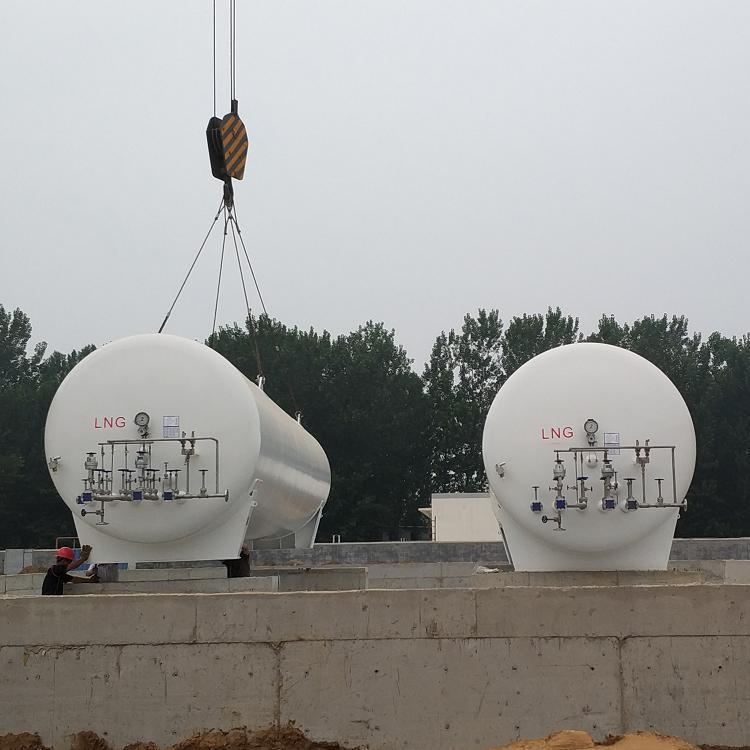
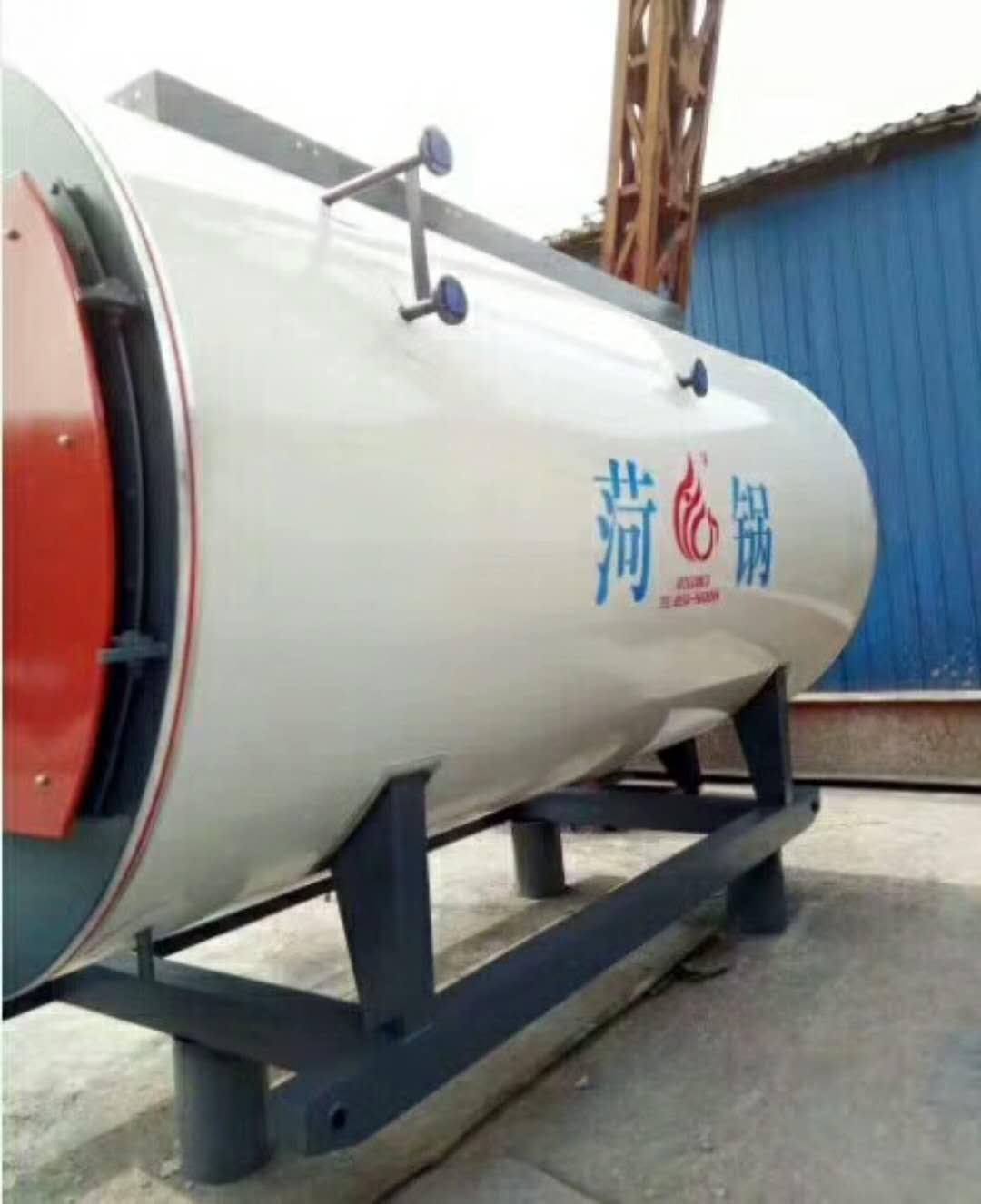
Shandong Zhongjie Special Equipment (formerly Heze Boiler Factory Co., Ltd.) was established in 2001, located at No. 2218 Jinnan Road, Development Zone, Heze City, with a registered capital of 50 million yuan and total assets of 500 million yuan. The company has 7 business centers: boilers, deep-freezing containers, pressure vessels, central air conditioning, engineering installation, international trade, and the Internet of Things. It has three factory sites on Jinnan Road, East Changjiang Road, and Bohai Road, covering a total area of 200,000 square meters, with the main workshop spanning 83,000 square meters. Currently, it employs 710 people, including 247 engineers and technicians, and 82 intermediate-level technicians. In December 2016, it was recognized as a "High-tech Enterprise" by the Science and Technology Department. In June 2021, it was identified as a "Specialized and New Enterprise in Shandong Province" by the Department of Industry and Information Technology. In June 2022, it was recognized as a "Gazelle Enterprise in Shandong Province" and in August 2022, as a "Specialized and New Small Giant Enterprise" by the Ministry of Industry and Information Technology.
Pressure Vessel Standards: Liquid carbon dioxide storage tanks are generally considered pressure vessels, and their design, manufacturing, and use should comply with the relevant pressure vessel standards. In China, common pressure vessel standards include GB150 "Steel Pressure Vessels" and GB18435 "Tanks." Safety Standards: The use of liquid carbon dioxide storage tanks should adhere to relevant safety standards and regulations. For instance, in China, the safe operation of liquid carbon dioxide storage tanks should follow standards such as GB50028 "Design Code for Petroleum and Chemical Enterprises" and GB50016 "Building Design Fire Prevention Code." Inspection and Testing Standards: The inspection and testing of liquid carbon dioxide storage tanks should meet the corresponding standards and regulations. For example, the regular inspection of liquid carbon dioxide storage tanks can refer to standards like GB/T 19638 "Code for Periodic Inspection of Pressure Vessels." Environmental Protection Standards: The use of liquid carbon dioxide storage tanks should comply with relevant environmental protection standards and regulations. For example, in China, the exhaust emissions from liquid carbon dioxide storage tanks should meet standards such as "Emission Standards of Air Pollutants."
Carbon dioxide and liquid oxygen storage tanks are equipment used for storing different gases, with some differences in their physical properties:
- Physical State: Carbon dioxide (CO2) is a gas at room temperature and requires low temperatures and high pressures to convert to a liquid. Liquid oxygen (LOX) is a liquid at room temperature and can remain in liquid form without special conditions.
- Storage Temperature: The liquid storage temperature of carbon dioxide typically ranges from -40°C to -78.5°C, while the liquid storage temperature of liquid oxygen usually ranges from -183°C to -183.15°C. The storage temperature of liquid oxygen is lower, requiring more stringent insulation measures.
- Storage Pressure: The liquid storage pressure of carbon dioxide typically ranges from 5 to 20 MPa, while the liquid storage pressure of liquid oxygen usually ranges from 0.2 to 2 MPa. The storage pressure of liquid oxygen is lower.
- Density: The density of liquid carbon dioxide is approximately 0.8 g/cm³, while the density of liquid oxygen is approximately 1.14 g/cm³. The density of liquid oxygen is greater.
- Safety: Liquid oxygen has a high oxygen content, making it highly flammable and oxidizing, necessitating stricter safety measures. Carbon dioxide is relatively safe but can still pose health risks at high concentrations.
When cooling carbon dioxide storage tanks, be mindful of the following points and familiarize yourself with the basic steps of the cooling process:
Cautionary Notes:
- Safety: Pay attention to safety during the cooling process to ensure the safety of operators and the surrounding environment. Adhere to relevant safety operation procedures and standards, and use appropriate personal protective equipment.
Equipment Selection: Choose the appropriate cooling equipment and tools, such as cooling mediums (e.g., liquid nitrogen), coolers, and cooling systems. Select the suitable cooling equipment based on the tank's size and requirements.
Temperature Control: Control the temperature during the cooling process to avoid overcooling or insufficient temperature. Determine the appropriate cooling temperature range based on the tank's design requirements and operating conditions.
Cooling Process Analysis:
- Preparations: Ensure there are no residual gases or impurities inside the tank to avoid affecting the cooling effect. Check the tank's sealing and the operation status of the safety valve.
Cooling Medium Injection: Inject the cooling medium (e.g., liquid nitrogen) into the tank to lower the tank's temperature. Control the injection speed and quantity during the process to avoid overinjection leading to excessive pressure.
Cooling Time: Determine the cooling time based on the tank's size and requirements. The cooling time typically needs to be long enough to ensure that the carbon dioxide inside the tank is sufficiently cooled and liquefied.
Temperature Monitoring: Regularly monitor the tank's temperature during the cooling process to ensure it remains within the appropriate range. Use temperature sensors or infrared thermometers for monitoring.
Cooling Completion: The cooling process is complete when the tank reaches the predetermined cooling requirements. At this point, the carbon dioxide inside the tank should be in a liquid state.
Note that the specific cooling process and steps may vary due to different tank designs and usage scenarios. When conducting cooling operations, follow relevant safety operation procedures and standards to ensure safety and effectiveness.
Standard parameters for CO2 storage tanks can vary depending on design and application requirements. Here are some common standard parameters:
- Storage Capacity: The capacity of CO2 storage tanks is typically expressed in kiloliters (L) or cubic meters (m), with common ranges extending from a few thousand to tens of thousands of liters.
- Operating Pressure: The working pressure of CO2 storage tanks is usually around 20 to 25 MPa at normal temperatures, with the specific pressure determined by application needs and design standards.
- Design Temperature: The design temperature for CO2 storage tanks is typically in the low-temperature range, generally between -40℃ and -60℃, to accommodate the liquefaction and storage requirements of CO2.
- Material: CO2 storage tanks are usually made from high-strength steel or alloy materials to withstand the stresses and loads under high pressure and low-temperature conditions.
- Insulation: The tanks are internally insulated to reduce heat transfer and liquid evaporation. Insulation is usually a multi-layer structure, including thermal insulation materials and an external protective layer.
- Safety Valves and Pressure Relief Devices: Safety valves and pressure relief devices are equipped on the tanks to control internal pressure, preventing overpressure and explosion.
- Level Monitoring and Control: The tanks are fitted with level monitoring devices to monitor the liquid level within. Timely monitoring and control of the level ensure that the liquid storage within the tank remains within safe limits.
Note that specific standard parameters for CO2 storage tanks may vary due to different design standards, application requirements, and manufacturers. When selecting and using CO2 storage tanks, it is important to consider these factors.
Our company attaches great importance to technological innovation and research and development, boasting one municipal-level enterprise technology center in Heze City. We have established testing facilities for non-destructive testing, physical and chemical testing, welding testing, hydrostatic testing, etc., and are equipped with over 600 various instruments and equipment, including CNC machine tools, X-ray flaw detectors, digital ultrasonic flaw detectors, mechanical property testing machines, chemical analyzers, spectrometers, tensile testing machines, plasma welding machines, and more. The key products and technologies we have developed, such as welding for temperature and pressure vessels, emission reduction for biomass boilers, and waste heat utilization, have successively been selected for multiple Shandong Provincial Department of Industry and Information Technology science and technology innovation projects, Shandong Provincial key projects, and Heze City innovation and excellence projects. We have cumulatively obtained 27 authorized utility models, 16 authorized inventions, participated in drafting 2 standards, 2 industry standards, and registered 15 trademarks. The technical team of our company, in collaboration with Professor Yajiang Li from Shandong University, has jointly developed deep cryogenic container processing technology, utilizing the international plasma arc + filler wire tungsten inert gas arc welding (PAW-GTAW) technology. After provincial-level scientific and technological achievement appraisal, the technology level has reached international standards in the field of deep cryogenic container manufacturing. Choose Zhongjie Special Equipment, and let's create brilliance together!
Jilin 30 Cubic Meter Carbon Dioxide Storage Tank, Comprehensive After-Sales Service
