


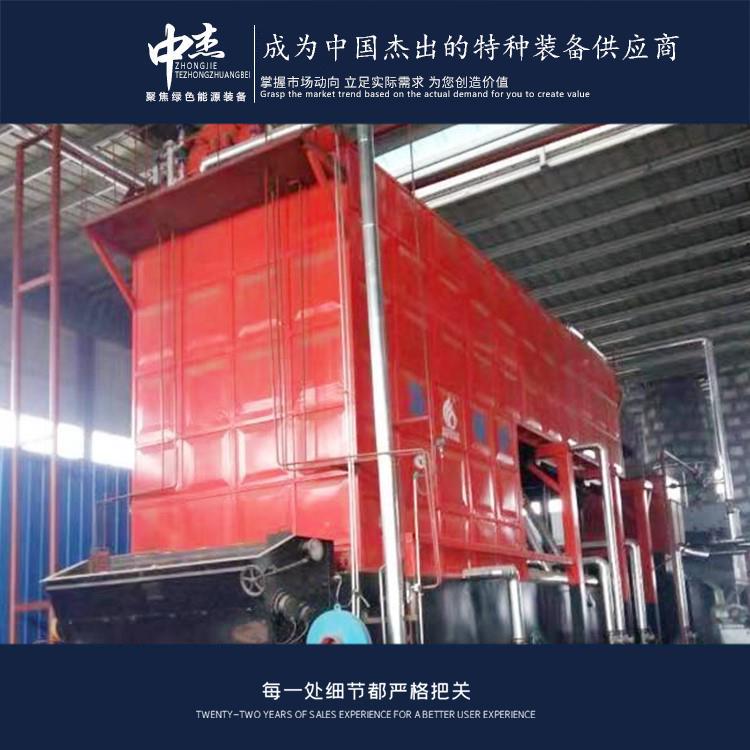
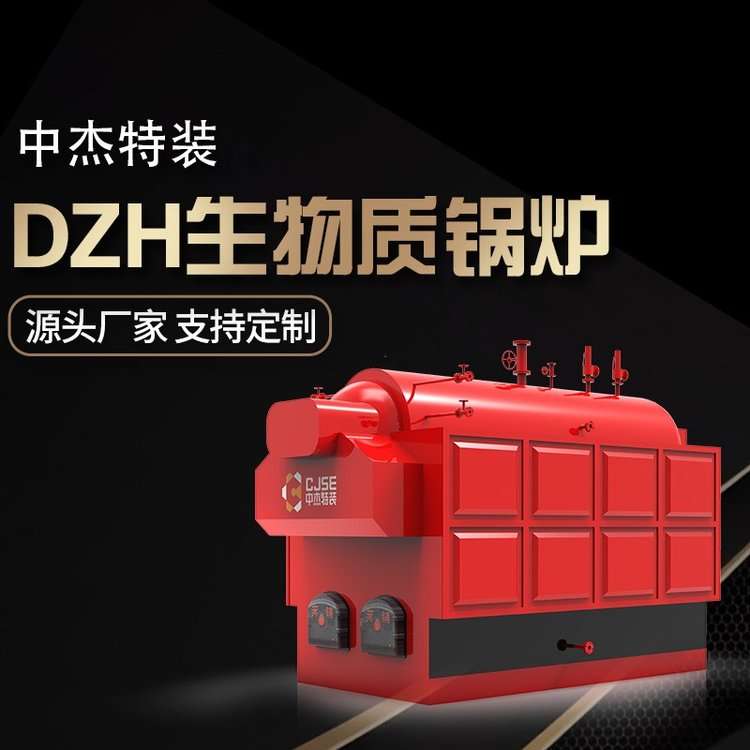
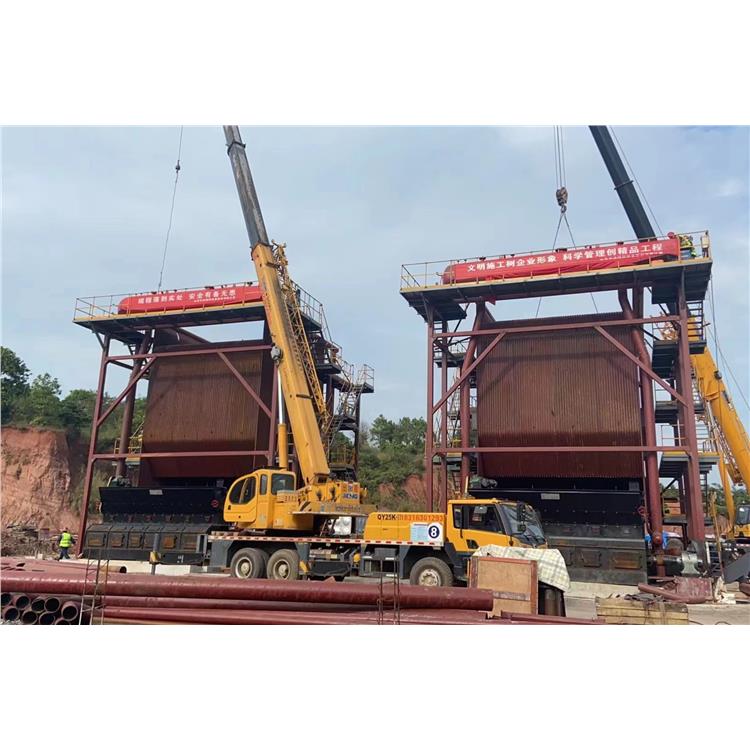
Shandong Zhongjie Special Equipment (formerly Heze Boiler Factory Co., Ltd.) holds an A-grade boiler manufacturing license, an A2-grade pressure vessel manufacturing license, an A2-grade pressure vessel design license, a B-grade boiler installation license, and GB2/GB3-grade pressure pipeline installation licenses, as well as a qualification for electromechanical equipment installation contracting. It is a member of the China Boiler and Water Treatment Association, the China Chemical Equipment Association, and a council member of the Shandong Equipment Manufacturing Association. The company has also passed certifications for the ISO9001 Quality Management System, ISO14001 Environmental Management System, OHSAS18001 Occupational Health and Safety Management System, and the U.S. ASME/U2 certification.
High evaporation fraction in biomass pellet boiler fuel may lead to the following issues:
Incomplete combustion: Fuels with high volatility release a large amount of steam during combustion, which lowers the combustion temperature and affects the completeness of combustion. Incomplete combustion leads to heat loss and increased emissions, reducing the boiler's thermal efficiency and environmental performance.
Poor combustion stability: Fuels with high volatility are prone to instability during the combustion process, which may result in flameout and uneven combustion. This can lead to unstable boiler operation and affect the stability of hot water supply.
To address issues caused by high-evaporation fuel, the following measures can be taken:
Combustion System Optimization: Optimize the combustion system of biomass pellet boilers, encompassing aspects such as combustion chamber design, combustion air supply, and mixing. Enhance combustion completeness and stability through measures like increasing combustion temperature and oxygen supply.
Combustion Adjustment Control: Utilizes a combustion adjustment control system that monitors and adjusts parameters such as temperature and oxygen content in real-time during the combustion process. Adjusts the supply of combustion air according to actual conditions to maintain stability and completeness of combustion.
Fuel Pretreatment: Pre-treat biomass pellets with high volatilization content, such as drying and crushing. By reducing the moisture content and particle size of the fuel, the volatilization content is minimized, enhancing the combustion efficiency and stability.
Burn Parameters Adjustment: Adjust the boiler's burn parameters, such as burn temperature and duration, based on actual conditions. Through reasonable parameter adjustment, make the burn process more adaptable to the high evaporation and fuel characteristics.
In summary, by optimizing the combustion system, adjusting control mechanisms, pre-treating the fuel, and fine-tuning combustion parameters, issues related to high fuel evaporation in biomass pellet boiler can be reduced, thereby enhancing the boiler's
Biomass boilers can generally be divided into the following two categories based on their application:
Biomass Hot Water Boilers: Biomass hot water boilers are primarily used for heating and hot water supply. They transfer heat energy to water by burning biomass fuel, producing hot water. This type of boiler is widely used in heating and hot water systems in residential, office buildings, schools, hotels, and other venues.
Biomass Steam Boilers: Biomass steam boilers are primarily used for steam supply in industrial production processes. They generate high-pressure steam at high temperatures by burning biomass fuel, which is used to power machinery, heating, and other industrial applications. This type of boiler is commonly found in industries such as pulp and paper, food processing, and chemicals.
These two types of biomass boilers differ in principle and design, catering to different application scenarios. Whether for hot water or steam boilers, they both utilize the thermal energy of biomass fuel to harness renewable energy, featuring environmental protection and energy-saving characteristics.
A hot water boiler is a device used for supplying hot water. With the increasing demand for energy and environmental awareness, hot water boilers have seen continuous development and improvement in technology and application.
Below are the trends in the development of hot water boilers:
Energy-saving: Energy efficiency in hot water boilers is a crucial development direction. By improving the combustion technology, heat exchanger design, and material selection, we enhance the utilization efficiency of thermal energy, reduce energy consumption, and emissions.
Temperature Control Intelligence: With the advancement of intelligent technology, the temperature control systems of hot water boilers are becoming increasingly intelligent. Through the adoption of control algorithms and sensor technology, temperature control and energy consumption management are achieved, enhancing system stability and comfort.
Multi-energy Supply: To reduce dependence on traditional energy sources, the trend in hot water boiler development is towards multi-energy supply. In addition to traditional fuels like gas and oil, an increasing number of hot water boilers are now utilizing renewable energy sources such as biomass, solar, and geothermal, achieving energy diversification and sustainable development.
Environmental Protection and Emission Reduction: Environmental protection and emission reduction is an important direction for the development of hot water boilers. By improving combustion technology, adding flue gas purification equipment and control systems, reducing pollutants emitted during the combustion process, and protecting the environment and human health.
Safety and Reliability: The safety and reliability of hot water boilers are crucial to development. By enhancing the structural design of the boiler, improving safety valves, and refining the control system, we boost the safety performance of the boiler to prevent accidents.
Miniaturization and Modularity: With the acceleration of urbanization, there is a distinct trend towards miniaturization and modularity in hot water boilers. These miniaturized hot water boilers can adapt to the needs of urban buildings, reducing floor space and installation costs, and enhancing flexibility and scalability.
Overall, the trend in hot water boiler development is towards energy efficiency, intelligence, multi-energy supply, environmental protection and emission reduction, safety and reliability, miniaturization, and modularization. These trends will drive continuous innovation and application of hot water boiler technology, providing more comfortable, reliable, and environmentally friendly hot water supply for people.
Biomass boilers, as equipment that converts thermal energy using biomass fuel, offer the following advantages:
Renewable Energy: Biomass fuel is a renewable energy source that can be continually replenished through cultivation and planting. Its use has a smaller environmental impact compared to fossil fuels, contributing to sustainable development.
Environmental Protection and Energy Saving: The emissions and waste from biomass combustion are relatively low, with low levels of pollutants released during combustion. Biomass fuel itself has low sulfur and low nitrogen characteristics, and the waste after combustion can be reused as organic fertilizer or biomass fuel, reducing environmental pollution.
Diversity and flexibility: Biomass fuels come in a wide variety, including sawdust, straw, etc. Different fuels can be selected based on actual conditions to enhance their substitutability and flexibility.
Utilization: The biomass boiler employs advanced combustion technology and heat conversion equipment, maximizing the thermal energy of biomass fuel and enhancing thermal efficiency. Additionally, equipped with an economizer and flue gas recirculation system, further thermal efficiency is achieved.
Economic Efficiency: Biomass fuel is more stable and less expensive compared to fossil fuels. The investment and operating costs of biomass boilers are relatively low, offering good economic value.
Broad Application: Biomass boilers are suitable for various fields, including industrial production, heating, and power generation. They can meet the thermal energy needs in different scenarios.
In summary, biomass boilers offer advantages such as renewable energy, environmental protection, energy efficiency, diversity and flexibility, utilization, cost-effectiveness, and wide application, making them a sustainable thermal energy conversion solution.
Zhongjie Special Equipment upholds the grand vision of "realizing employees' dreams, creating value for customers, and striving for the prosperity and strength of our motherland," and is dedicated to the development of the green energy equipment industry. We offer products and services with high cost-performance to contribute to society!
Sanya Biomass Boiler Prices, 304 Stainless Steel Material
