


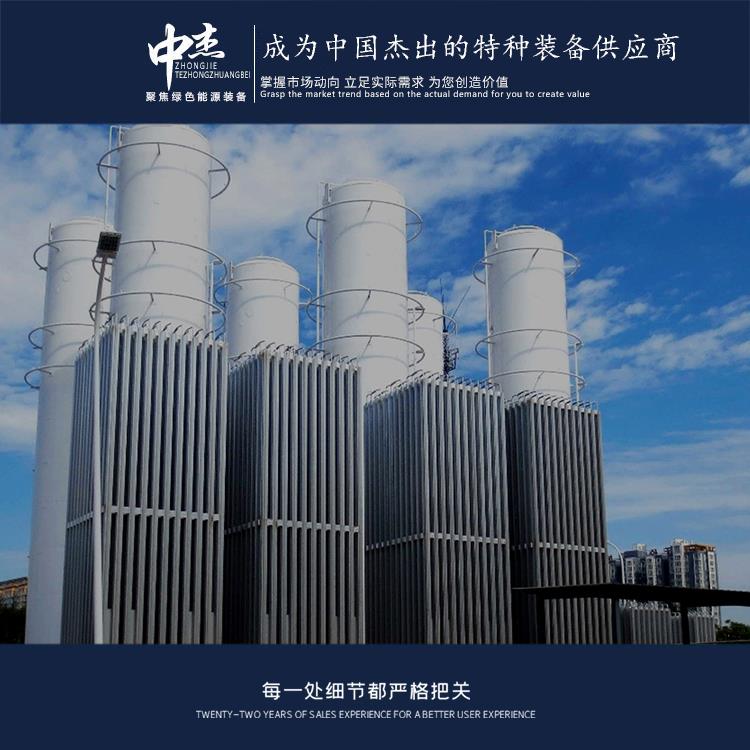
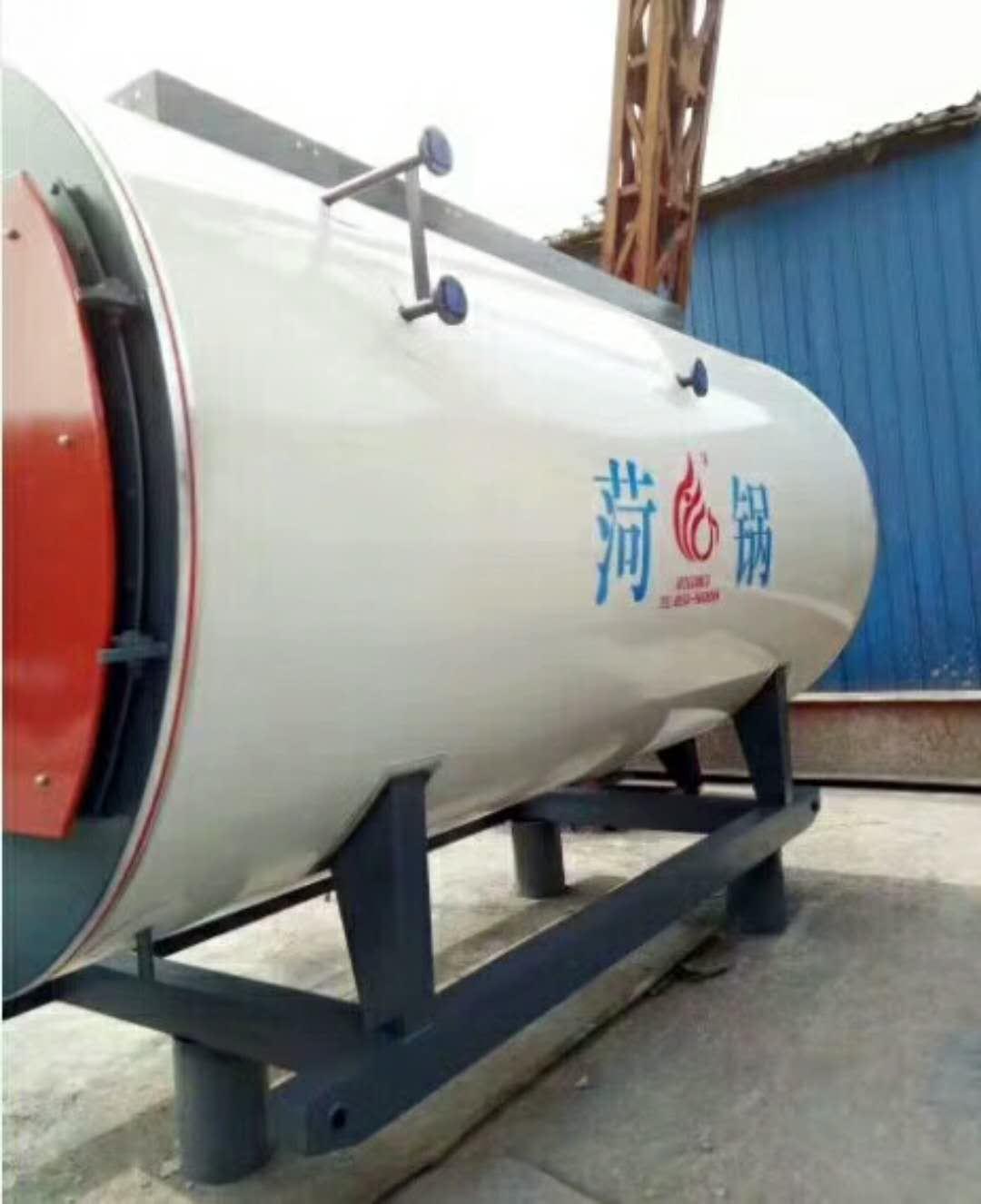
Shandong Zhongjie Special Equipment (formerly Heze Boiler Factory Co., Ltd.) was established in 2001, located at No. 2218 Jinnan Road, Economic and Technological Development Zone, Heze City. With a registered capital of 50 million yuan and total assets of 500 million yuan, the company has 7 business centers: boilers, deep-freeze containers, pressure vessels, central air conditioning, engineering installation, international trade, and Internet of Things. It has three factory sites on Jinnan Road, East Changjiang Road, and Bohai Road, covering a total area of 200,000 square meters, with the main workshop spanning 83,000 square meters. The company currently employs 710 people, including 247 engineers and technicians, and 82 intermediate-level technical personnel. In December 2016, it was recognized as a "High-tech Enterprise" by the Science and Technology Department. In June 2021, it was identified as a "Specialized and New Enterprise in Shandong Province" by the Ministry of Industry and Information Technology. In June 2022, it was recognized as a "Gazelle Enterprise in Shandong Province" and in August 2022, as a "Specialized and New Small Giant Enterprise" by the Ministry of Industry and Information Technology.
Liquid oxygen storage tanks are used for storing and supplying liquid oxygen. Liquid oxygen is oxygen cooled below its boiling point, converting it to a liquid state. Liquid oxygen storage tanks are typically designed with double or multi-layer structures, filled with insulating materials in between to reduce heat transfer and evaporation of the liquid oxygen.
Liquid Oxygen Storage Tanks Feature the Following Characteristics:
High Purity: The liquid oxygen tanks store high purity liquid oxygen, typically achieving a purity of over 99.5%. This makes liquid oxygen tanks essential for applications requiring high purity oxygen, such as medical, industrial, and research fields.
Low Temperature: As the boiling point of liquid oxygen is -183°C, liquid oxygen storage tanks must have excellent insulation properties to maintain the low temperature state of the liquid oxygen. Tanks are typically designed with double or multi-layer structures, filled with insulating material in between to minimize heat transfer and evaporation of the liquid oxygen.
High Pressure: Liquid oxygen tanks typically need to withstand high pressure to maintain their liquid state. The design and material selection of the tank must consider the pressure requirements of liquid oxygen to ensure the tank's safety and reliability.
Flammability: Liquid oxygen is highly flammable and can support combustion. Therefore, during the design and use of liquid oxygen storage tanks, fire prevention measures must be implemented to ensure there are no ignition sources nearby, and appropriate fire extinguishing equipment is provided.
High Density: Liquid oxygen has a higher density, allowing for more oxygen storage than gaseous oxygen in storage tanks. This makes liquid oxygen tanks advantageous for applications requiring large volumes of oxygen supply, such as in the field.
The use of liquid oxygen tanks must strictly adhere to relevant safety regulations and operational guidelines to ensure safe operation and use of the tank.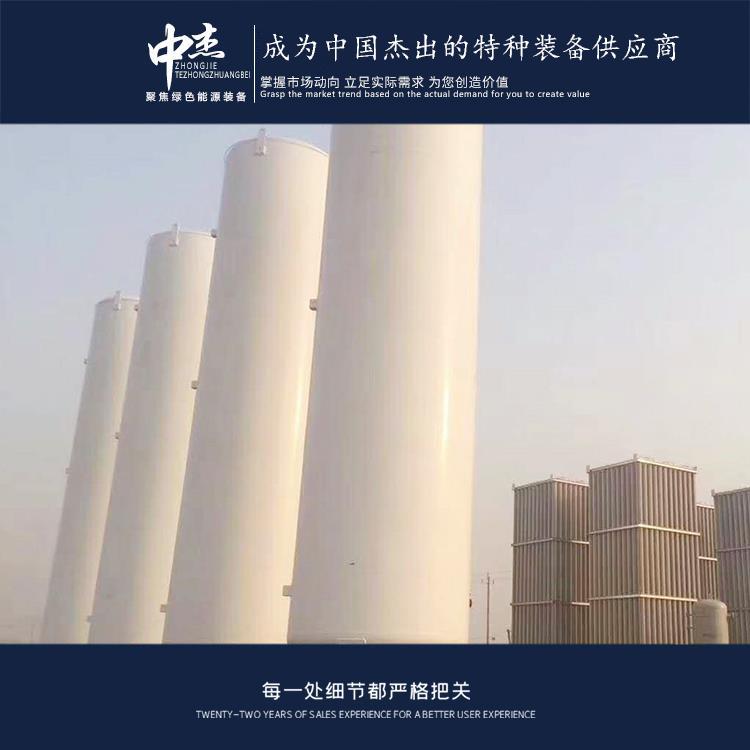
Liquid argon storage tanks are equipment used for storing and transporting liquid argon, featuring the following characteristics:
Low-temperature retention performance: The liquid argon tank is equipped with special insulation materials and structural design, effectively maintaining the low-temperature state of liquid argon. The tank is internally lined with insulation to minimize heat conduction and loss, ensuring long-term storage of liquid argon.
High-sealed performance: The liquid argon storage tank features excellent sealing properties, effectively preventing any leakage or evaporation of liquid argon. The tank's valves, connectors, and sealing components are designed and manufactured with precision, ensuring reliable sealing performance.
High strength and corrosion resistance: The liquid argon tank is made from high-strength materials, capable of withstanding the high pressure and low temperature of liquid argon. Both the internal and external surfaces of the tank have been specially treated, offering excellent corrosion resistance and resistance to corrosion and oxidation by liquid argon.
Safety Performance: The liquid argon tank is equipped with multiple safety protection measures, including safety valves, pressure sensors, and level monitoring devices. These devices can monitor and control the tank's pressure, temperature, and level to ensure the tank operates within a safe range.
Reliability and Stability: The liquid argon storage tank has undergone rigorous design, manufacturing, and testing, offering excellent reliability and stability. The tank is capable of long-term stable storage and transportation of liquid argon, ensuring that the quality and performance of the liquid argon remain unaffected.
Ease of Operation and Maintenance: The operation and maintenance of liquid argon tanks are relatively simple, equipped with valves and fittings that are easy to operate. The maintenance tasks mainly include regular inspections, cleaning, and repairs, which can extend the service life of the tank.
The performance characteristics of liquid argon tanks make them essential for the storage and transportation of liquid argon, widely used in scientific research, industry, and other fields. When using liquid argon tanks, it is crucial to strictly adhere to the relevant operational specifications and safety requirements to ensure safe usage.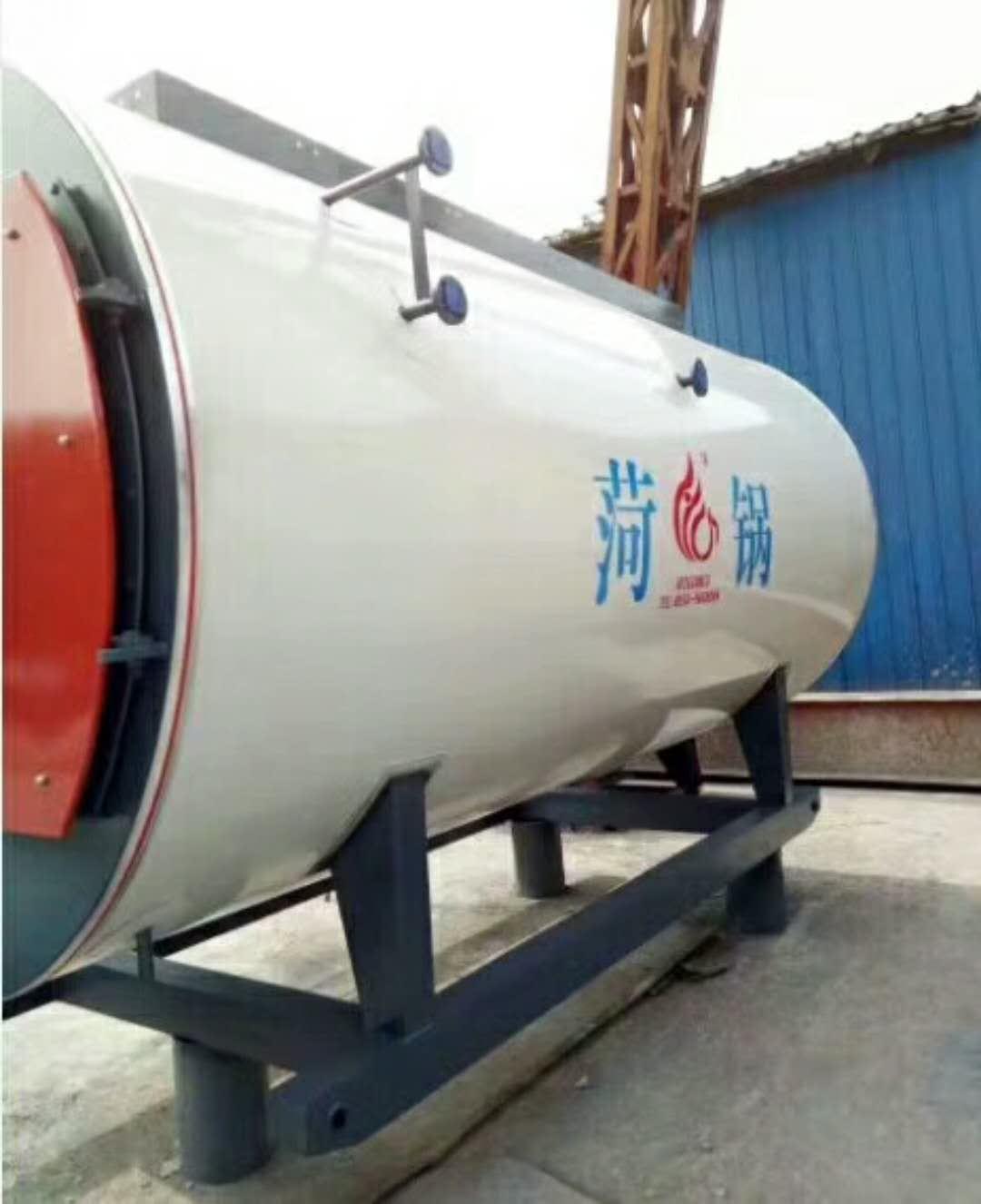
The application of strain-hardening in austenitic stainless steel on low-temperature pressure vessels is a common method, which can enhance the material's strength and durability. Below are some details regarding the application of strain-hardening in austenitic stainless steel on low-temperature pressure vessels:
Principle of Strain Hardening: Strain hardening is achieved by introducing plastic deformation into the material, which alters the crystal structure and thereby increases the material's strength. In Austenitic stainless steel, strain can be introduced through methods such as cold working (e.g., cold rolling, cold drawing) or heat treatment (e.g., solution heat treatment and cold deformation), leading to dislocations and grain boundary sliding in the crystal structure, thereby enhancing the material's strength.
Advantages in Low-Temperature Applications: Austenitic stainless steel exhibits excellent corrosion resistance and low-temperature toughness in cold environments. Strain hardening can further enhance the strength and durability of austenitic stainless steel, enabling it to perform in low-temperature pressure vessels. Under low-temperature conditions, strain hardening effectively resists plastic deformation and fracture, improving the material's tensile strength and impact resistance.
Application Cases: Austenitic stainless steel strain hardening is widely used in low-temperature pressure vessels. For instance, in liquid nitrogen, liquid oxygen, and liquid argon storage tanks, etc., strain-hardened austenitic stainless steel is commonly used as structural material. These vessels must withstand high pressure and impact loads at low temperatures; strain hardening enhances the material's strength and durability, ensuring safe operation of the containers.
It is important to note that the strain-hardening of austenitic stainless steel should be conducted under suitable temperatures and deformation conditions to avoid excessive deformation and material embrittlement. When designing and manufacturing low-temperature pressure vessels, it is essential to rationally select and apply the strain-hardening of austenitic stainless steel based on specific engineering requirements and material characteristics.
The maintenance and protection of liquid argon cylinder accessories are crucial for ensuring the normal operation and extending the service life of the cylinder. The following are general methods for the maintenance and protection of liquid argon cylinder accessories:
Valve Maintenance: Regularly inspect and maintain valves within the tank accessories, including intake valves, exhaust valves, and safety valves. Ensure valves operate smoothly and reliably with no leaks or jamming. Regularly lubricate the valves and clean any debris or dirt.
Pressure Relief Device Maintenance: The pressure relief devices (such as safety valves) within the liquid argon storage tank accessories are critical components for ensuring the internal pressure safety of the tank. Regularly inspect and test the operational status of the pressure relief devices to ensure proper functioning. Clean and repair as necessary.
Sensor and Instrument Maintenance: Sensors and instruments within the liquid argon storage tank accessories are used for monitoring and controlling parameters such as tank temperature and pressure. Regularly calibrate and inspect the accuracy and reliability of the sensors and instruments. Maintain cleanliness and normal operation of the sensors and instruments.
Insulation Layer Protection: The insulation layer of liquid argon storage tank accessories is crucial for maintaining the low temperature state of liquid argon. Regularly inspect the integrity and insulation performance of the insulation layer, and repair or replace any damaged insulation material. Avoid mechanical damage or contamination to the insulation layer.
Cleaning and Corrosion Protection: Regularly clean the accessories of the tank, removing impurities and dirt from the surface. Regularly inspect and maintain the corrosion-resistant coating on the accessories to prevent corrosion and oxidation.
Regular inspections and maintenance: Conduct comprehensive inspections and maintenance of liquid argon cylinder accessories on a regular basis, including the exterior, fasteners, seals, etc. Detect and address any damage, leaks, or other issues with the accessories promptly.
Record and Document Management: Document each maintenance and repair outcome, including dates, services performed, issues identified, and corrective measures. Establish comprehensive management records and documents for tracking and managing the operation of attachments.
Please note that the maintenance and protection of liquid argon cylinder accessories should be carried out by trained personnel, following relevant specifications and standards. Ensure safety during maintenance and operation, and consult with experts for accurate guidance.
Shandong Zhongjie Special Equipment, welcome customers to visit our factory for business discussions.
Shuozhou Argon Storage Tank, Factory Direct Supply
