


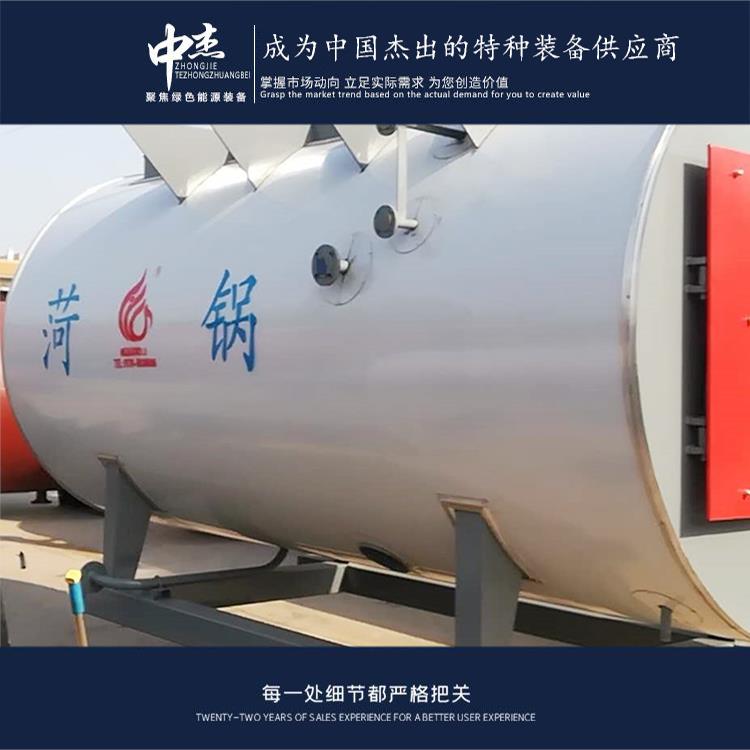
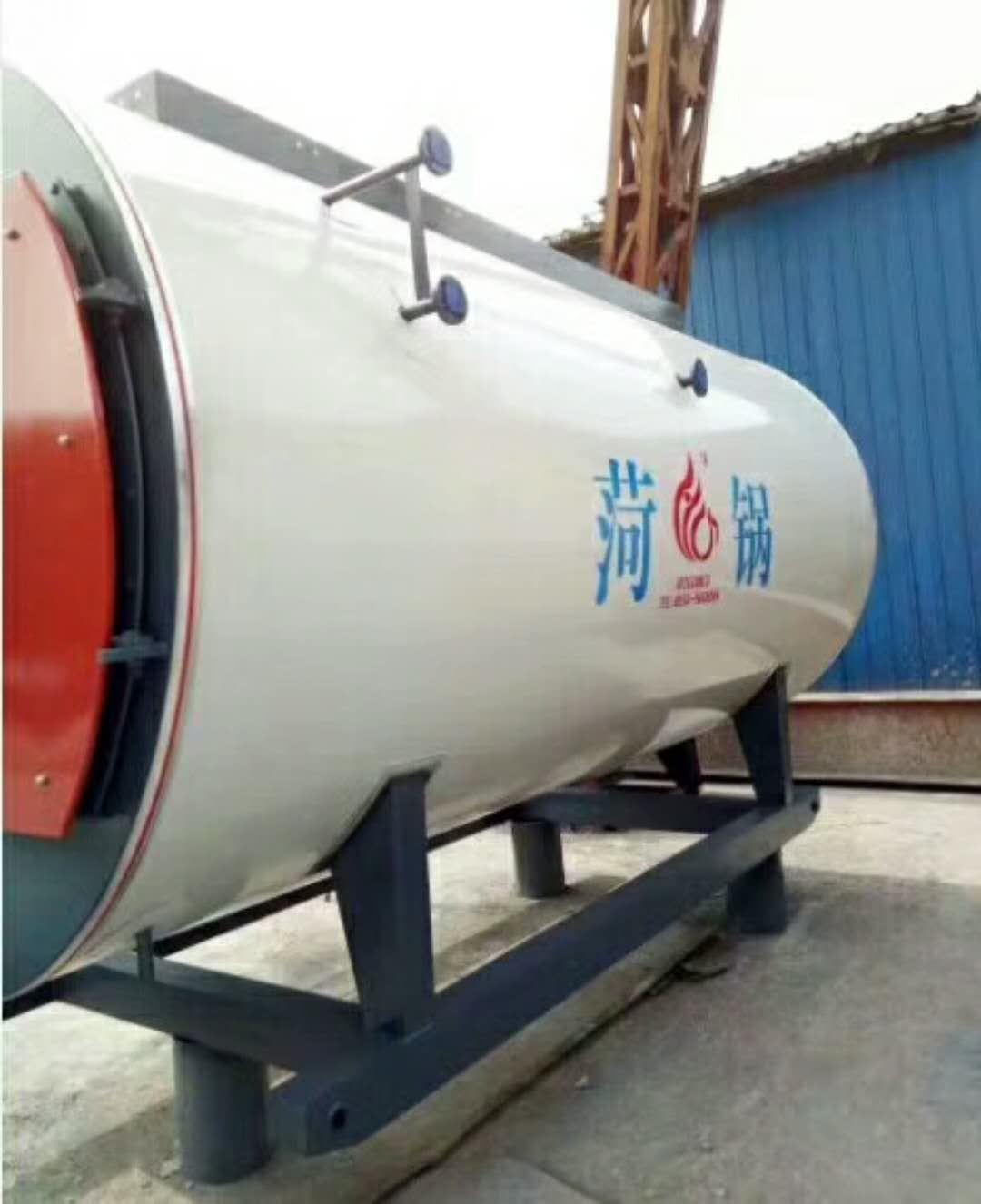
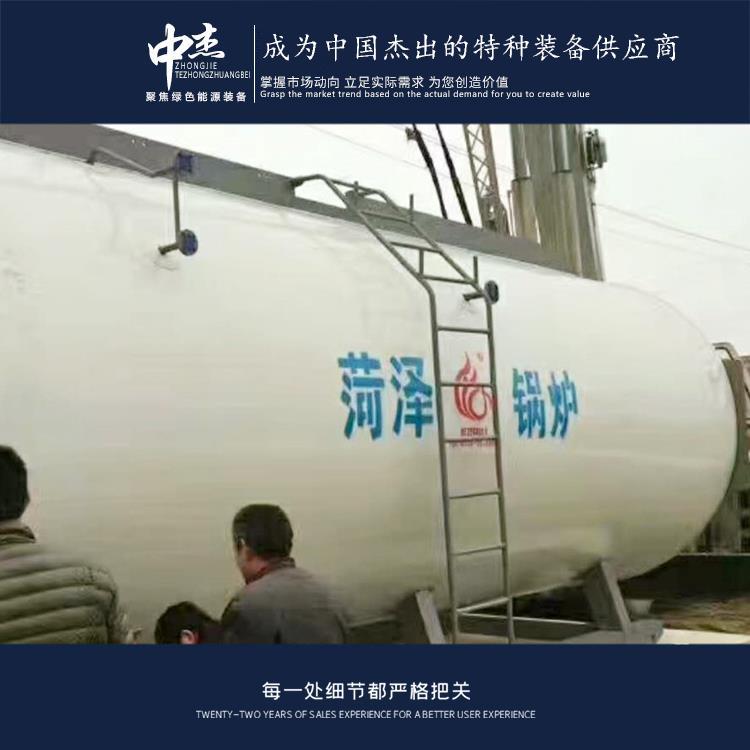
Shandong Zhongjie Special Equipment specializes in products such as fuel (gas) boilers, organic heat carrier boilers, biomass boilers, waste heat recovery boilers, and other boiler products; vacuum insulation cryogenic pressure vessels like LNG, oxygen-nitrogenargon, and CO2 storage tanks; pressure vessel products including denitrification engineering equipment, heat storage and energy storage equipment, and complete chemical equipment sets; central air conditioning and ventilation equipment like ground (water) source heat pumps, air source units, water-cooled screw units, and air-cooled modular units. Planned products include large-scale thermal energy centers, LNG transport vehicles, LNG tank containers, and other green energy equipment.
The reasons for uneven heat distribution in steam boilers may include the following aspects: Uneven combustion: During the combustion process, uneven mixing of fuel and air, or improper design and adjustment of the burner, can lead to uneven combustion. This results in some areas producing more heat while others produce less. Pipe blockage: In the transmission pipes of steam boilers, the presence of blockages or scale can cause uneven heat transfer. Blockages or scale hinder steam flow, limiting heat transfer in some areas while allowing it to be relatively better in others. Heat exchanger issues: If the heat exchangers in the steam boiler have problems such as scaling, corrosion, or blockage, they can cause uneven heat transfer. These issues affect the heat conduction efficiency of the heat exchangers, impacting heat transfer in some areas. Water level issues: Inaccurate or unstable water level control in steam boilers can lead to uneven steam production. Both high and low water levels can affect steam production and distribution, causing uneven heat distribution. Boiler load changes: Changes in the boiler load of steam boilers can also lead to uneven heat distribution. When the load suddenly increases or decreases, the boiler's heat production and distribution may not adjust in time, resulting in uneven heat distribution. To address the issue of uneven heat distribution in steam boilers, regular inspection and maintenance of the boiler equipment are necessary to ensure the normal operation of combustion and heat exchange processes. Additionally, adjusting the burner and control systems reasonably, maintaining stable water levels, cleaning pipes and heat exchangers, and improving...
Steam boiler energy conservation is an urgent mission for the following reasons: Energy Consumption: Steam boilers typically use fuel to produce steam, and the consumption of fuel directly impacts energy usage. With the increasing scarcity of energy resources and rising energy prices, energy conservation has become a critical task. Environmental Protection: The emissions and waste smoke from fuel combustion pollute the environment, including air pollution and greenhouse gas emissions. By reducing fuel consumption through energy conservation, the impact on the environment and carbon emissions can be decreased. Economic Benefits: Energy conservation can lower energy consumption and operational costs, enhancing energy utilization efficiency. By implementing energy-saving measures, companies can reduce energy expenses and improve economic profitability. Sustainable Development: Energy conservation is a crucial component of sustainable development. By reducing energy consumption, the lifespan of energy resources can be extended, providing more energy reserves for future development. Legal and Regulatory Requirements: Many regions have established laws, regulations, and policies on energy conservation and emission reduction, requiring companies to adopt energy-saving measures and reduce energy consumption and environmental pollution. Therefore, energy conservation for steam boilers is an urgent task. By implementing effective energy-saving measures, energy consumption can be reduced, environmental pollution can be minimized, economic profitability can be improved, and sustainable development can be achieved.
Industrial boilers, during their long-term operation, can accumulate scale and sediments, affecting heat exchange efficiency and the normal operation of the boiler. Here are some effective descaling methods:
1. Mechanical Cleaning: Utilizes cleaning equipment and tools to wash away scale and sediments inside the boiler with high-pressure water or mechanical brushes. This method is suitable for lighter scale and sediment buildup.
2. Chemical Cleaning: Uses chemical cleaning agents to dissolve scale and sediments through chemical reactions. Select an appropriate cleaning agent based on the composition and nature of the scale, and follow the instructions provided. Chemical cleaning requires safe operation to avoid damage to equipment and the environment.
3. Acid Cleaning: A common descaling method for difficult-to-dissolve scale and sediments. Common acid cleaning agents include, etc., and the appropriate cleaning agent and concentration should be selected based on the specific situation. Acid cleaning requires safe operation to prevent harm to equipment and personnel.
4. Alkaline Cleaning: A descaling method for specific types of scale, suitable for alkaline scale. Common alkaline cleaning agents include, etc., and the appropriate cleaning agent and concentration should be selected based on the specific situation. Alkaline cleaning requires safe operation to prevent harm to equipment and personnel.
5. Physical Descaling: Physical descaling methods include ultrasonic cleaning and electro-dissolution. Ultrasonic cleaning uses the vibration effect of ultrasound to shake the scale into pieces. Electro-dissolution utilizes the principle of electrolysis to dissolve scale through the action of electricity. These physical descaling methods are suitable for specific situations and types of scale.
When selecting a descaling method, it is necessary to consider the specific conditions of the boiler.
The flow rate standard for the thermal oil in the oil pipes of a thermal oil furnace typically varies depending on the specific application and equipment requirements, with no unified fixed value. However, generally speaking, the flow rate of thermal oil in the pipes should be maintained within a reasonable range to ensure the normal operation of the equipment and the effectiveness of heat transfer. Excessive flow rates of thermal oil can lead to issues such as increased system pressure loss and pump power consumption, increased frictional losses in the pipes leading to energy loss, and increased system noise and vibration. Low flow rates of thermal oil can result in insufficient heat transfer, affecting the thermal efficiency of the equipment, prolonged residence time of the thermal oil in the pipes, which can easily lead to oxidation and thermal decomposition, affecting the lifespan of the thermal oil, and the formation of scale in the pipes, increasing resistance and affecting fluid flow. Therefore, when designing and operating a thermal oil furnace system, it is necessary to consider specific equipment parameters, the properties of the thermal oil, and pipe layout factors to determine an appropriate flow rate. Generally, the flow rate of thermal oil should be within the range of 0.5-2.0 m/s, but the specific values need to be adjusted and optimized based on the actual situation. In practice, the flow rate of thermal oil can be controlled by monitoring and adjusting the pump flow rate and pipe resistance to meet the equipment's heat energy needs and operational requirements.
Zhongjie Special Equipment upholds the grand vision of "realizing employees' dreams, creating customer value, and striving for the prosperity and strength of our motherland," and is dedicated to the development of the green energy equipment industry. We offer society products and services with high cost-performance!
Chenzhou 3-ton Gas Boiler, Low Nitrogen Emission, Eco-friendly and Energy-saving
